


Japandi bathroom design brings together Japanese warmth and craftsmanship with Scandinavian simplicity, creating spaces that feel calm without feeling cold or generic.
These 25 ideas cover everything from signature Japanese details to full style obvariations to budget-friendly execution, so there’s real direction here whether you’re planning a full renovation or a simple refresh.
Save your favorites and start picturing the Japandi bathroom that fits your own home and budget.
1. Wabi-Sabi Japandi Bathroom Style

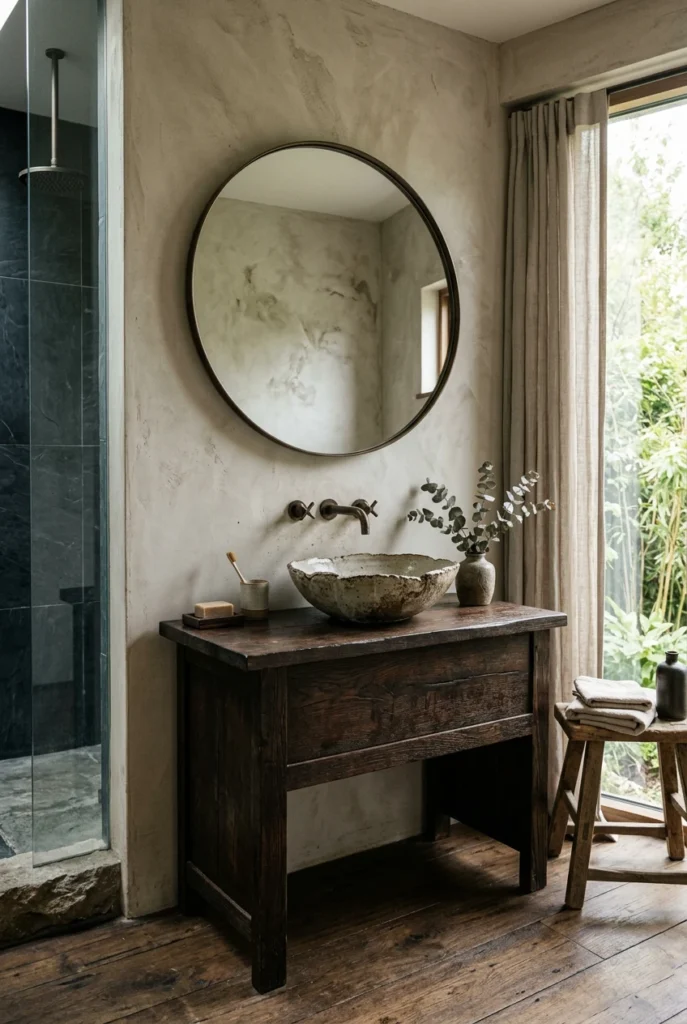
Wabi-sabi embraces imperfection as genuine beauty, and a hand-troweled plaster wall with visible texture variation captures that philosophy perfectly.
An asymmetrical ceramic vessel sink with a naturally uneven rim reinforces the idea that nothing needs to be flawless to feel intentional.
Dark stained wood grounds the space with warmth against the pale plaster. This direction works especially well if you’re drawn to Japandi’s quieter, more philosophical side rather than its cleaner Scandinavian half.
2. Modern Japandi Bathroom Design
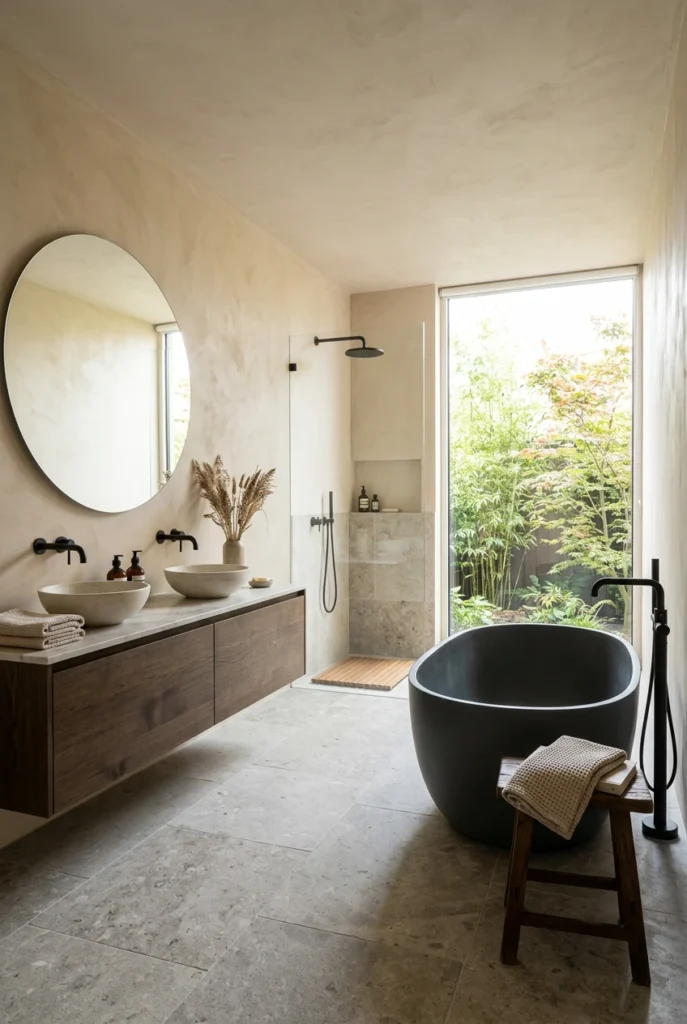
A low-profile dark wood vanity paired with a charcoal soaking tub creates the balanced tension between clean lines and organic material that defines modern Japandi.
Matte black fixtures add current, architectural polish without disrupting the room’s calm foundation. Warm plaster walls keep the material palette cohesive throughout.
This direction works especially well if you want Japandi’s warmth balanced with a slightly more current, streamlined execution.
3. Zen-Inspired Japandi Bathroom
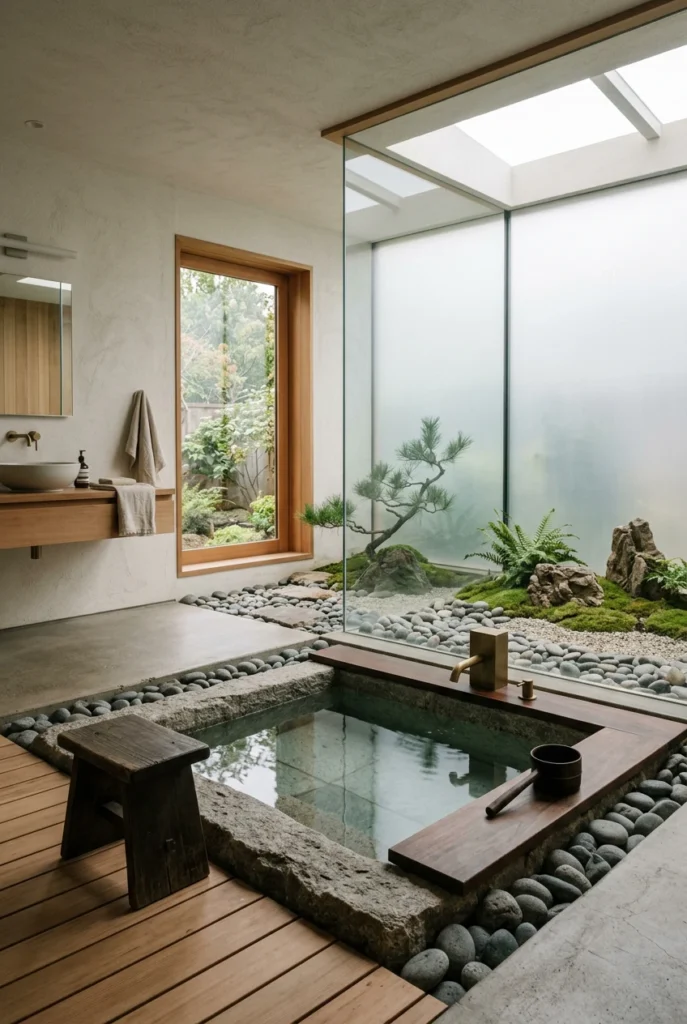
A sunken stone bathing area brings genuine ritual and intention to your daily routine, turning bath time into something closer to meditation.
A small interior rock garden visible through a glass partition extends that sense of calm beyond the tub itself.
A single wood stool beside the tub keeps the space feeling functional rather than purely decorative.
This direction works especially well if your bathroom has room for a genuinely immersive, spa-like transformation.
4. Dark Japandi Bathroom Style
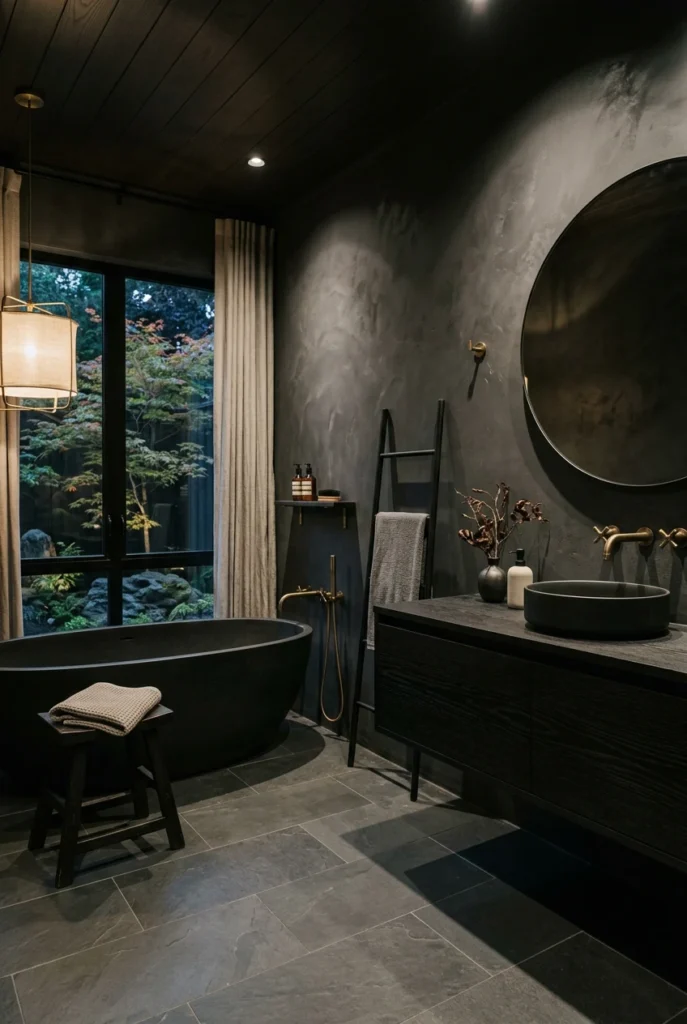
Deep charcoal plaster paired with a black stained vanity creates a moody, enveloping version of Japandi that skips the typical brightness of Scandinavian design entirely.
Warm brass fixtures provide just enough metallic contrast to keep the dark palette from feeling flat. A matte black soaking tub reinforces the same grounded, dramatic tone throughout.
This direction works especially well if you want your bathroom to feel intimate and cocoon-like rather than bright and airy.
5. Minimalist Japanese-Leaning Bathroom
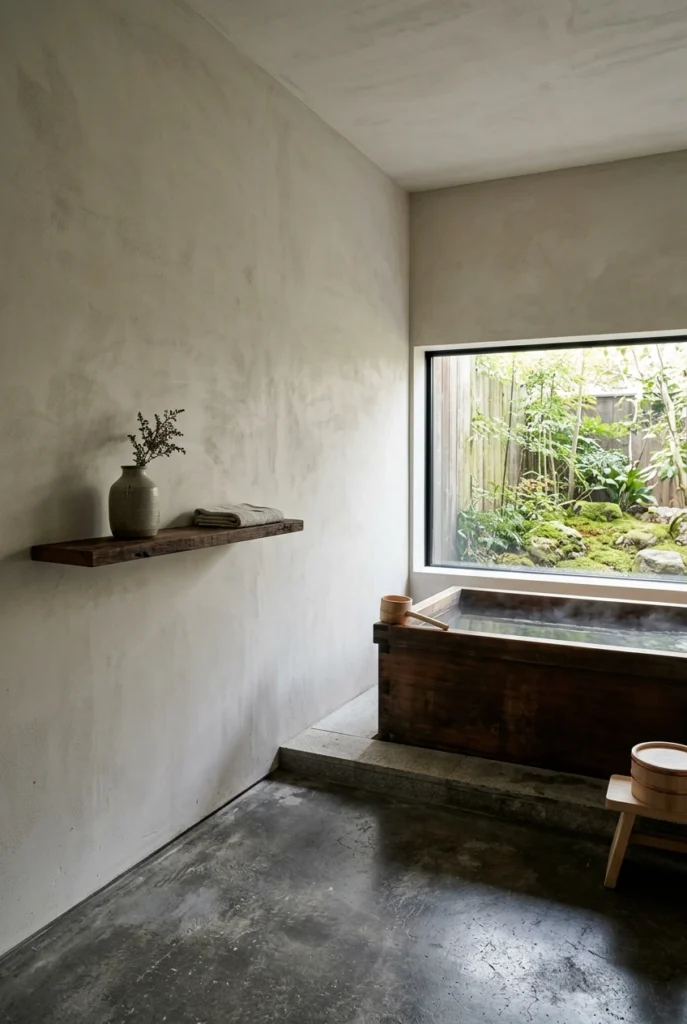
This direction strips Japandi down to its quietest, most restrained form, letting a deep soaking tub and a single ceramic vessel carry the entire room’s visual interest.
Unadorned plaster walls leave genuine negative space rather than filling every surface with decor. This restraint actually makes each remaining element feel more significant by contrast.
This direction works especially well if you want Japandi’s Japanese half to dominate over its Scandinavian counterpart.
6. Small Japandi Bathroom Style
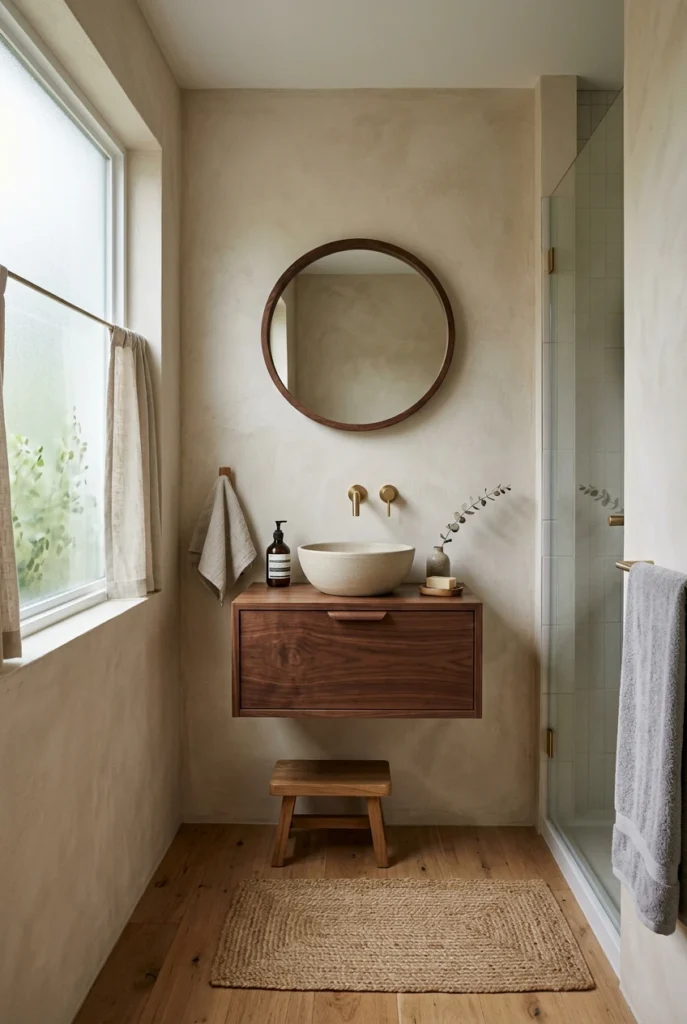
Japandi style doesn’t require a spacious bathroom to come through clearly, even though many examples lean into larger primary suites.
A compact dark wood vanity and one small asymmetrical vessel prove the aesthetic translates well into a genuinely tight footprint.
Choosing appropriately scaled pieces keeps the small space feeling calm rather than cluttered. This is a great reference if your bathroom is on the smaller side but you still want full Japandi character.
7. Japandi Primary Bathroom Suite
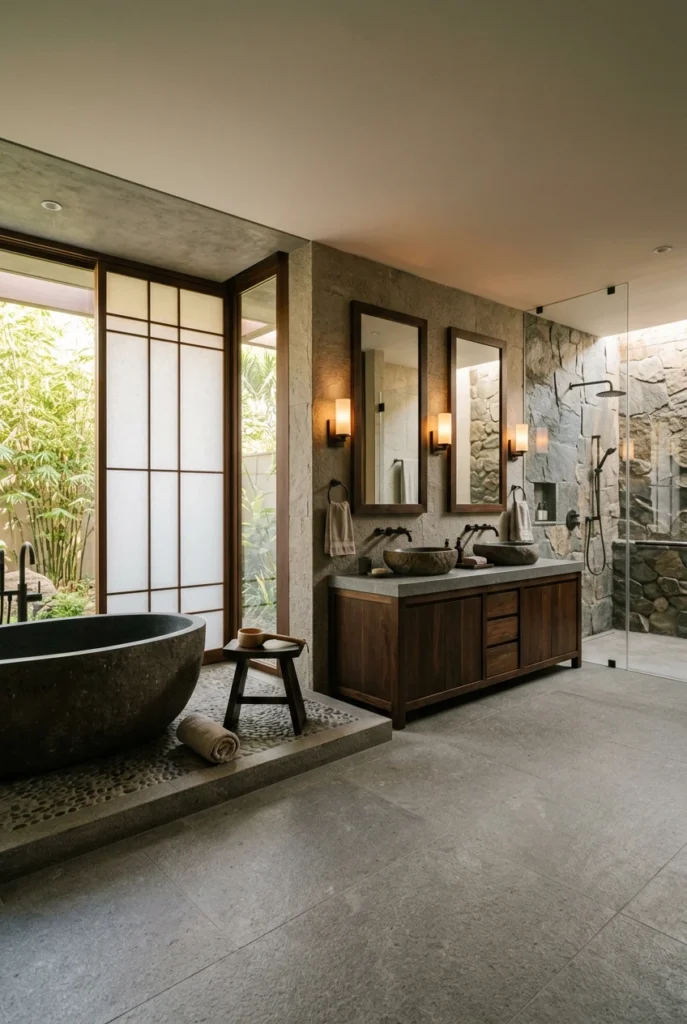
A primary suite gives you room to layer in Japandi’s signature elements fully, from a deep soaking tub near a shoji-inspired partition to a dark wood double vanity.
A walk-in shower with natural stone walls adds genuine texture alongside the contemplative soaking area.
This is the version of Japandi that feels genuinely elevated, since the bigger footprint allows each element room to breathe. It’s worth prioritizing if you’re planning a full primary bathroom renovation.
8. Japandi Powder Room Design
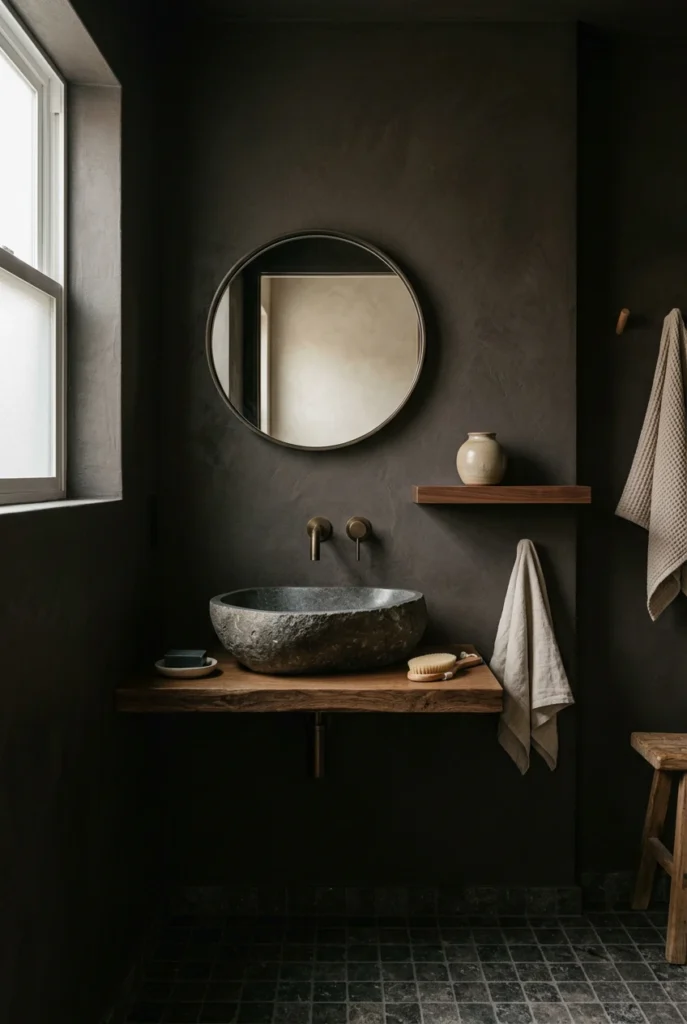
A small powder room is actually one of the easiest spots to execute Japandi style fully, since you’re only committing to one compact space.
Dark textured plaster and an asymmetrical stone vessel sink give the room genuine character despite its size.
A single dark wood shelf with one ceramic piece keeps the styling restrained rather than overcrowded. This is a great starting project if you’re testing out Japandi style before committing to a bigger space.
9. Japandi Guest Bathroom Style
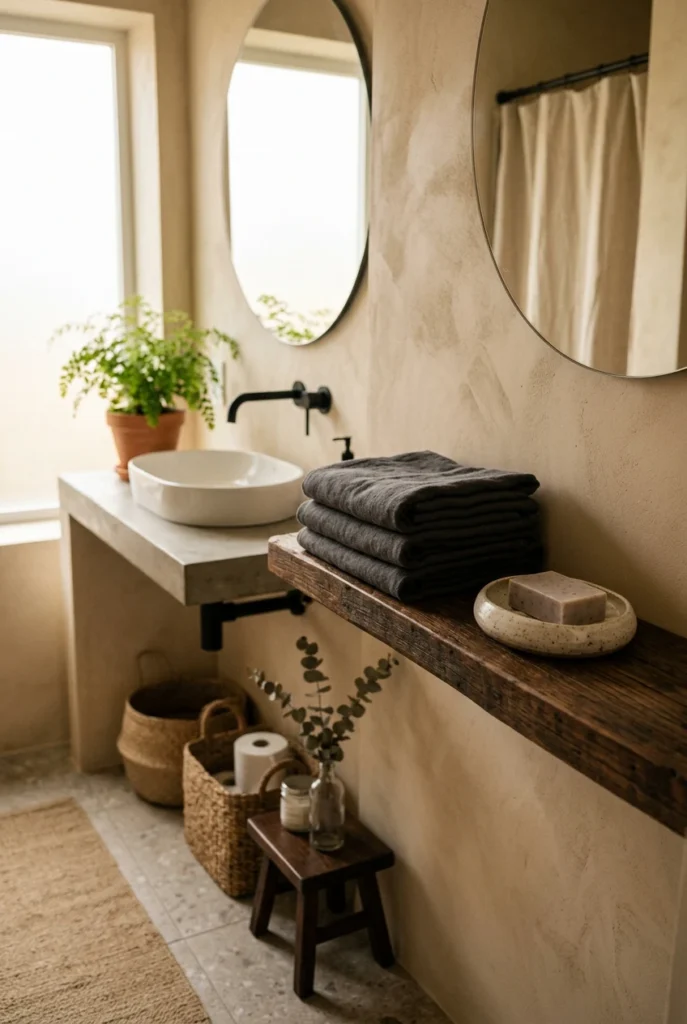
A guest bathroom benefits from Japandi’s calm, grounded feeling just as much as any other room, giving visitors a genuinely restful space to use.
A dark wood shelf and charcoal-toned linen towels create the foundation, while a single handmade ceramic soap dish adds artisanal detail.
This execution works especially well if you want your guest bathroom to feel intentional rather than an afterthought. It’s proof that Japandi style doesn’t need to be reserved for your primary spaces.
10. Deep Soaking Tub Centerpiece
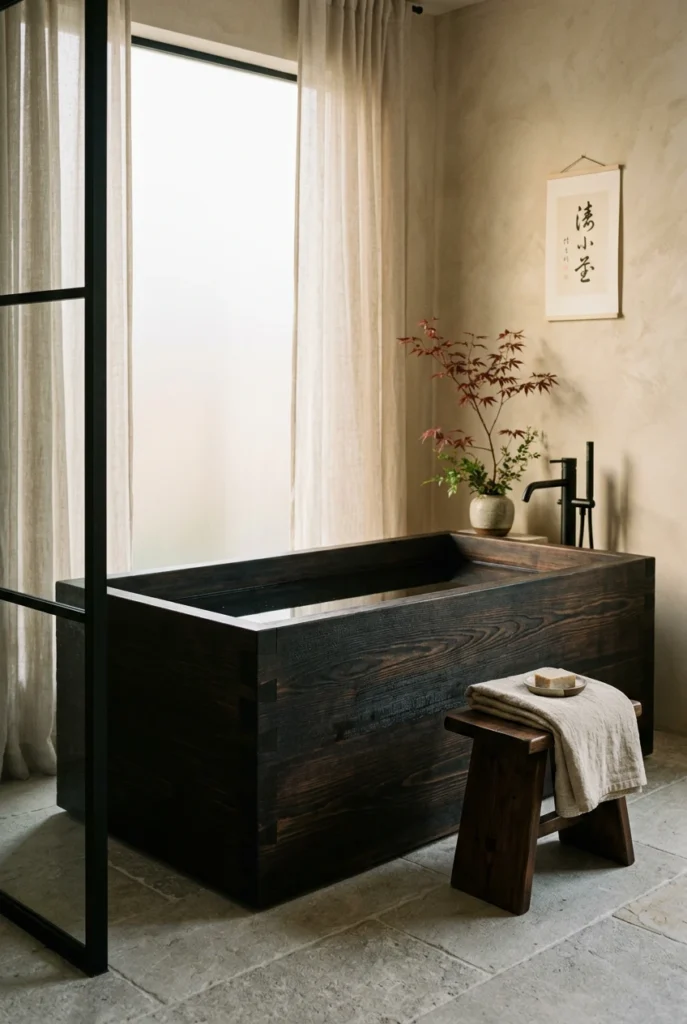
A deep, wood-clad soaking tub does more than just hold water — it becomes the genuine focal point and ritual center of a Japandi bathroom.
This style of tub, inspired by traditional Japanese bathing, encourages you to actually sit and soak rather than just rinse off quickly.
A small stool and folded linen towel beside it complete the intentional, unhurried mood. This is worth prioritizing if you want your bathroom to feel like a genuine daily ritual rather than a purely functional stop.
11. Shoji-Inspired Screen Detail
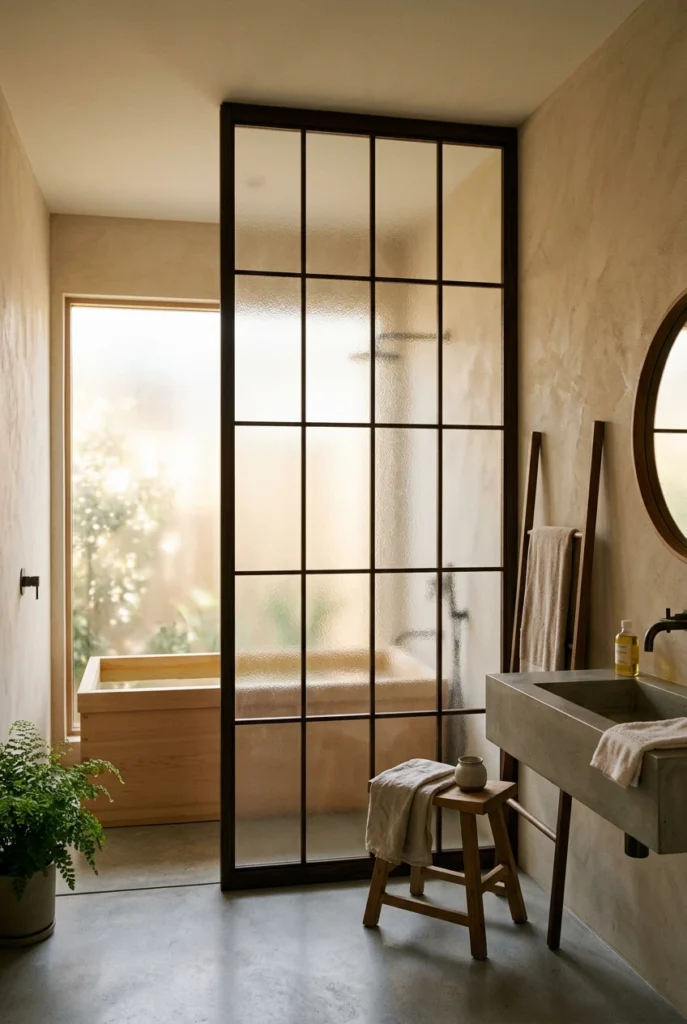
A shoji-inspired partition filters natural light through its translucent panels, softening the whole room without blocking daylight entirely.
This detail brings genuine Japanese architectural character into your bathroom rather than relying purely on furniture or decor choices.
Positioned to separate the soaking tub from the rest of the space, it adds a sense of ritual and privacy at the same time.
This is a bigger architectural investment, but one that immediately signals authentic Japandi design.
12. Asymmetrical Vanity Arrangement
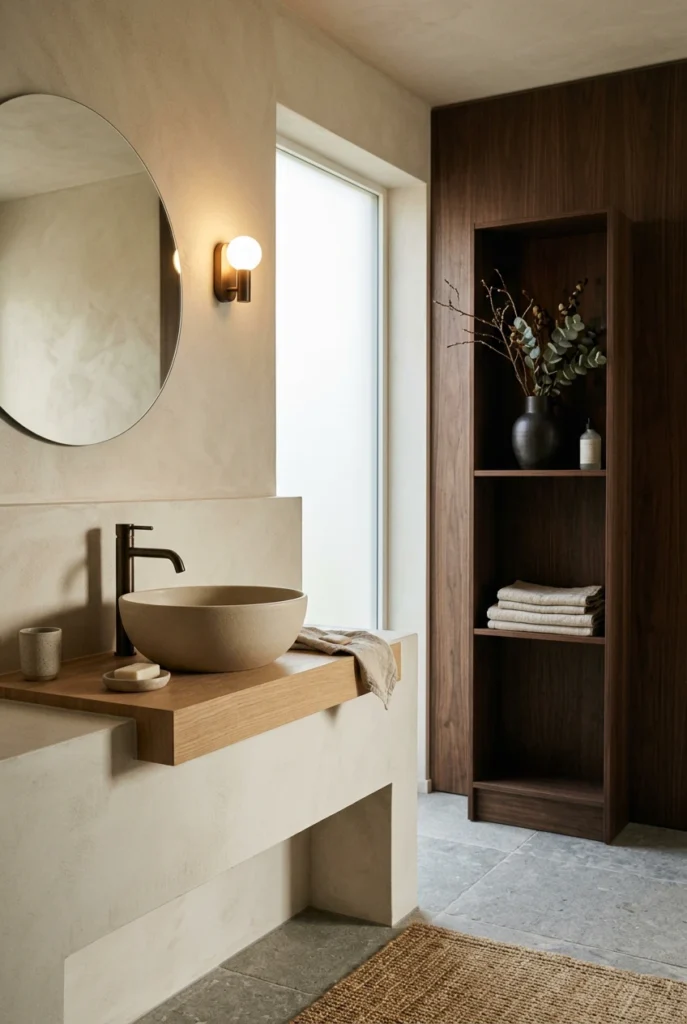
Deliberately off-center design is a hallmark of Japanese aesthetics, and applying it to your vanity arrangement creates genuine visual interest that a perfectly symmetrical layout can’t offer.
Positioning the vessel sink toward one side and balancing it with a tall shelf on the other creates intentional visual tension.
This approach requires a bit more planning than a standard centered vanity, but the result feels distinctly more considered.
It’s worth trying if you want your Japandi bathroom to feel genuinely authentic rather than generically balanced.
13. Visible Wood Joinery Detail
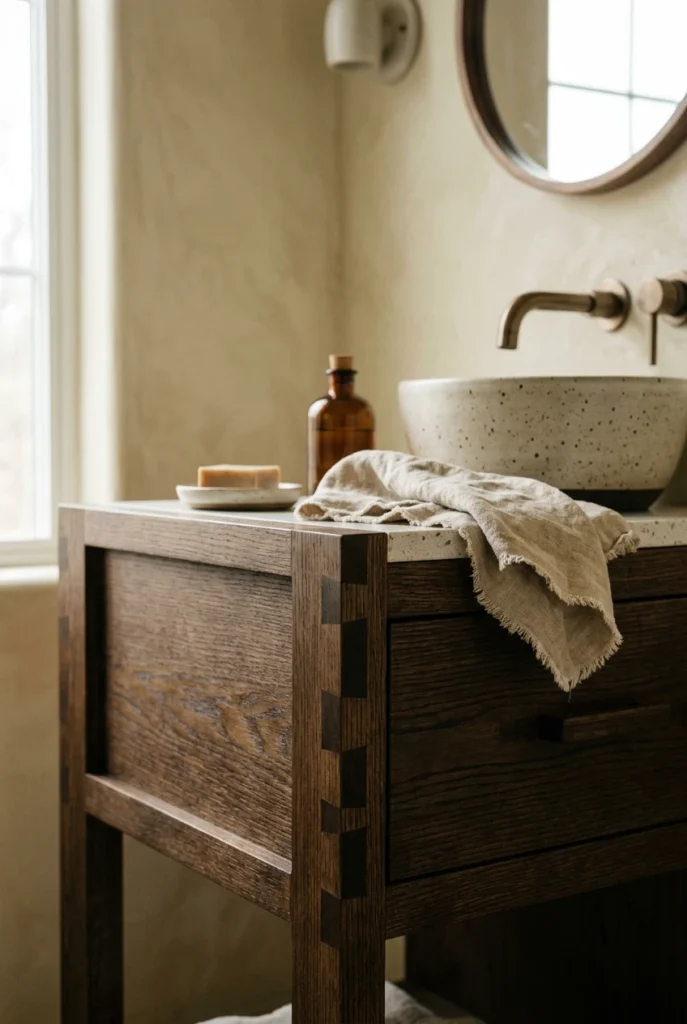
Leaving traditional wood joinery exposed rather than hidden celebrates the craftsmanship behind your vanity instead of concealing it.
Interlocking joints at the corners become a genuine design detail rather than something to disguise with trim or paint.
This detail requires working with a skilled woodworker familiar with traditional joinery techniques, so it’s not a simple DIY swap.
It’s worth the investment if you want your Japandi bathroom to feel genuinely handcrafted rather than mass-produced.
14. Dark Wood Japandi Bathroom
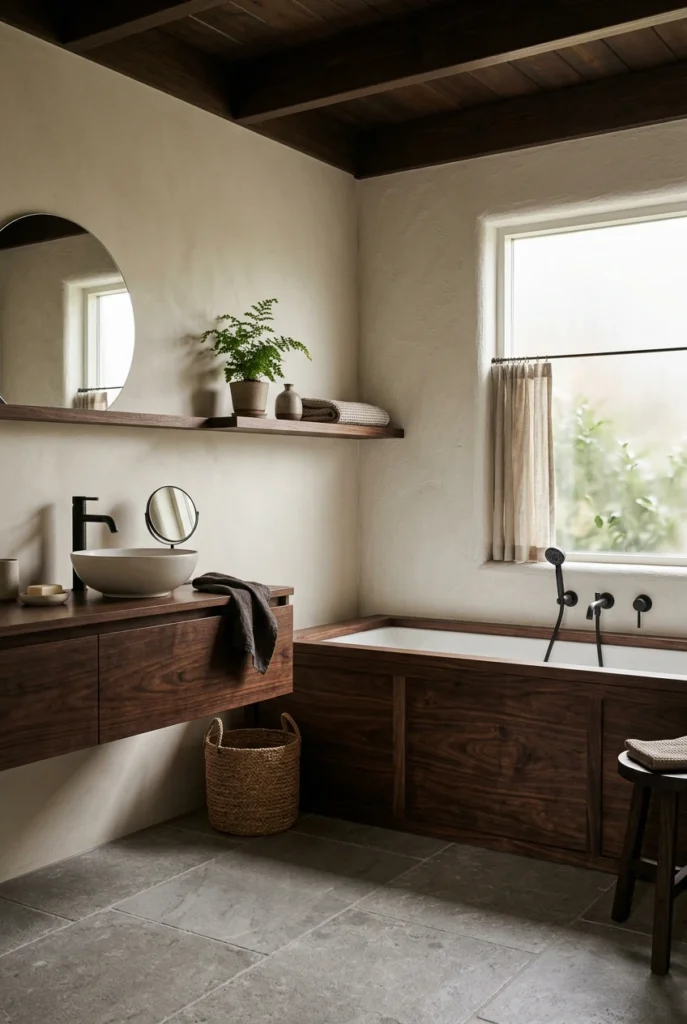
Building your entire material palette around rich, dark stained wood creates genuine cohesion throughout a Japandi bathroom.
Using the same deep wood tone across the vanity, shelving, and tub cladding keeps everything feeling connected rather than randomly assembled.
This approach grounds the space with warmth while still keeping the overall look restrained and intentional. This is a reliable starting point if you’re building your Japandi bathroom’s material story from scratch.
15. Charcoal and Clay Palette
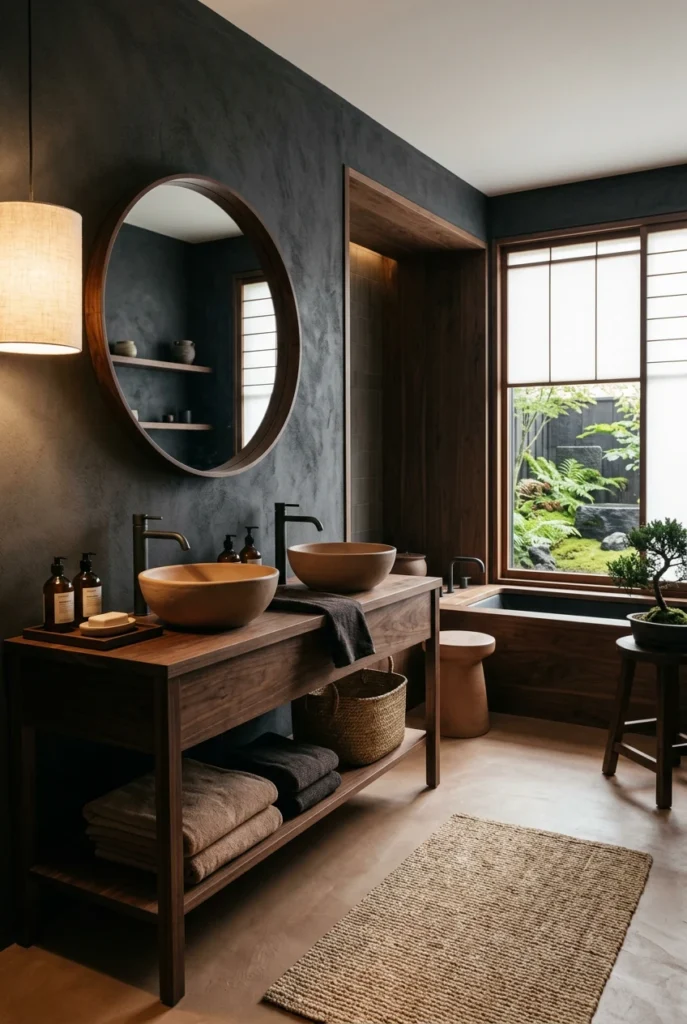
Charcoal and warm clay create an earthy, grounded palette that feels distinctly different from the typical pale Scandinavian foundation.
Charcoal plaster walls paired with clay-toned ceramic fixtures keep the whole room feeling warm despite the darker overall tone.
Dark wood accents throughout reinforce the same grounded quality. This combination works especially well if you want your Japandi bathroom to lean more toward its Japanese half than its Nordic one.
16. Stone and Wood Pairing
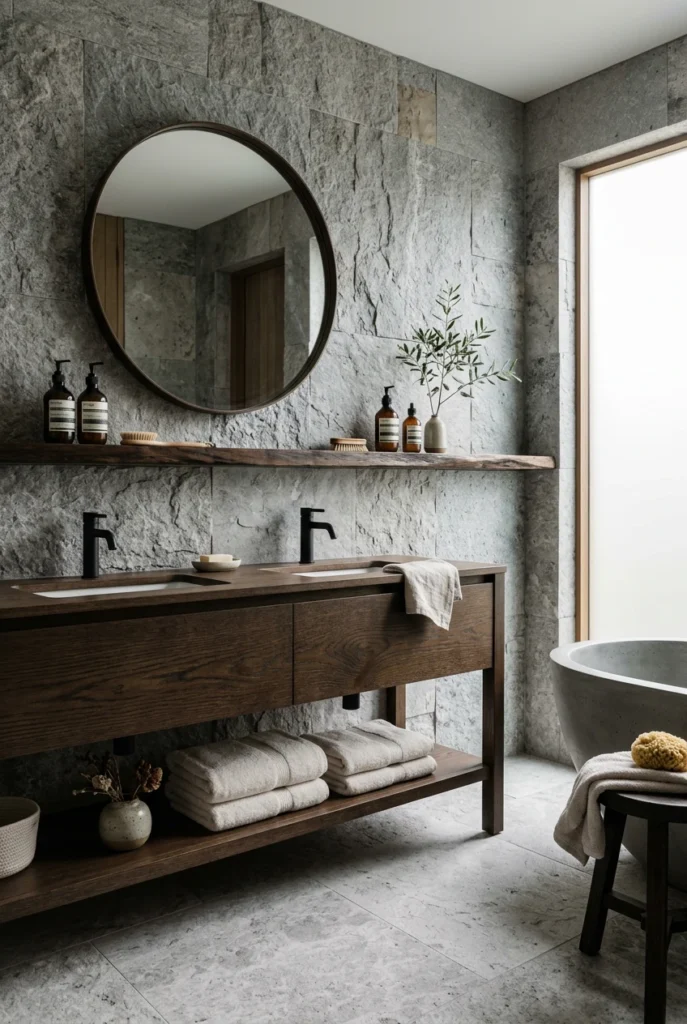
Cool, mineral stone paired with warm wood creates genuine textural contrast that anchors a Japandi bathroom in both halves of its design heritage.
Gray stone tile walls provide a grounded, substantial backdrop for a dark wood vanity and shelf to stand out against.
This pairing works especially well if you want your bathroom to feel both calming and visually rich at the same time. It’s a reliable combination for anyone building a Japandi material story around natural elements.
17. Warm Black and Natural Wood Palette
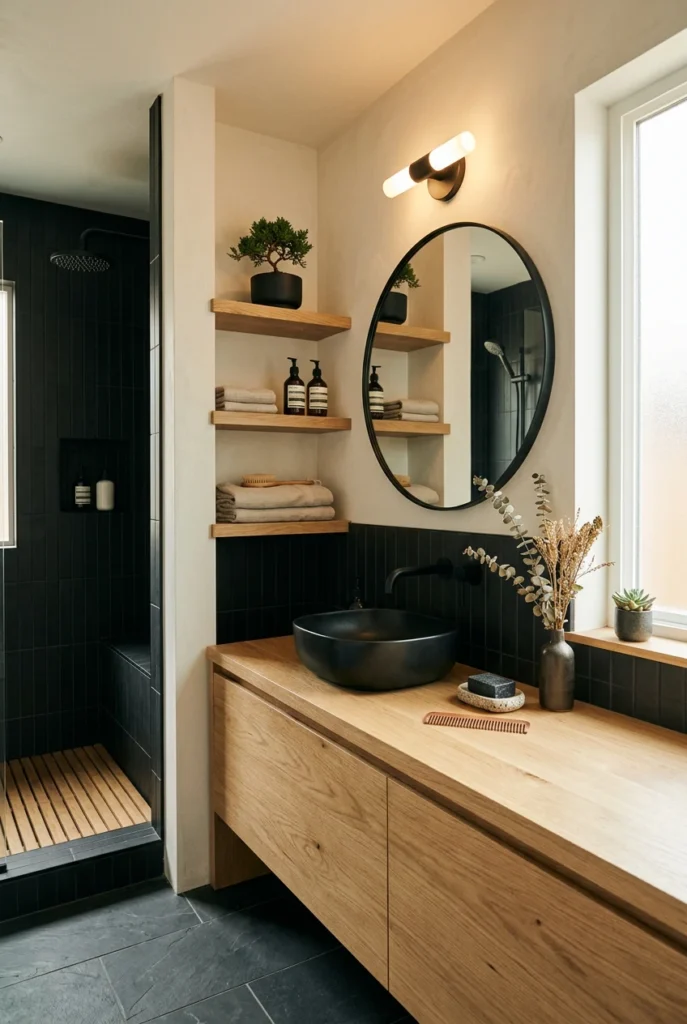
Matte black fixtures and tile paired with unstained natural wood create balanced contrast between cool and warm tones within the same room.
This combination avoids leaning too heavily into either the dark, moody Japanese aesthetic or the pale Scandinavian one, landing somewhere genuinely in between.
Natural wood grain adds organic texture against the black’s graphic solidity. This palette works especially well if you want your Japandi bathroom to feel like a true fusion rather than favoring one influence over the other.
18. Handmade Pottery Vanity Styling
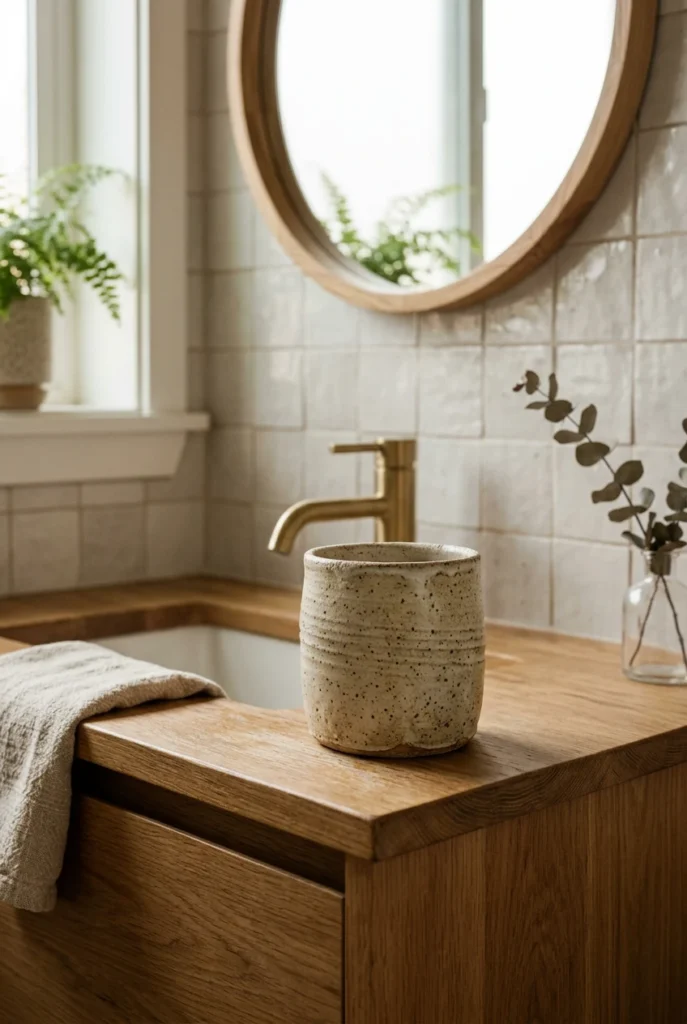
A single handmade ceramic vessel with visible throwing marks and a slightly uneven form brings genuine artisanal character to your vanity countertop.
Leaving these small imperfections visible rather than smoothing them away is a deliberate wabi-sabi choice, not a flaw.
This piece works best as a standalone styling moment rather than competing with other decor.
It’s worth seeking out from a local potter or small maker if you want your Japandi bathroom to feel genuinely handcrafted.
19. Imperfect Glazed Ceramic Accent
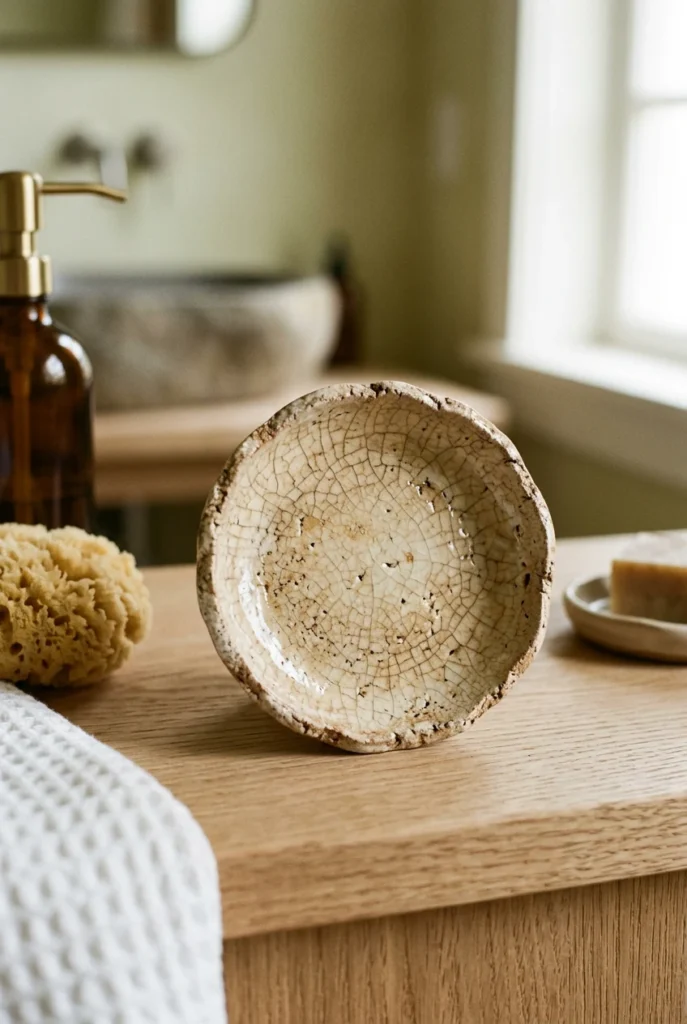
A small dish with an intentionally crackled, uneven glaze embraces visible variation as genuine beauty rather than something to avoid.
This detail embodies wabi-sabi more clearly than almost any other small object you could add to your counter.
Choosing pieces with this kind of organic imperfection over anything uniform or mass-produced reinforces the whole room’s philosophy. It’s a small, affordable way to bring authentic Japandi character into your daily styling.
20. Artisanal Wood Bath Tray
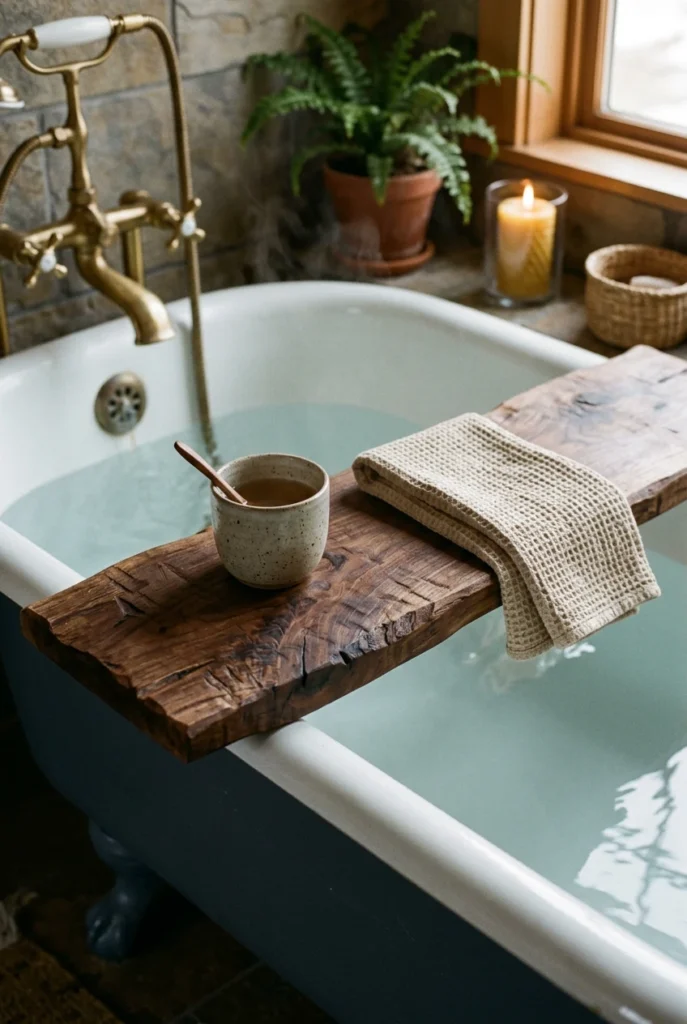
A hand-carved wood tray with visible tool marks and natural grain variation turns a purely functional bath accessory into a genuine craft object.
Positioned across your soaking tub, it holds a ceramic cup and folded linen cloth within easy reach during a long soak.
This detail works especially well paired with a deep wood-clad tub, since both pieces share the same handcrafted sensibility.
It’s worth seeking out artisan-made options rather than mass-produced versions for genuine authenticity.
21. Budget Japandi Bathroom Style
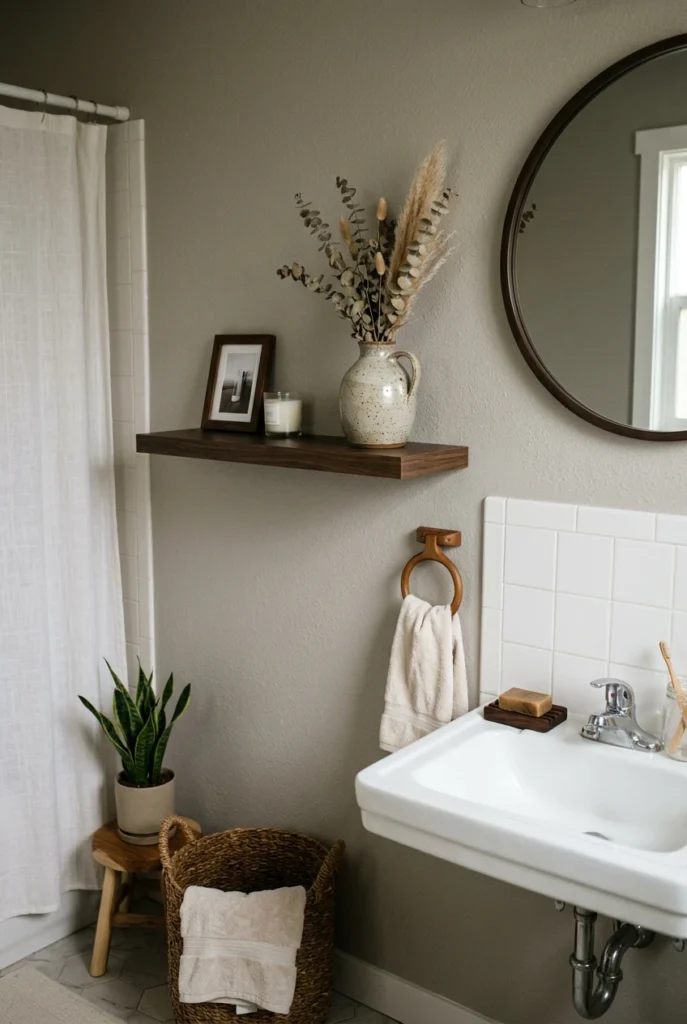
Japandi style doesn’t require a full renovation to come through clearly in a bathroom. Warm gray paint, an affordable dark wood-look shelf, and a single ceramic vessel can get you most of the way there without touching your existing layout.
This approach works especially well if your current fixtures are structurally fine but visually plain. It’s proof that Japandi’s calm, grounded look is achievable on almost any budget with a bit of patience and some thoughtful, low-cost choices.
22. Renter-Friendly Japandi Approach
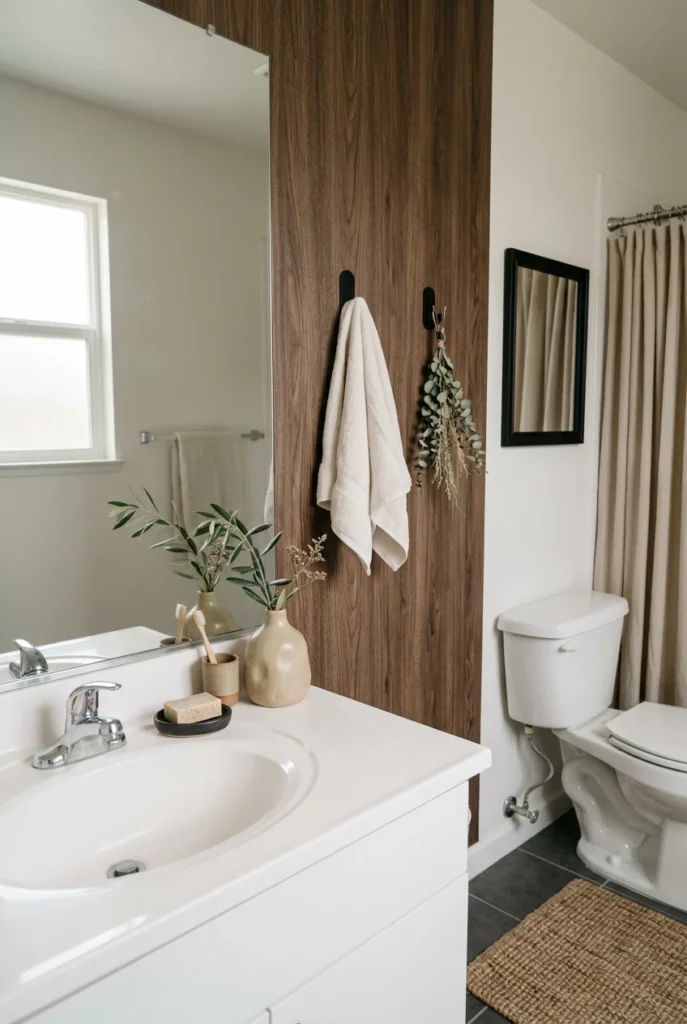
Renters can absolutely achieve Japandi style using entirely removable elements like peel-and-stick dark wood-look wallpaper panels and adhesive hooks. A
small tabletop ceramic piece adds genuine artisanal character without requiring any permanent changes to the space.
This approach means everything can come with you when you eventually move, without leaving any damage behind.
It’s a genuinely effective way to make a rental bathroom feel intentional without risking your security deposit.
23. Balancing Japanese and Scandinavian Elements
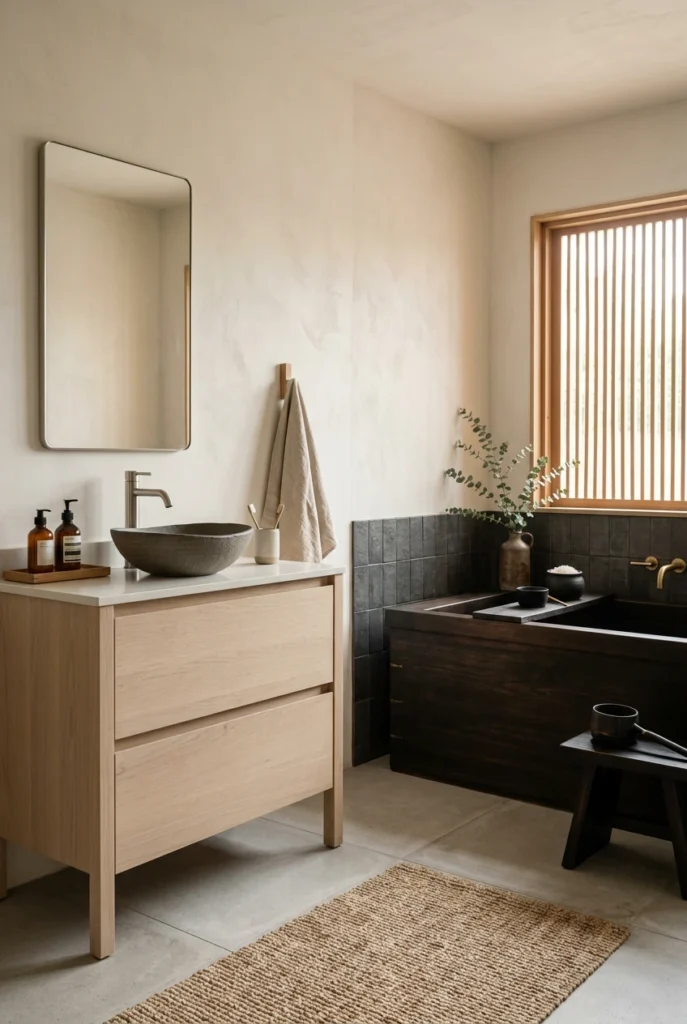
The best Japandi bathrooms genuinely balance both halves of the style rather than letting one dominate completely.
Pairing a pale Scandinavian-style vanity with a darker, asymmetrical Japanese-inspired soaking tub keeps neither influence overpowering the other.
This balance takes a bit more intentional planning than leaning fully into just one aesthetic. It’s worth aiming for this mix if you want your bathroom to feel like genuine Japandi rather than just one style borrowing the other’s name.
24. Avoiding Generic Minimalism in Japandi Design
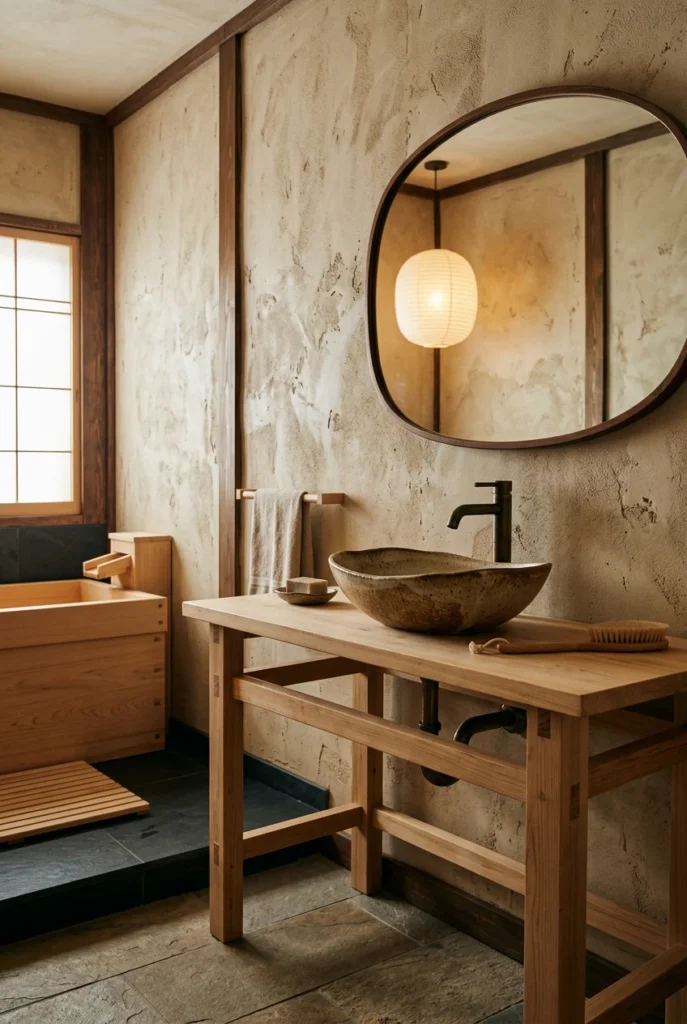
Japandi is often mistaken for simple minimalism, but genuine cultural detail is what actually sets it apart from a plain white space.
Visible wood joinery, an asymmetrical vessel sink, and wabi-sabi textured plaster all signal something more specific and intentional than generic minimalism.
Without these details, a “Japandi” bathroom risks looking like any other pared-back modern space. It’s worth prioritizing at least one or two of these signature details to keep your bathroom genuinely distinctive.
25. Japandi Style for a Plain Builder-Grade Bathroom
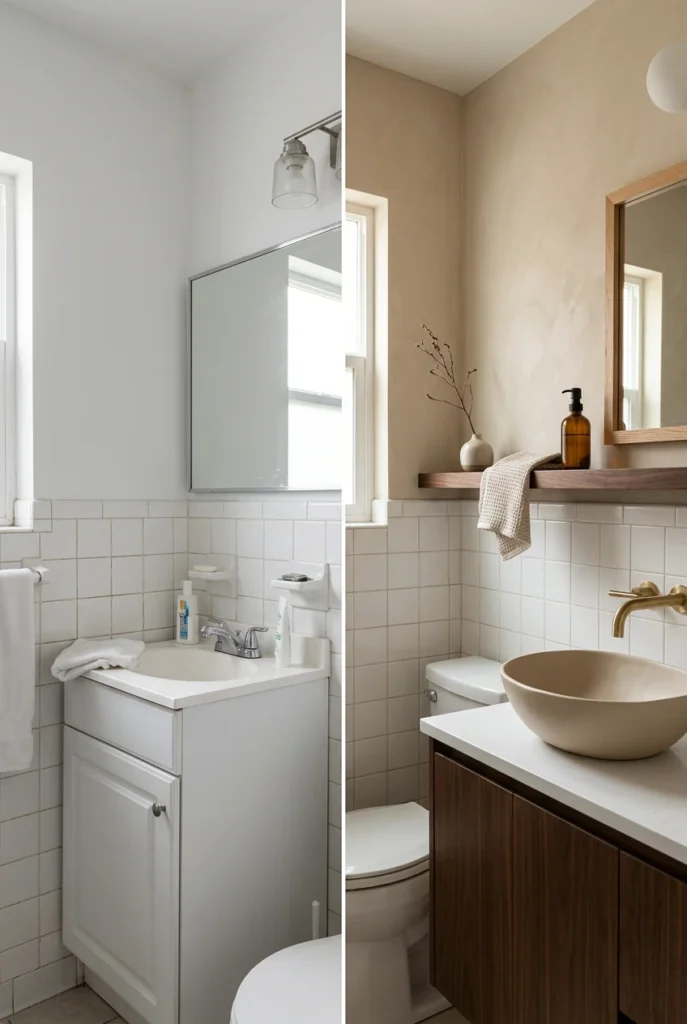
A generic builder-grade bathroom can absolutely become a genuine Japandi space without changing the existing layout or tile.
Adding a dark wood shelf, an asymmetrical ceramic vessel, and warm plaster-look paint can shift the whole feel dramatically.
This approach proves that Japandi style is achievable even when you’re working within someone else’s original design decisions. It’s a great starting point if a full renovation isn’t in your current budget or plans.
From dramatic dark palettes to quiet wabi-sabi textures, there’s a Japandi bathroom style here for nearly every taste and budget.
Pick the direction that feels most balanced to you, then start layering in the materials and details that bring genuine character to the space.
Pin your favorites now so you have real style direction ready when your own Japandi bathroom project gets underway.