


A wood vanity brings genuine warmth and character to a bathroom, but choosing the right species, finish, and construction matters just as much as the overall style.
These 25 ideas cover everything from wood type and sourcing to finish direction and practical humidity protection, so you’ll have real guidance whether you’re shopping for a new vanity or building your own.
Save your favorites and start picturing which wood species and finish actually fit your bathroom.
1. Modern Wood Vanity Design

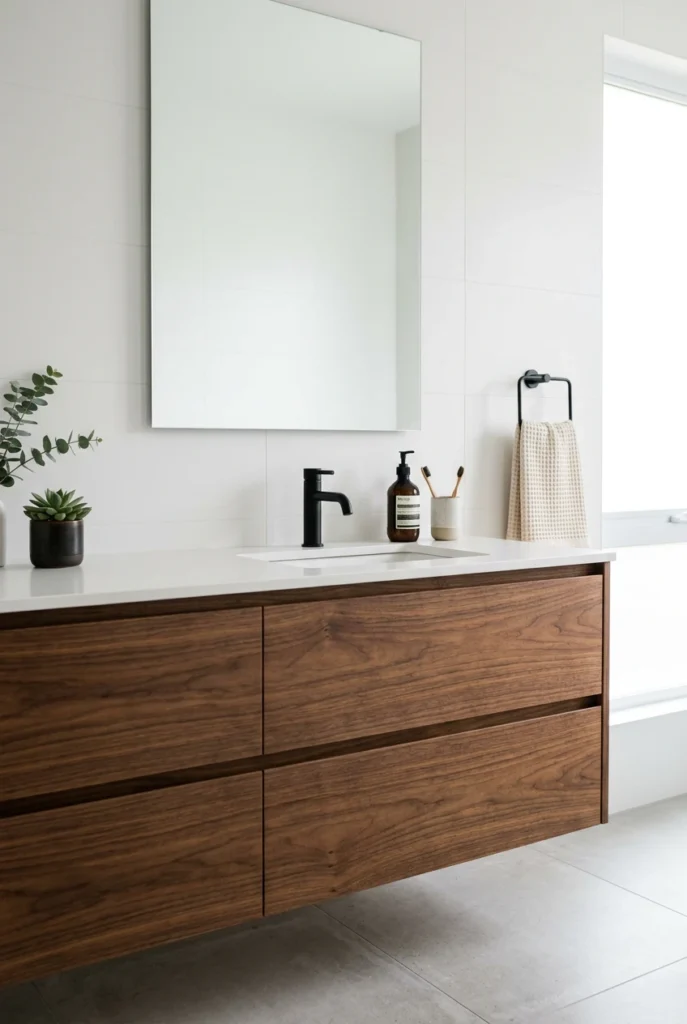
A flat-panel walnut vanity with no visible hardware gives your bathroom clean, architectural lines while still bringing genuine warmth through the wood grain.
A white quartz countertop keeps the overall look bright, letting the walnut’s rich tone stand out clearly. Matte black fixtures add just enough contrast without competing with the wood.
This style works especially well if you want warmth without straying into anything too rustic or heavily textured.
2. Rustic Wood Vanity Style
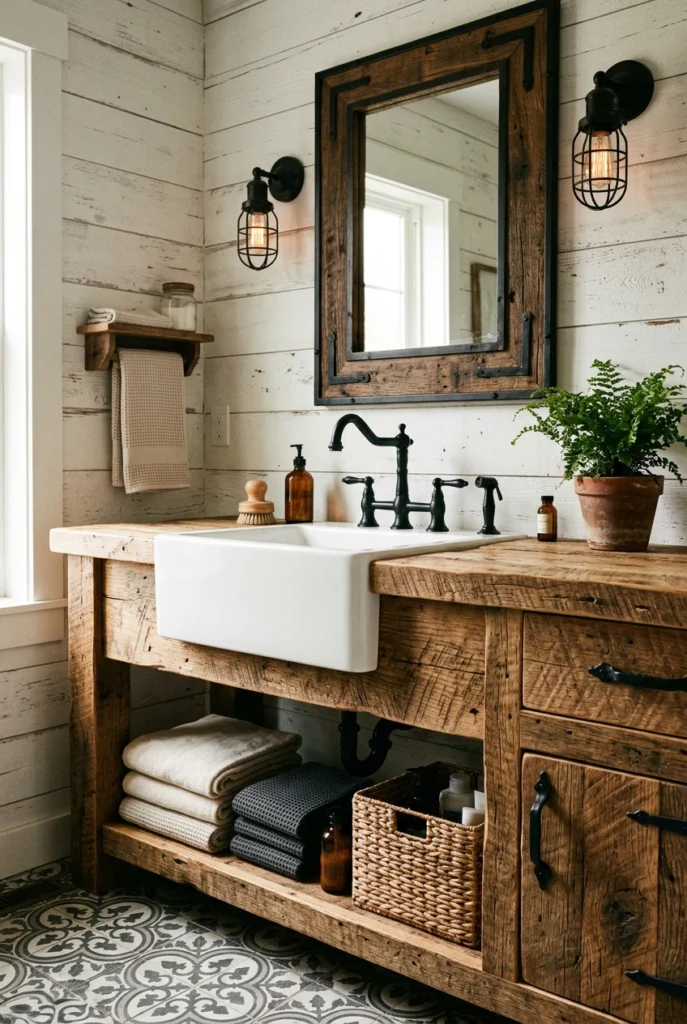
A chunky vanity with visible saw marks and rough-hewn texture brings genuine farmhouse character that manufactured cabinetry simply can’t replicate.
Black iron hardware and a white apron sink reinforce the same handcrafted, collected feeling. This style works especially well against white shiplap, where the raw wood grain really gets to shine.
It’s a great choice if you want your vanity to feel like a genuine piece of furniture rather than a standard cabinet.
3. Mid-Century Wood Vanity Look
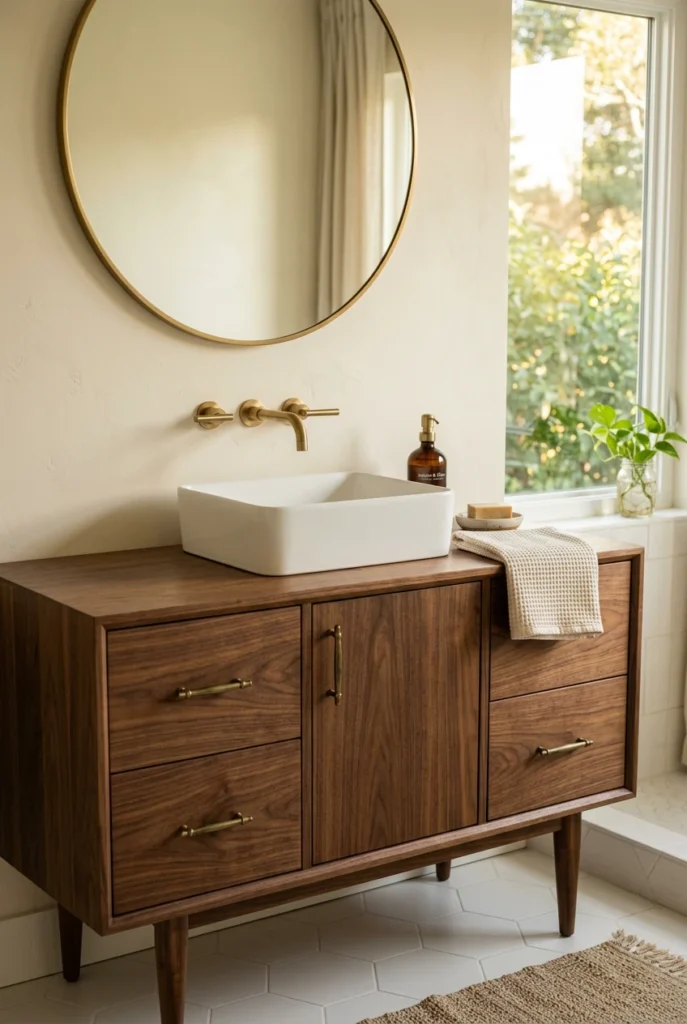
Tapered wooden legs and a sleek rectangular silhouette instantly signal mid-century design, even before you notice the brass hardware.
This vanity style reads as furniture rather than built-in cabinetry, giving your bathroom a distinct, era-inspired character.
A simple white vessel sink keeps the overall look from feeling overly retro or costume-like. This style works especially well if you already love mid-century design elsewhere in your home.
4. Scandinavian Wood Vanity Design
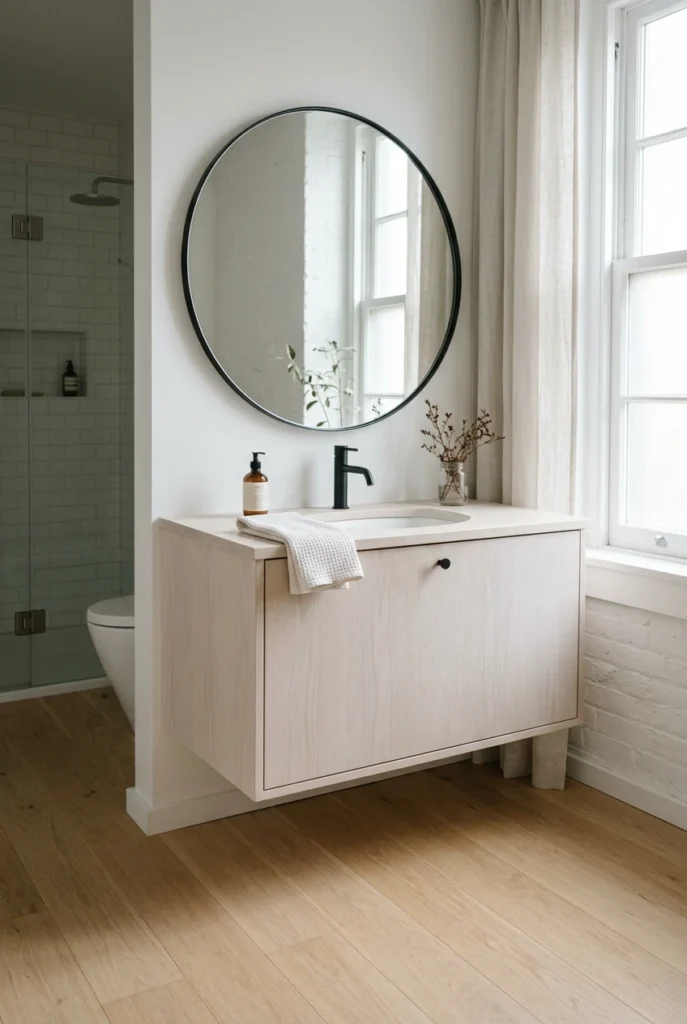
Pale, whitewashed oak keeps this vanity feeling calm and understated, exactly in line with Scandinavian design’s quieter sensibility.
Simple straight lines avoid any unnecessary ornamentation, letting the wood’s natural grain do the visual work.
A single thin black faucet adds just enough contrast without disrupting the overall simplicity. This style works especially well if you want warmth without any heavy or dark wood tones.
5. Industrial Wood Vanity Style
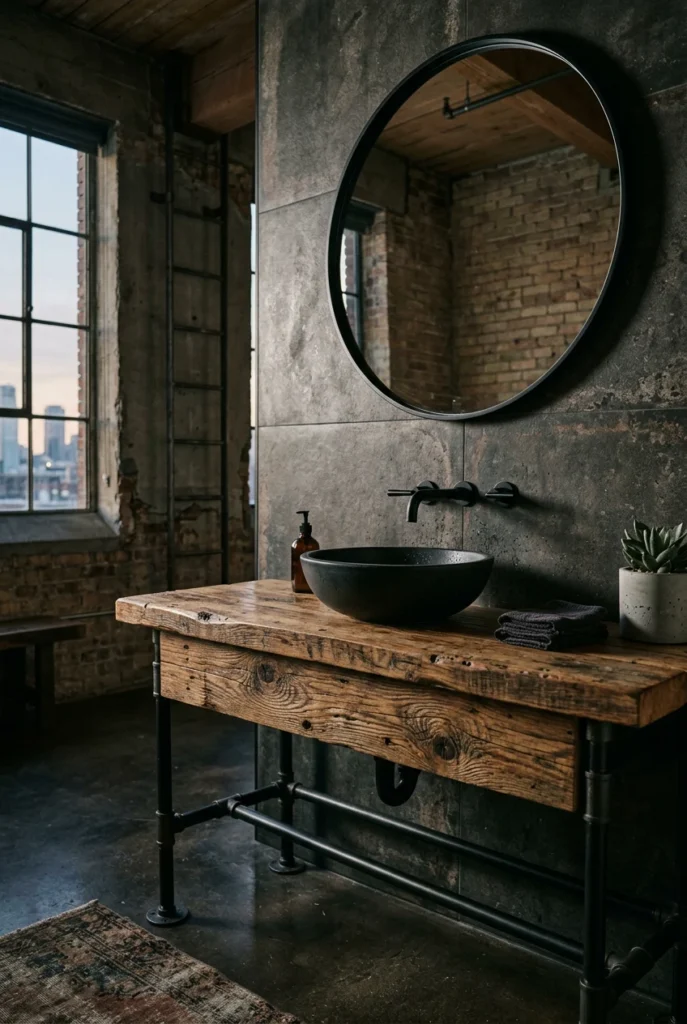
Reclaimed wood with visible knots and grain variation gives this vanity genuine converted-loft character, especially paired with black steel pipe legs. A matte black vessel sink continues the same raw, industrial theme throughout the piece.
This combination works especially well against dark concrete-look tile, where the moody materials play off each other nicely. It’s a bold choice if the rest of your bathroom already leans toward raw, unfinished surfaces.
6. Small Bathroom Wood Vanity
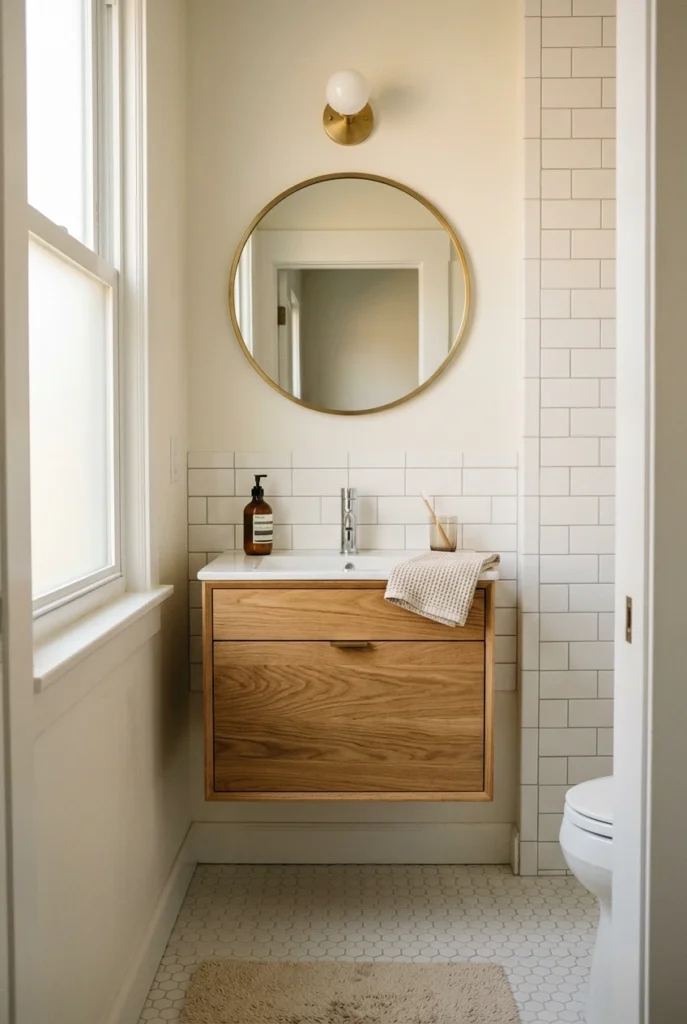
A slim wood vanity brings genuine warmth to a small bathroom without needing much floor space at all.
Choosing a compact profile keeps the piece from overwhelming the room’s limited square footage while still delivering real wood character.
A simple round mirror overhead keeps the styling minimal so the vanity itself stays the clear focal point. This is a great reference if your bathroom is on the smaller side but you still want authentic wood warmth.
7. Primary Bathroom Wood Vanity
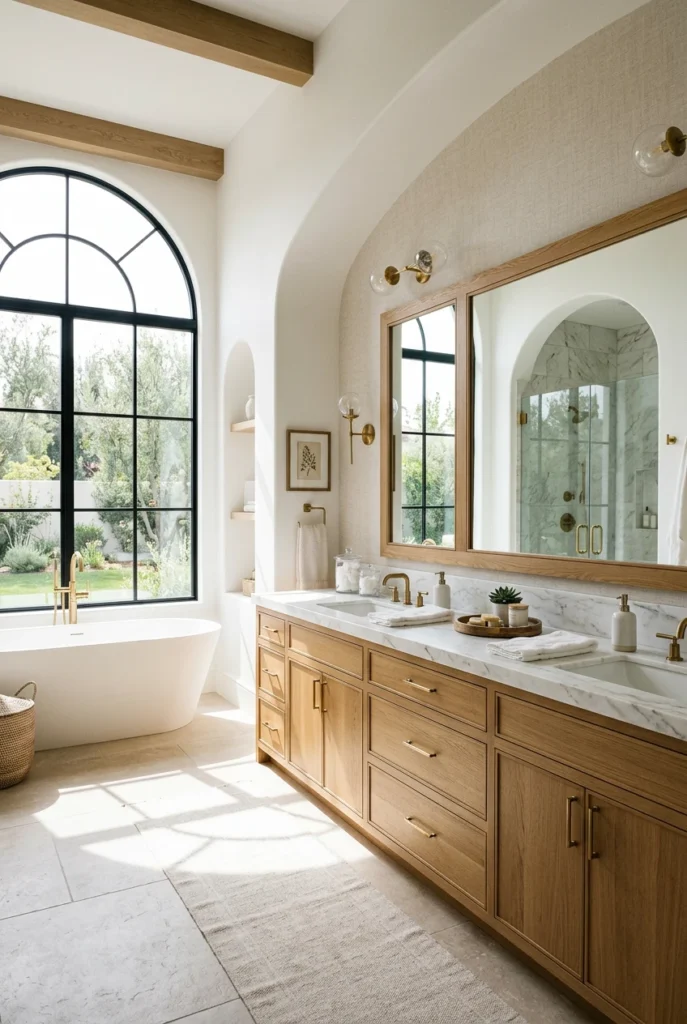
A long wood vanity gives you generous countertop space while still feeling warm and grounded rather than purely functional.
Warm oak cabinetry paired with a wide marble top creates a genuinely elevated look for your primary bathroom.
Large-format tile flooring beneath keeps the whole room feeling cohesive and spacious. This is worth prioritizing if you’re planning a full primary bathroom renovation and want both function and real material warmth.
8. Powder Room Wood Vanity
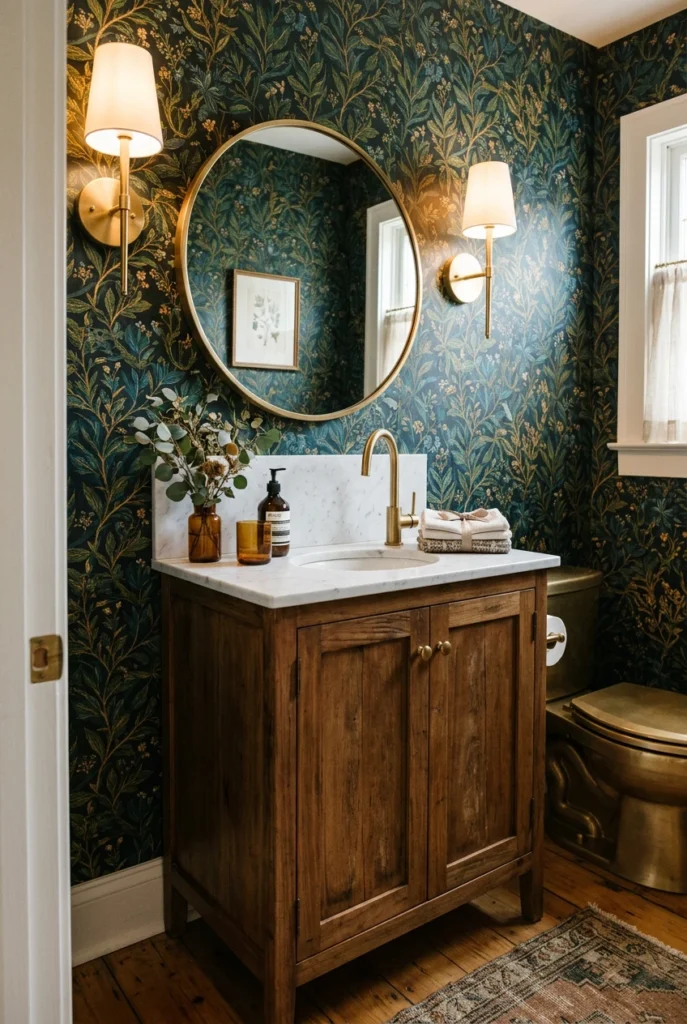
A petite wood vanity suits a small powder room perfectly, bringing genuine warmth into a space that’s often overlooked in terms of material choice. A slim marble top and single sink provide just enough function for occasional guest use.
Pairing it with bold wallpaper lets the vanity stay simple while the wall does the visual heavy lifting. This is a great choice if you want your powder room to feel boutique despite its modest size.
9. Double Wood Vanity Design
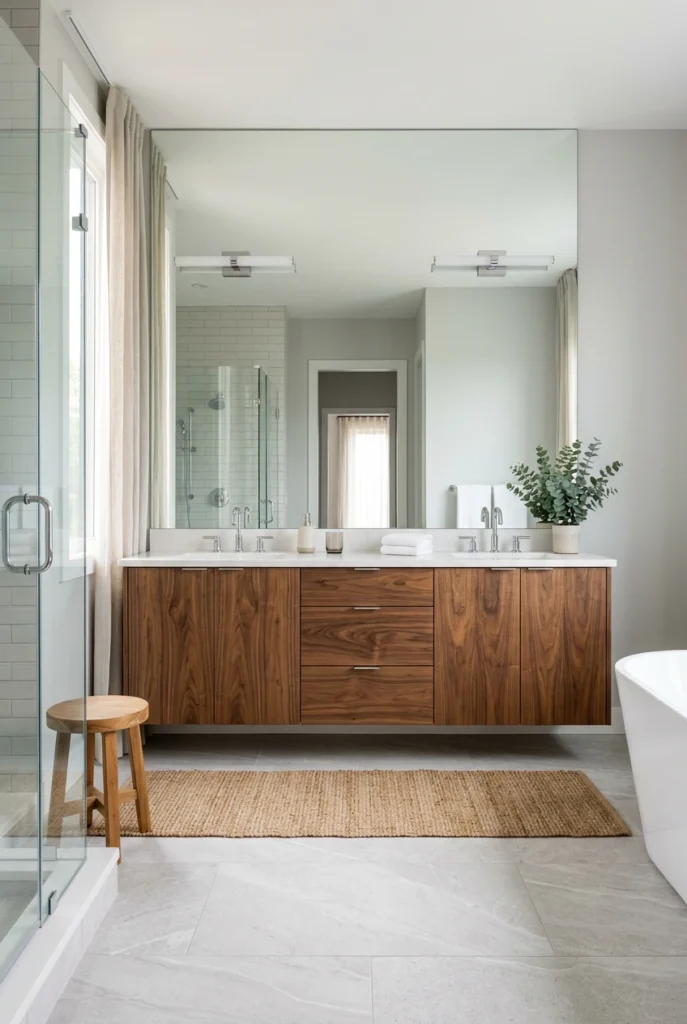
A wide double vanity in warm walnut gives two people their own sink while showcasing genuine wood grain across a larger surface area.
This scale works especially well in a primary suite, where the bigger footprint lets the wood’s natural character really stand out.
Large-format tile flooring beneath keeps the whole space feeling cohesive despite the vanity’s substantial size. This is a smart choice if you want wood warmth without sacrificing double-sink function.
10. Rich Walnut Vanity Grain
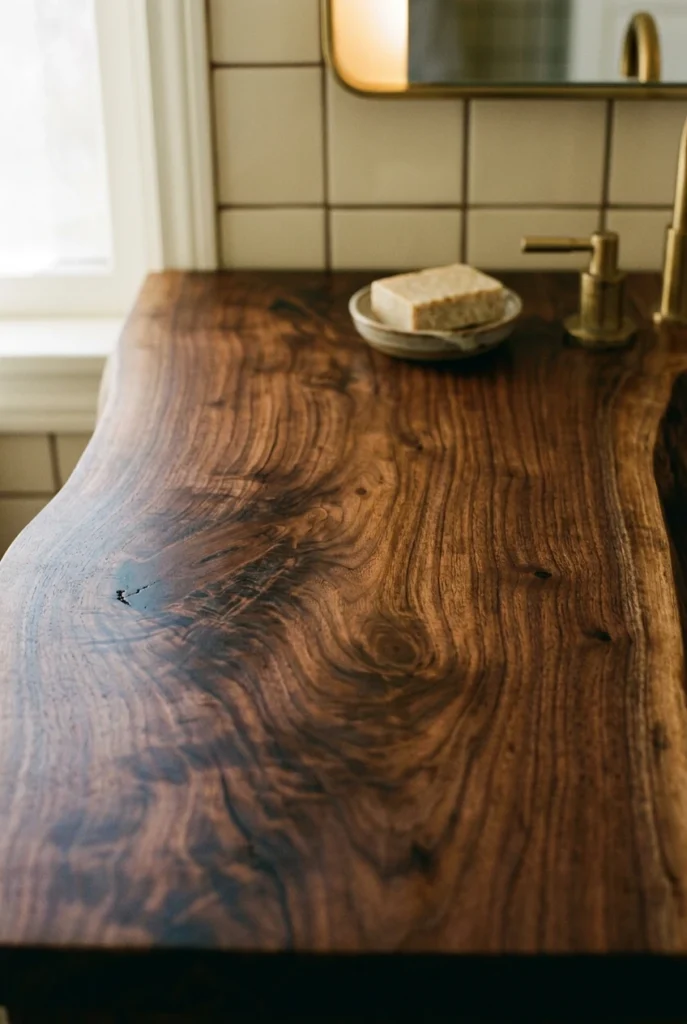
Walnut brings a deep chocolate tone and dramatic swirling grain that few other wood species can match, making it a genuine statement material even without any additional styling.
This wood naturally darkens and develops richer character over time with use. Choosing walnut works especially well if you want your vanity to feel like a genuine investment piece rather than a standard cabinet. It’s one of the most visually striking wood options available for bathroom furniture.
11. Classic White Oak Vanity
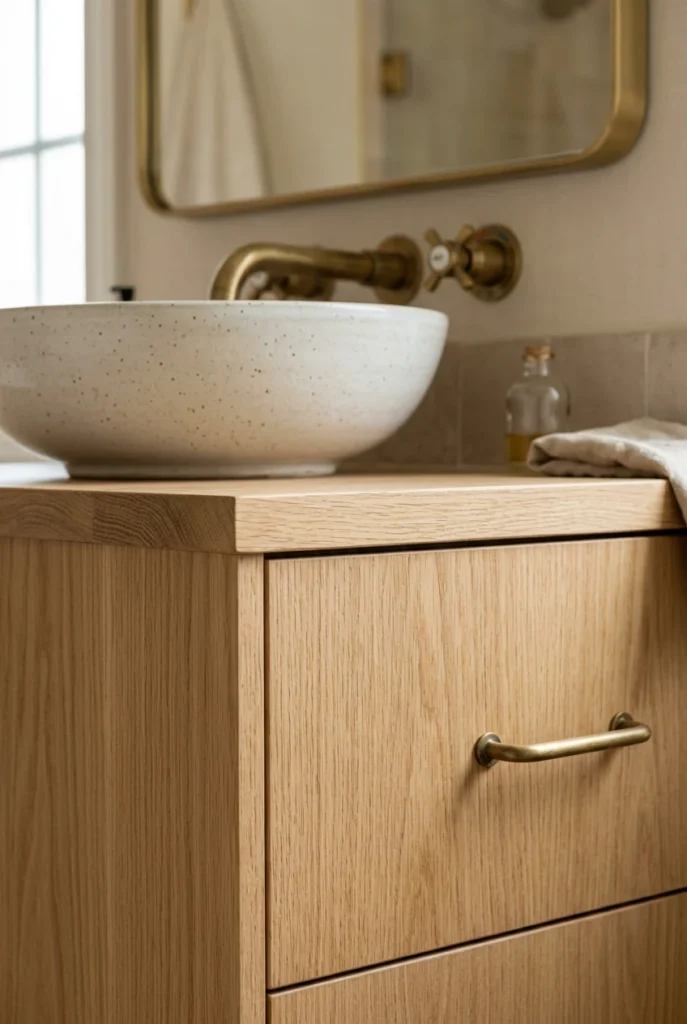
White oak brings a light golden-brown tone and distinctive straight grain that feels timeless rather than trendy.
This wood species pairs well with nearly any bathroom style, from modern to traditional, since its character is genuinely versatile.
Oak also holds up well structurally over time, making it a practical choice beyond just its classic good looks. This is a reliable option if you want real wood character without committing to anything too bold or dramatic.
12. Warm Teak Wood Vanity
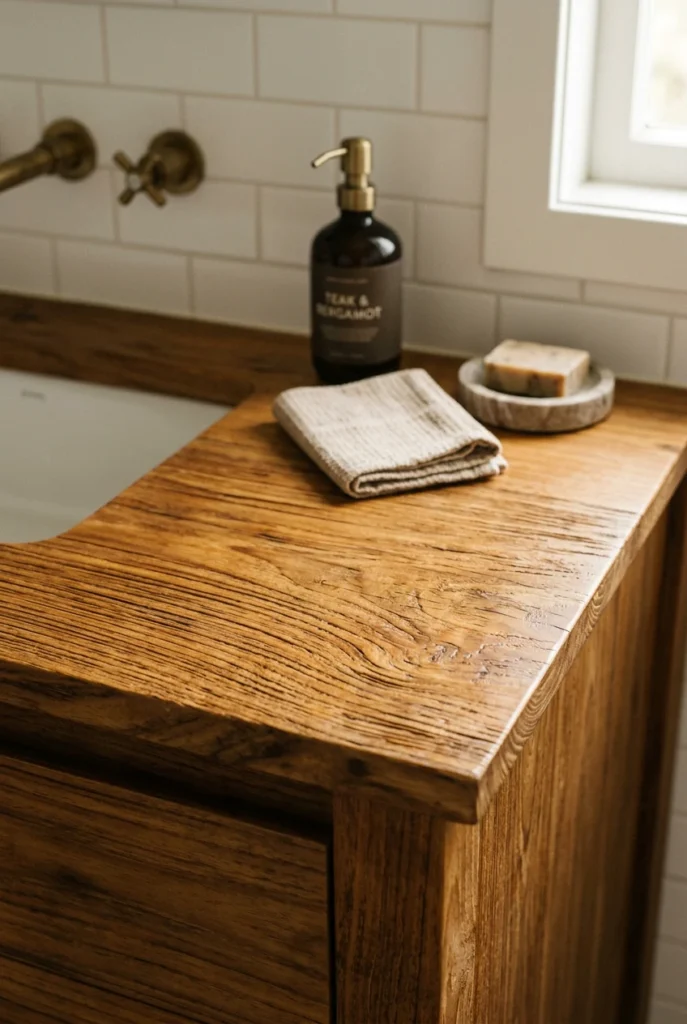
Teak brings genuine natural water resistance thanks to its dense grain and natural oils, making it one of the smartest wood choices for a genuinely humid bathroom environment.
Its rich amber tone adds real warmth without needing heavy staining or finishing. This wood requires less maintenance than many other species specifically because of its built-in moisture resistance. It’s worth the investment if durability matters as much to you as the wood’s visual appeal.
13. Bold Mahogany Vanity Detail
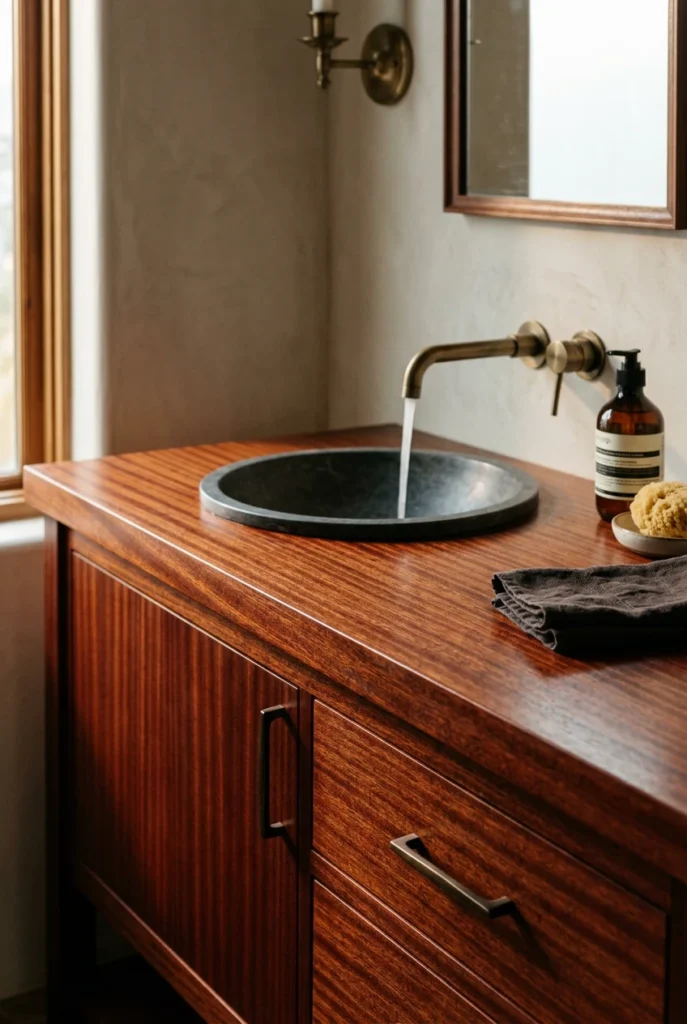
Mahogany brings a bold, reddish-brown color and fine, straight grain that reads as genuinely luxurious without needing any additional embellishment.
This wood species has long been associated with fine furniture, and that same quality translates beautifully into a bathroom vanity.
Its rich, saturated tone works especially well in a more traditional or formal bathroom setting. This is a great choice if you want your vanity to feel like a genuine heirloom piece.
14. Reclaimed Wood Vanity Character
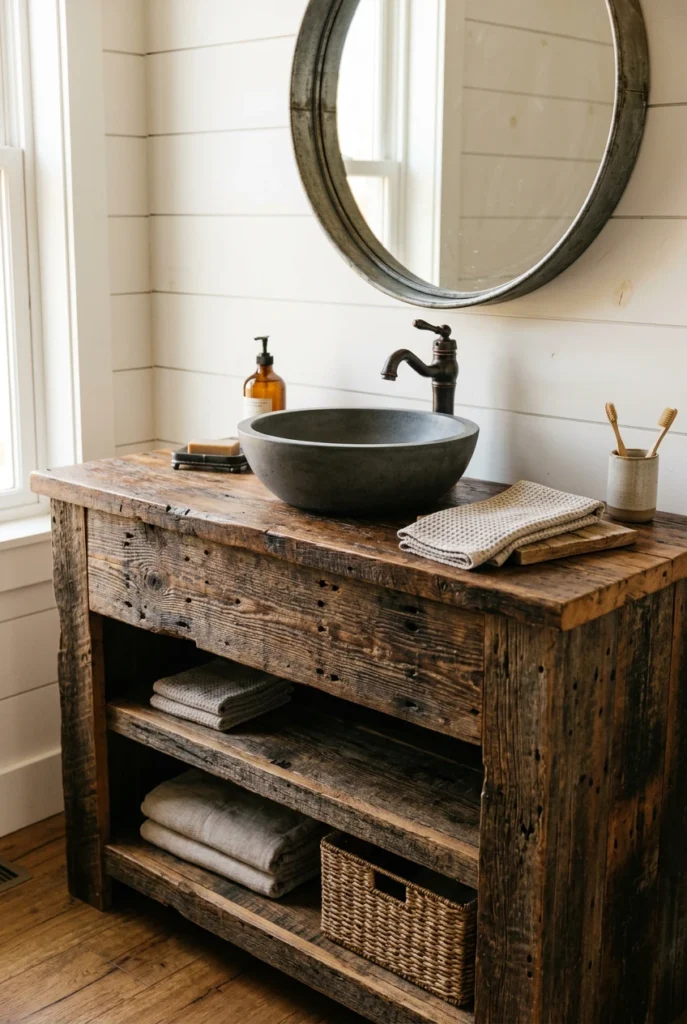
Genuinely reclaimed barn wood brings visible nail holes, weathering, and natural color variation that new lumber simply can’t replicate authentically. Every board carries its own history, meaning no two reclaimed wood vanities ever look quite the same.
This option works especially well if you want your vanity to feel collected and storied rather than freshly manufactured.
It’s worth sourcing from a reputable reclaimed lumber supplier to ensure the wood has been properly treated and stabilized.
15. Live-Edge Wood Vanity Slab
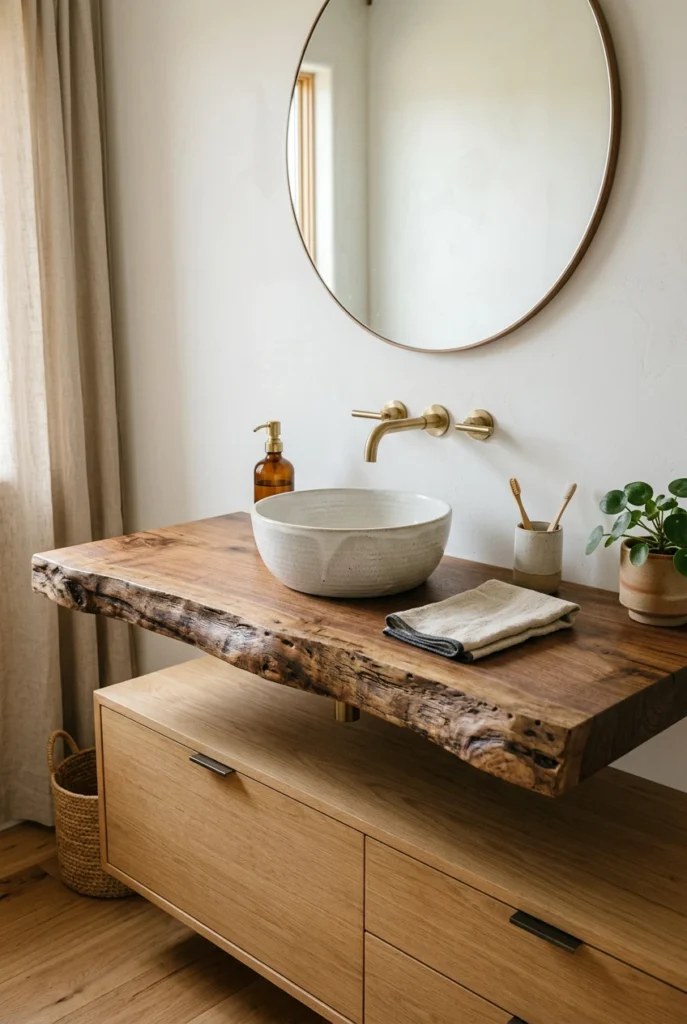
A live-edge countertop showcases the tree’s natural, organic boundary rather than a straight, manufactured line, turning your vanity into genuine functional art.
This style works beautifully paired with a simple wood cabinet base, letting the dramatic top take center stage.
Every slab is unique, so no two live-edge vanities ever look quite the same. It’s a great choice if you want your vanity to feel like a genuinely one-of-a-kind statement piece.
16. Visible Dovetail Joinery Detail
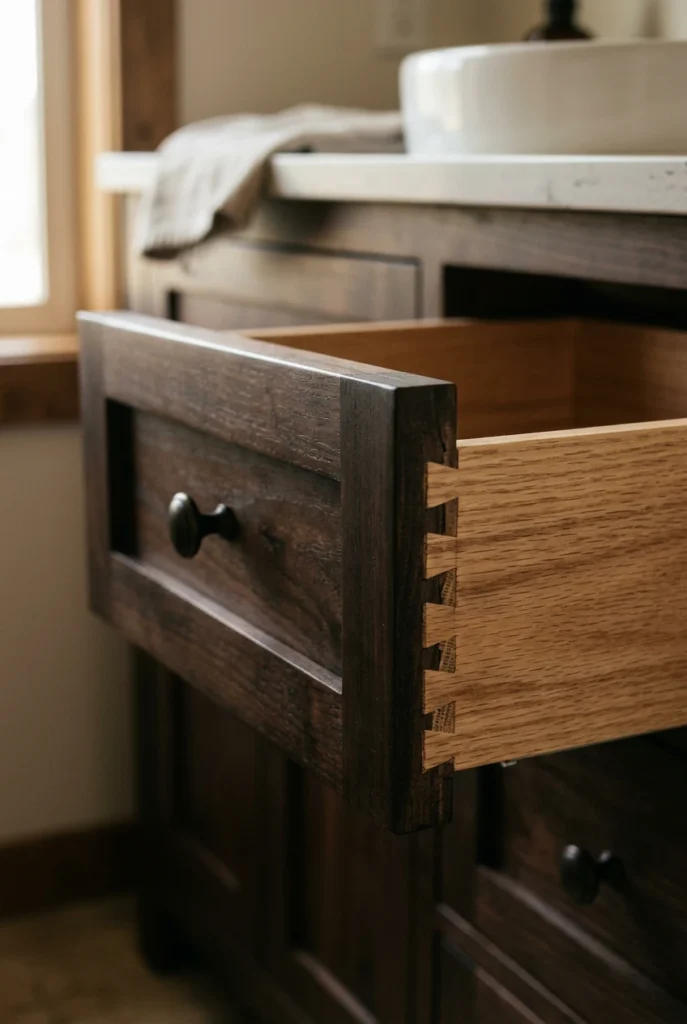
Leaving traditional dovetail joinery exposed rather than hidden celebrates the craftsmanship behind your vanity instead of concealing it.
Interlocking joints at the drawer corners become a genuine design detail rather than something to disguise with trim or paint.
This detail requires working with a skilled woodworker familiar with traditional joinery techniques, so it’s not a simple retrofit. It’s worth the investment if you want your vanity to feel genuinely handcrafted rather than mass-produced.
17. New-Cut Clean Wood Vanity
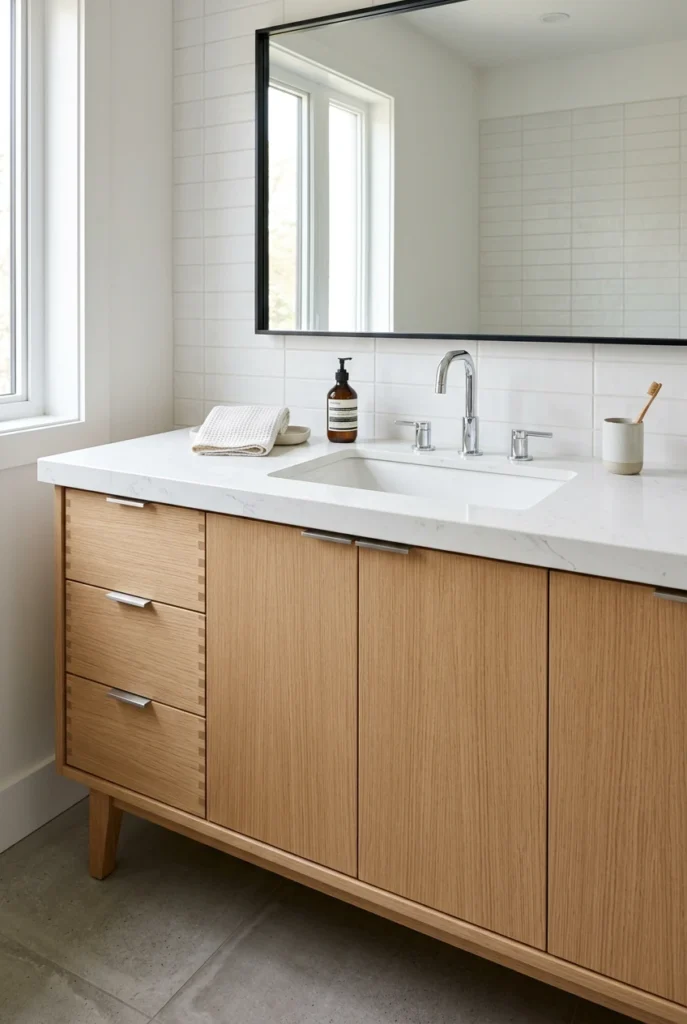
Freshly milled new-cut wood offers crisp, uniform grain and consistent color that reclaimed or aged material simply can’t provide.
This option works especially well if you want the warmth of real wood without the visual variation and imperfections that come with reclaimed lumber.
A clean, precise finish feels distinctly different from the collected, weathered character of older wood. It’s a great choice if you prefer a more polished, predictable look for your vanity.
18. Dark Stained Wood Vanity
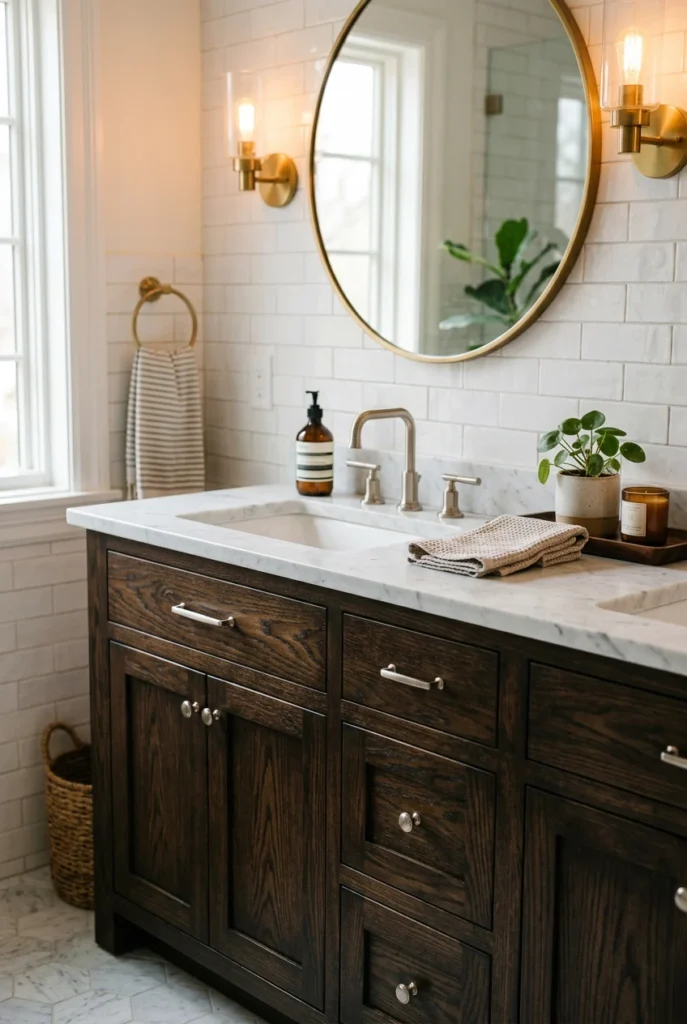
A deep espresso stain adds genuine richness while still letting the wood’s natural grain pattern show through beneath the finish.
This combination gives you the drama of a dark vanity without losing the organic texture that makes wood feel warm in the first place.
Pairing it with a white marble countertop creates striking contrast between the two materials. This finish works especially well if you want your vanity to feel bold and grounded rather than light and airy.
19. Whitewashed Wood Vanity Finish
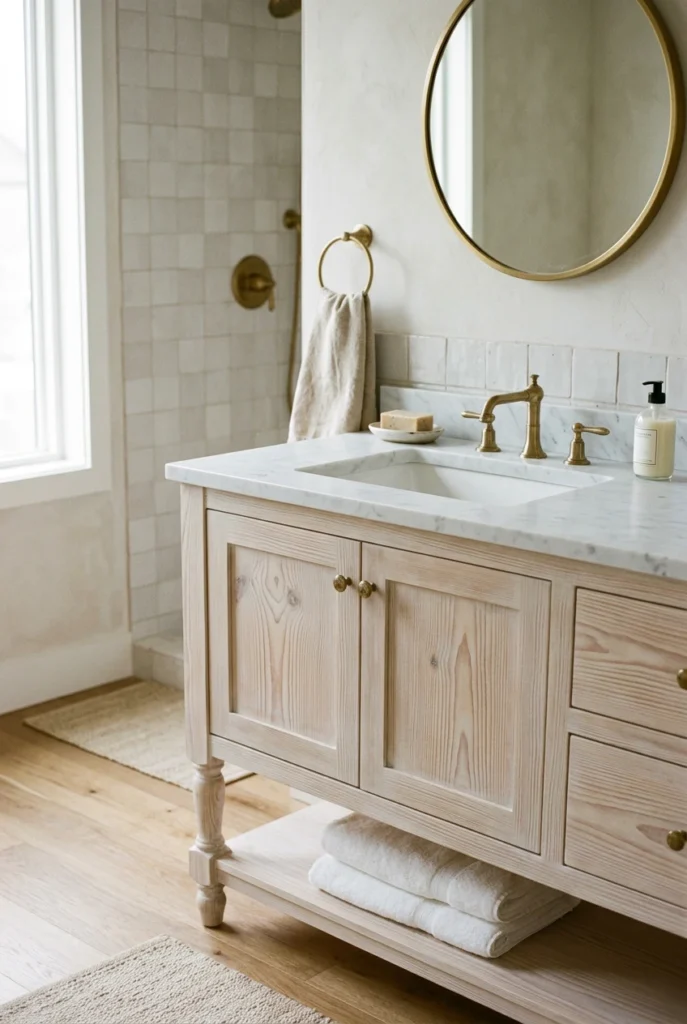
A whitewashed finish lets the wood grain remain visible beneath a light, translucent white wash, striking a genuine balance between painted and natural wood.
This technique brings a soft, weathered quality that feels distinctly different from either a fully painted vanity or an untreated one.
It works especially well if you love the texture of real wood but want a brighter, airier overall look. This finish requires some skill to apply evenly, so it’s worth practicing on a scrap piece first.
20. Natural Raw Wood Vanity
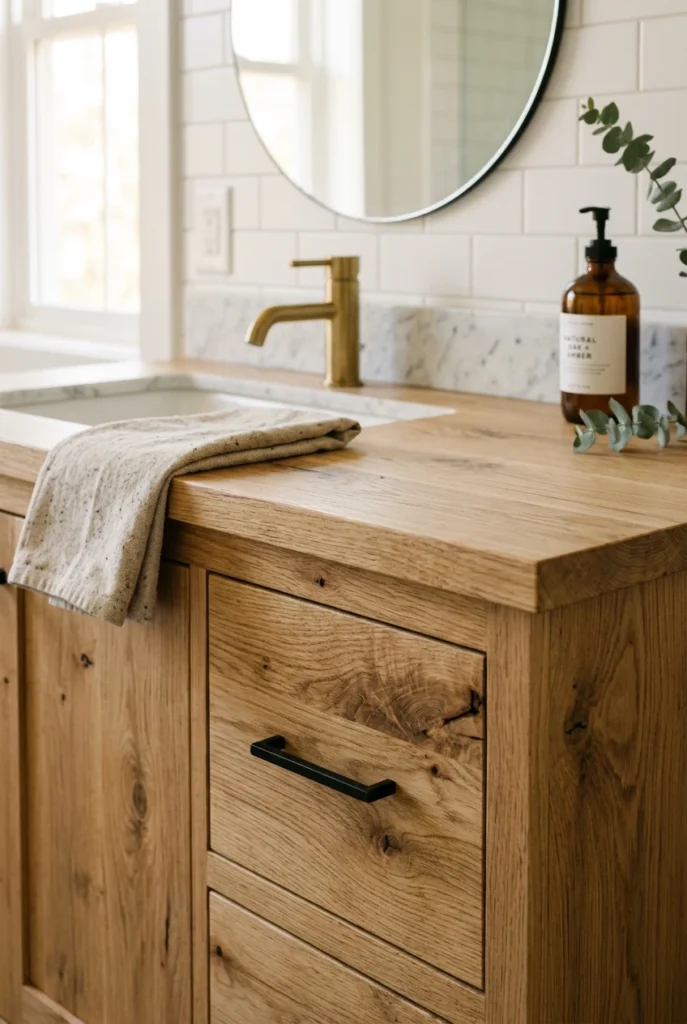
Leaving your vanity in its natural, unstained state showcases the wood’s true original color and grain without any added color manipulation.
A clear protective sealant still provides genuine moisture protection while keeping the wood’s authentic appearance intact.
This approach works especially well if you love the specific tone of your chosen wood species and don’t want to alter it. It’s the most honest way to showcase real wood character in your bathroom.
21. Matte Sealed Wood Finish
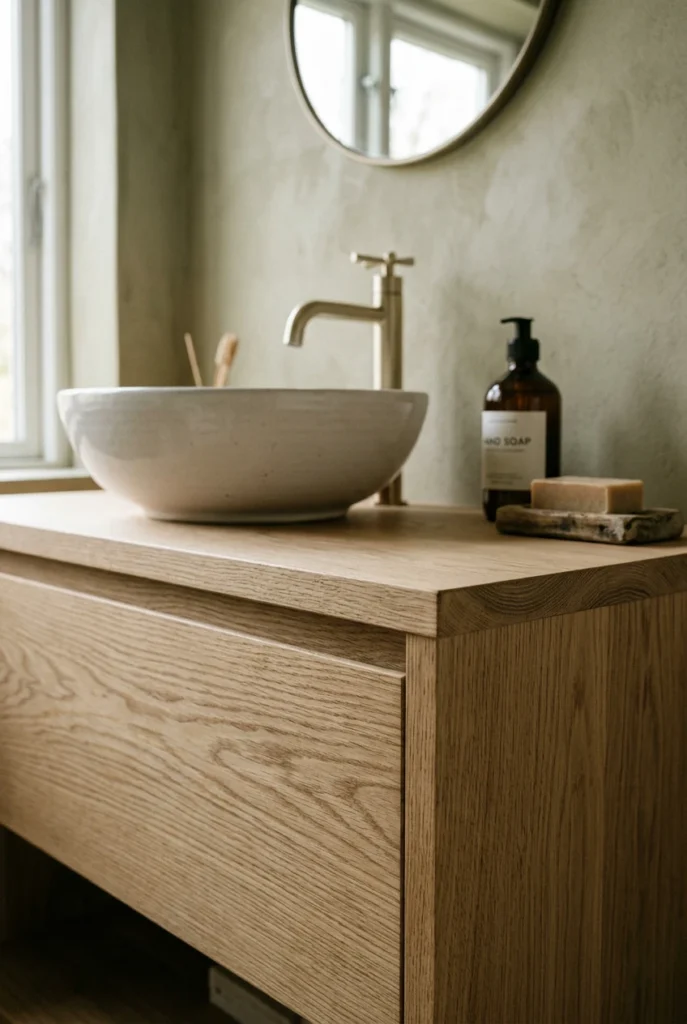
A matte sealant keeps your wood vanity’s grain clearly visible without introducing any glossy sheen or reflection.
This finish tends to feel more understated and natural compared to a high-gloss lacquer, letting the wood itself remain the visual focus.
Matte finishes also tend to hide water spots and fingerprints better than glossy alternatives, making them a genuinely practical choice for daily use. This is worth considering regardless of which wood species or stain color you choose.
22. Wood Vanity with Stone Top
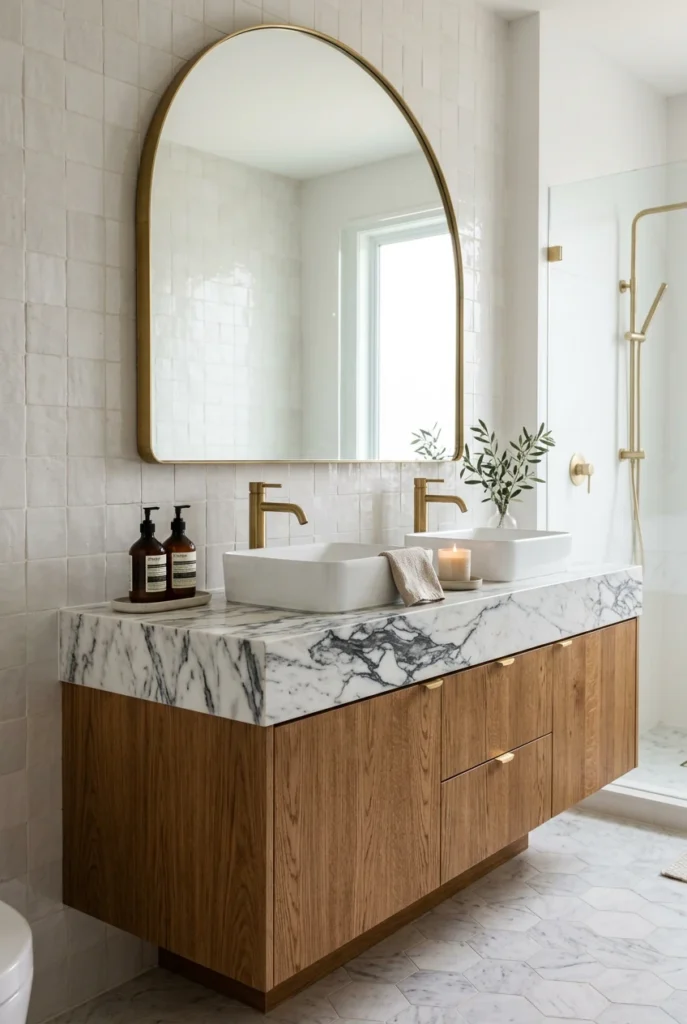
Pairing a warm wood cabinet base with a dramatic marble countertop creates genuine visual contrast between organic grain and cool stone veining.
This combination lets both materials shine without competing for attention, since each brings a distinctly different texture and character.
Marble adds a level of elevation that wood alone can’t achieve, while the wood keeps the overall look from feeling too formal or cold.
This pairing works especially well if you want your vanity to feel both warm and genuinely luxurious.
23. Wood-on-Wood Vanity Pairing
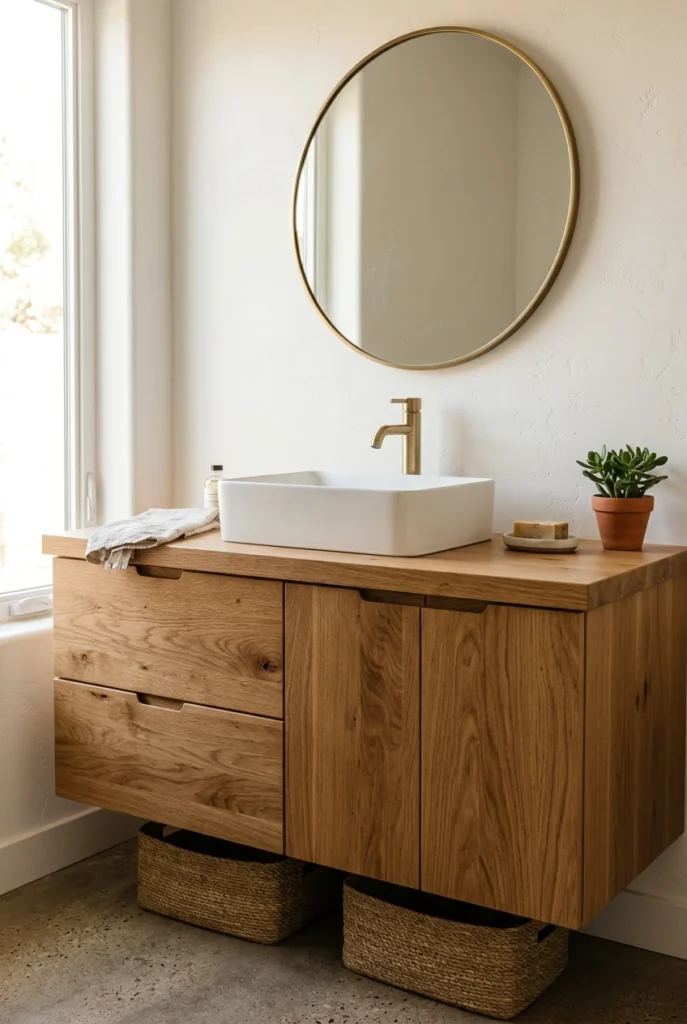
Matching your countertop to your cabinet base in the same wood tone creates a fully cohesive, uninterrupted material story throughout the entire vanity.
This approach lets the wood’s natural grain flow visually from top to bottom without any material transition to interrupt it.
This combination works especially well if you want your vanity to read as one sculptural piece rather than separate parts assembled together.
It’s a great choice for anyone who wants their bathroom to feel genuinely grounded in natural materials.
24. DIY Wood Vanity Build
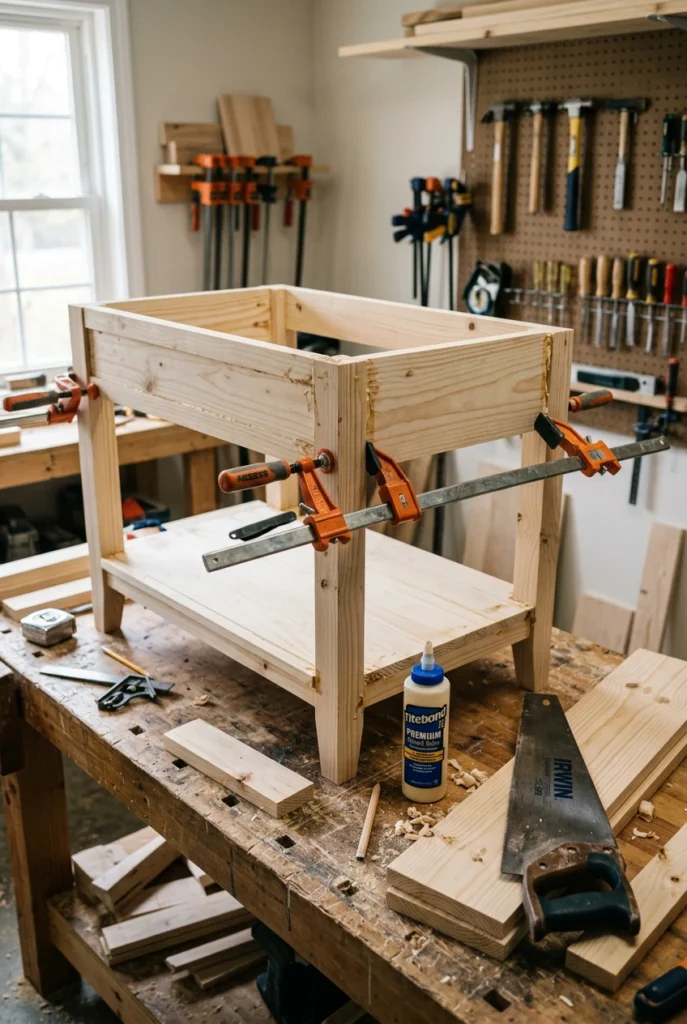
Building your own wood vanity is a genuinely ambitious project, but one that’s achievable with the right tools and some patience.
Basic supplies like wood boards, a saw, wood glue, and clamps are really all you need to get started on a simple design.
This approach lets you customize the exact dimensions and wood species to fit your specific bathroom and preferences.
It’s worth researching proper sealing techniques before you begin, since a bathroom vanity needs genuine moisture protection to last.
25. Protecting Wood Vanities from Humidity
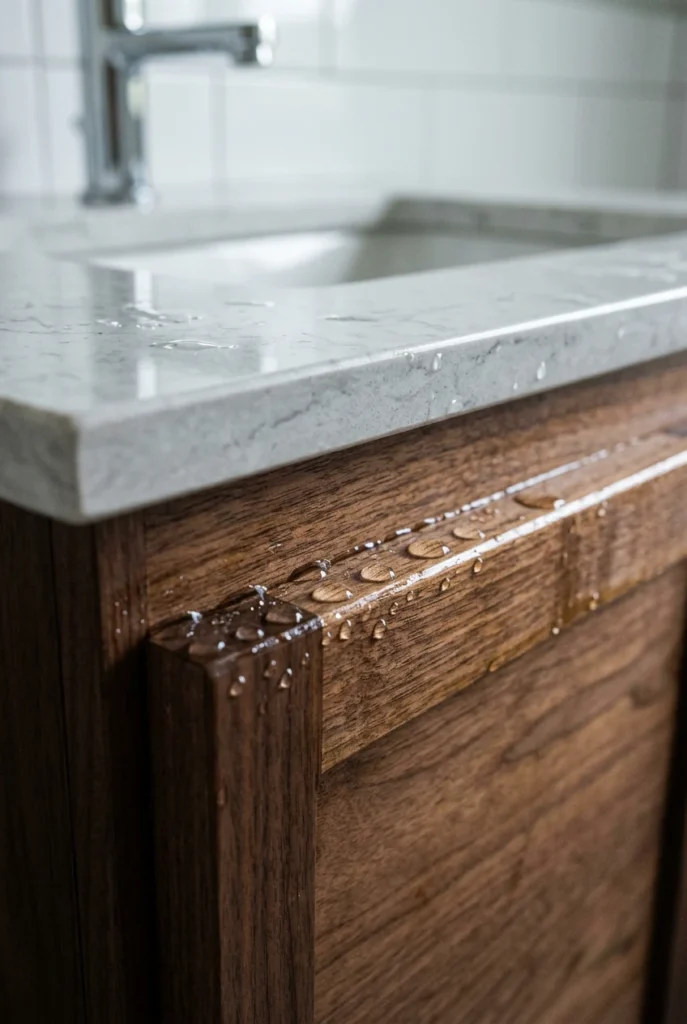
A quality protective sealant is essential for any wood vanity in a bathroom, since humidity and moisture can warp or damage unprotected wood over time.
Water beading on the surface rather than absorbing into the material is a good sign that your sealant is doing its job effectively.
This protection needs periodic reapplication depending on the product and how much moisture exposure your bathroom sees. It’s worth investing in proper sealing regardless of which wood species or finish you ultimately choose.
Whether you’re drawn to rich walnut grain or a simple whitewashed finish, there’s a wood vanity idea here for every style and practical need.
Start by considering your wood species and protection needs before narrowing down finish and pairing choices.
Pin your favorites now so you have real reference points ready when you’re ready to bring genuine wood warmth into your own bathroom.