


A floating vanity does more than just look sleek — it can genuinely change how spacious and easy to clean your bathroom feels day to day.
These 30 ideas cover everything from style and material choices to storage configurations and real installation considerations, so you’ll have genuine guidance before making a decision.
Save your favorites and start picturing how a floating vanity could work in your own bathroom.
1. Modern Floating Vanity Design

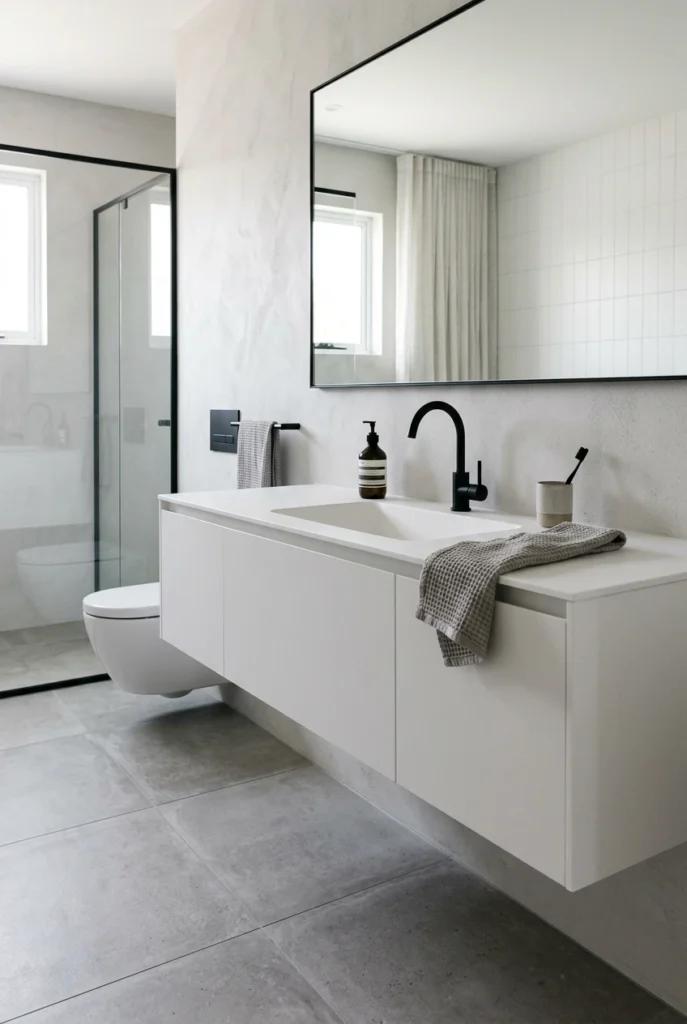
A flat-panel floating vanity in matte white gives your bathroom clean, architectural lines without any unnecessary detail.
The visible open space beneath makes the whole room feel more spacious, even before you factor in the actual storage inside.
A matte black faucet adds just enough contrast to keep the look from feeling too flat. This style works especially well if the rest of your bathroom already leans toward a sleek, contemporary aesthetic.
2. Minimalist Floating Vanity Look
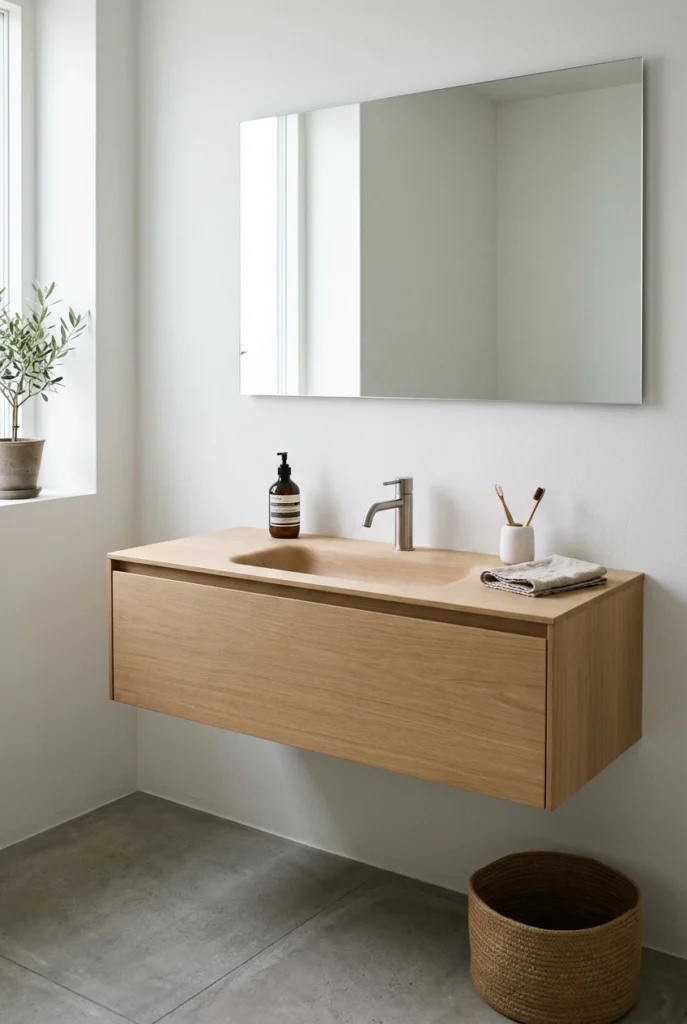
Skipping visible hardware entirely gives this vanity an almost sculptural quality, since there’s nothing to interrupt its smooth, uninterrupted surface.
A push-to-open mechanism keeps the front completely seamless while still being fully functional.
This works especially well against a plain white wall, where the vanity’s simple form gets to be the sole focal point. It’s a great choice if you want your bathroom to feel calm and genuinely uncluttered.
3. Farmhouse Floating Vanity Style
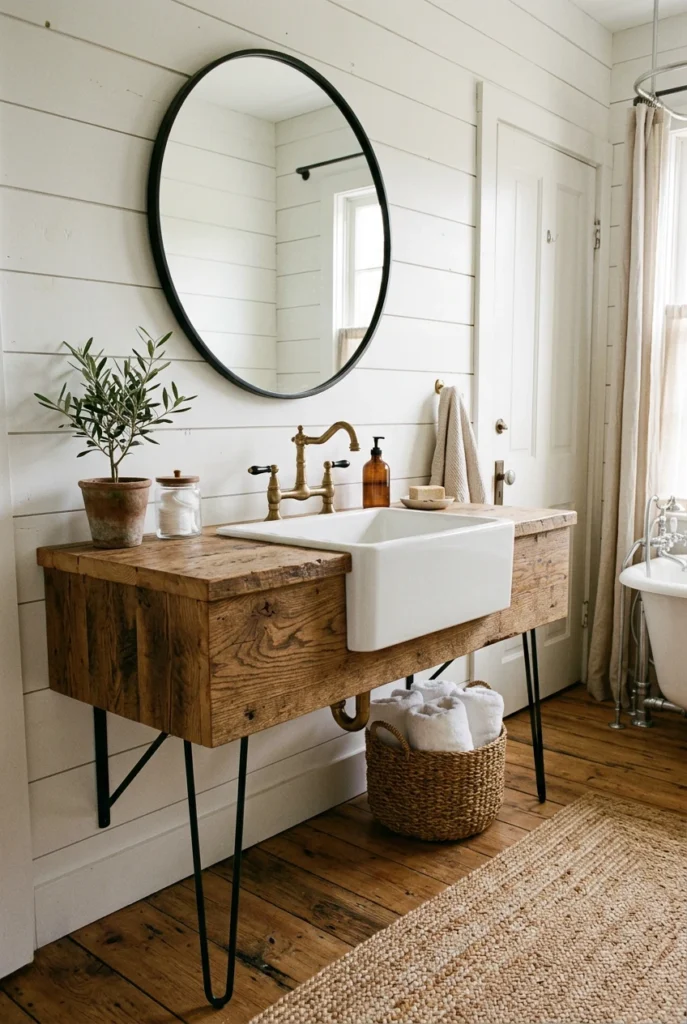
Warm reclaimed wood paired with black iron hairpin brackets gives this floating vanity genuine farmhouse character while still keeping the floor visually open beneath it.
A white apron-style sink on top continues the classic farmhouse detail you’d expect from a floor-mounted version.
This combination proves that floating vanities aren’t reserved only for modern bathrooms. It’s a great pick if you want farmhouse warmth with a slightly more current silhouette.
4. Scandinavian Floating Vanity Design
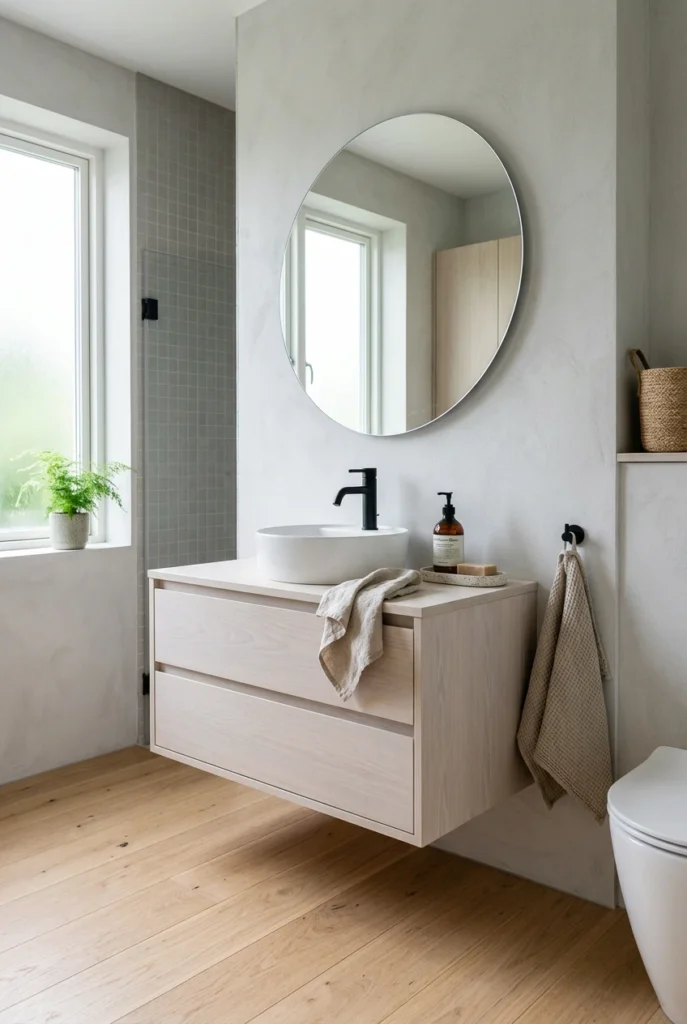
Pale whitewashed wood keeps this floating vanity feeling calm and understated, exactly in line with Scandinavian design’s quieter sensibility.
A single thin black faucet adds just enough contrast without disrupting the overall simplicity.
Light oak flooring beneath ties the whole look together in a soft, cohesive palette. This style works especially well if you want your bathroom to feel airy and genuinely restful rather than visually busy.
5. Industrial Floating Vanity Style
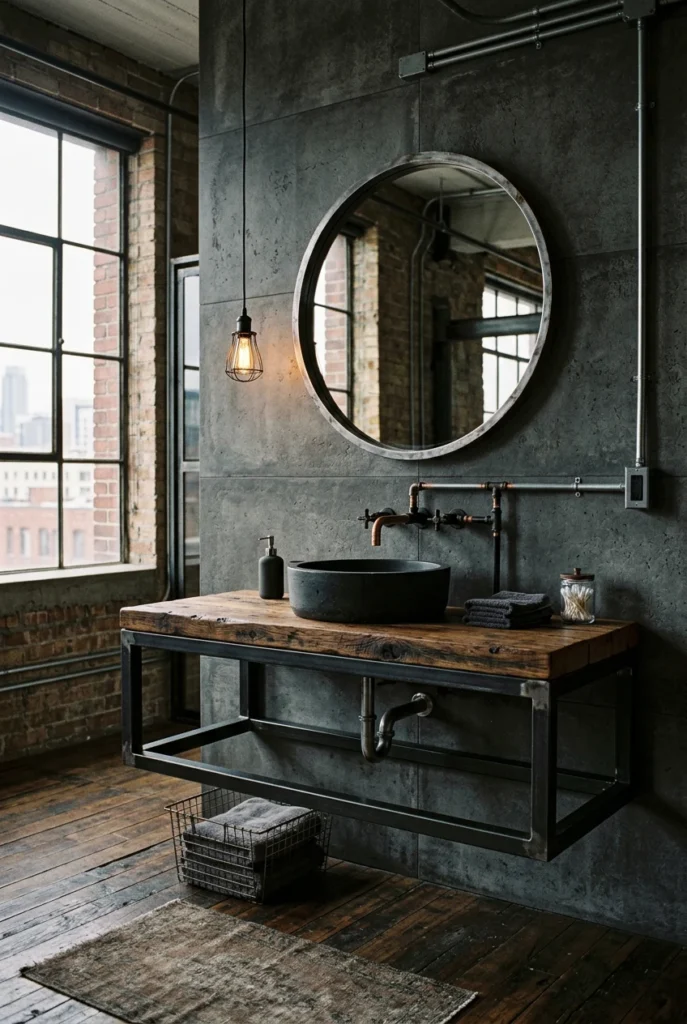
A raw blackened steel frame paired with reclaimed wood gives this floating vanity real converted-loft character.
Exposed pipe fixtures reinforce the industrial theme without feeling like a costume, since the materials themselves do most of the styling work.
This combination works especially well against dark concrete-look tile, where the moody, textured materials play off each other nicely. It’s a bold choice if the rest of your bathroom already leans toward raw, unfinished materials.
6. Small Bathroom Floating Vanity
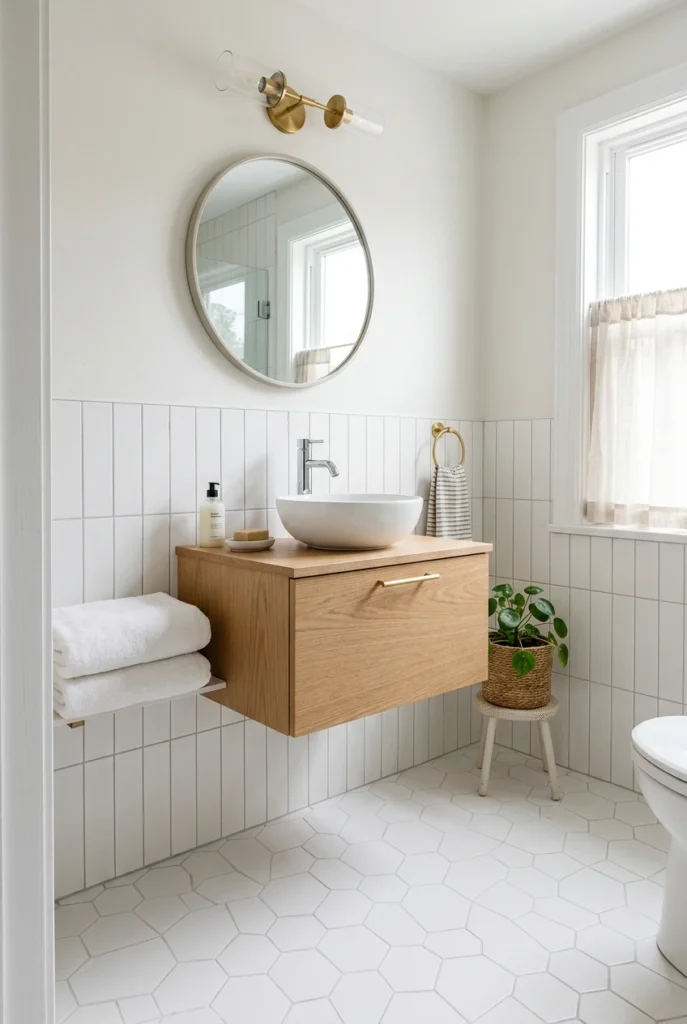
A compact floating vanity is one of the smartest choices for a small bathroom, since the visible open space beneath actually makes the room read as larger than it is.
This trick works because your eye continues past the cabinet to the floor, rather than stopping at a solid, floor-mounted base.
Keeping the profile slim ensures the vanity doesn’t overwhelm the room’s limited square footage. It’s a genuinely effective way to make a tight bathroom feel more open.
7. Primary Bathroom Floating Vanity
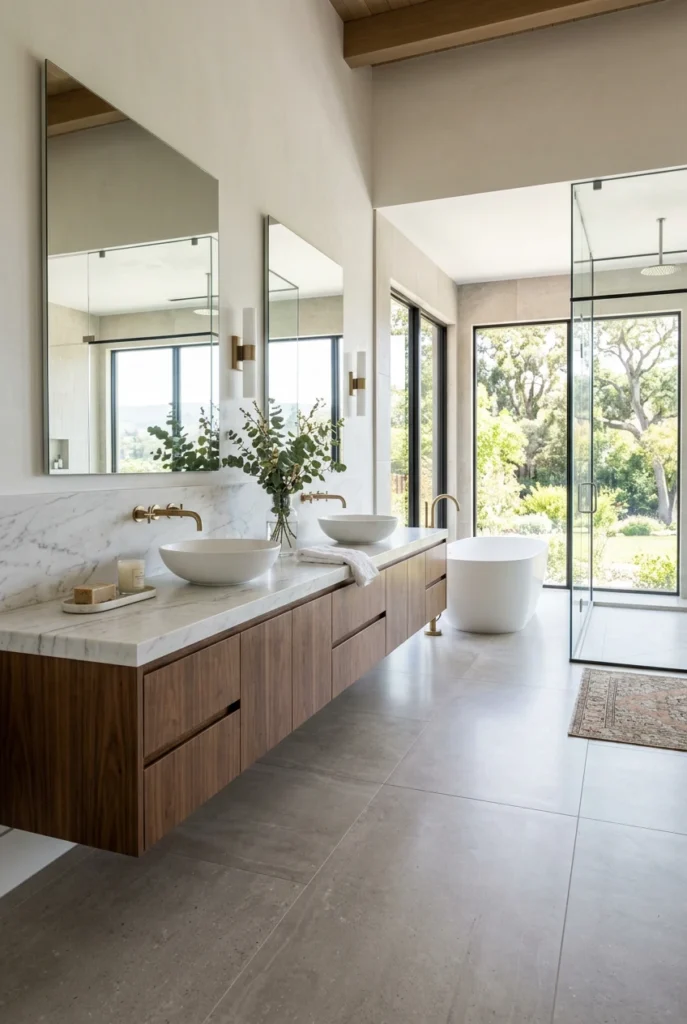
A long floating vanity in a spacious primary bathroom lets you enjoy generous countertop space without the visual heaviness of a full floor-mounted cabinet.
Warm wood cabinetry paired with a wide marble top creates a genuinely luxurious look. The visible floor beneath keeps even a larger piece from feeling bulky within the room.
This is worth prioritizing if you’re planning a full primary bathroom renovation and want both function and openness.
8. Powder Room Floating Vanity
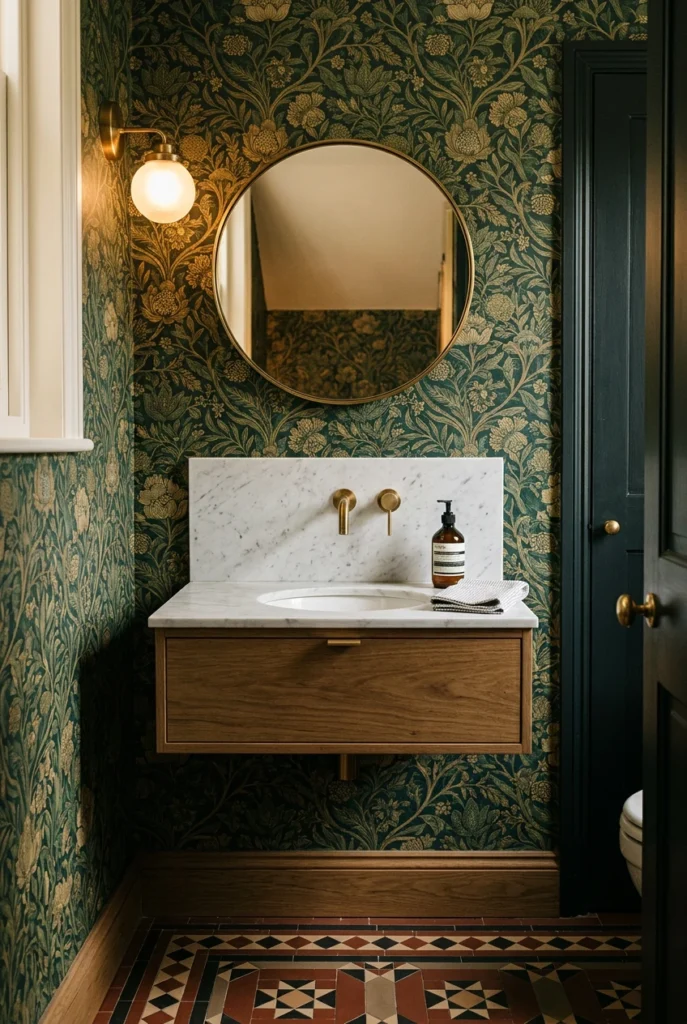
A petite floating vanity suits a small powder room perfectly, since the visible open floor space keeps the compact room from feeling cramped.
A slim marble top and single sink provide just enough function for occasional guest use. Pairing it with bold wallpaper lets the vanity stay simple while the wall does the visual heavy lifting.
This is a great choice if you want your powder room to feel boutique despite its modest size.
9. Double Floating Vanity Design
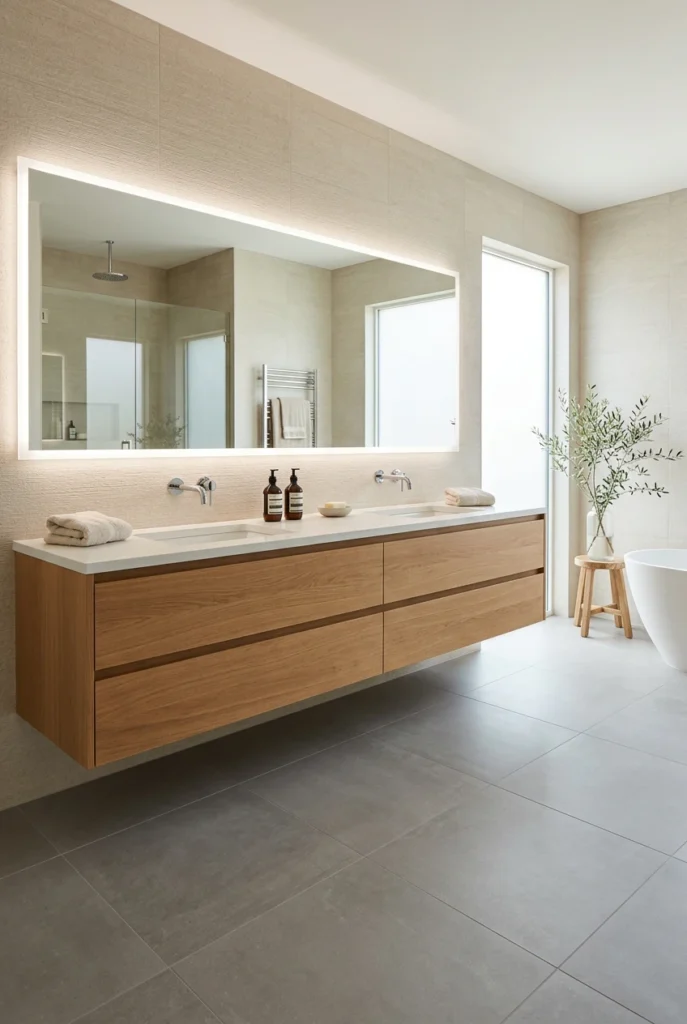
A wide double floating vanity gives two people their own sink while still preserving the airy, open feeling that makes floating designs so appealing.
Continuous open space beneath the entire unit keeps even this larger footprint from feeling heavy in the room.
Warm wood cabinetry adds richness without weighing down the overall look. This works especially well in a primary suite where a double vanity is genuinely needed but visual bulk is still a concern.
10. Wood Floating Vanity with Live Edge
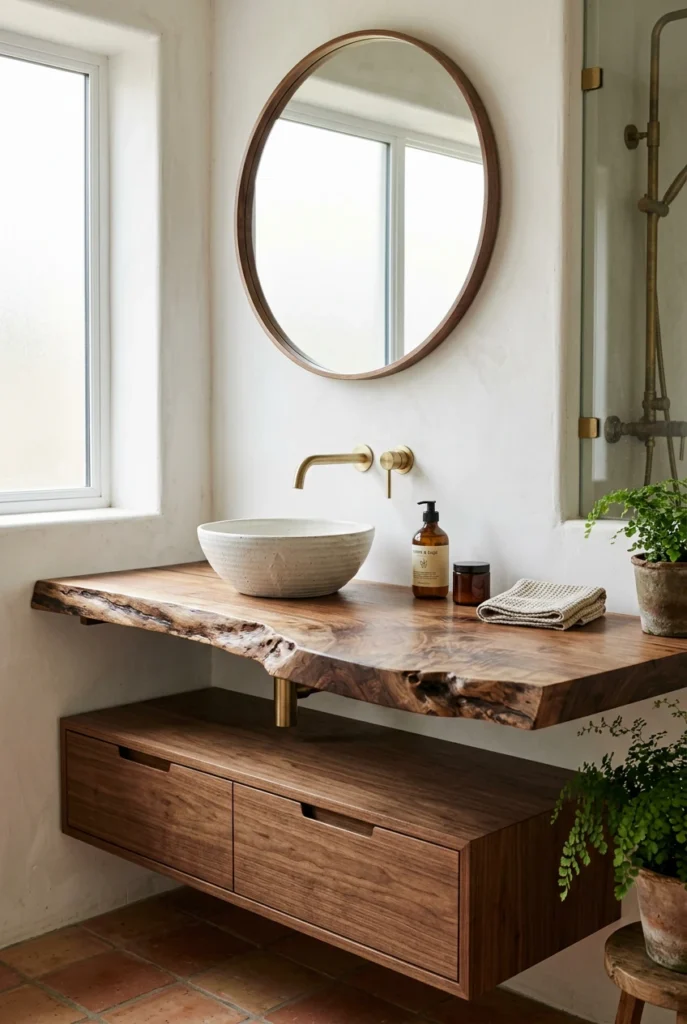
A live-edge wood countertop turns your floating vanity into a genuine art piece, showcasing the slab’s natural, organic edge rather than a straight, manufactured line.
This works beautifully paired with a simple wood cabinet base, letting the dramatic top take center stage.
Every slab is unique, so no two live-edge vanities ever look quite the same. It’s a great choice if you want your vanity to feel like a genuinely one-of-a-kind statement.
11. Marble-Top Floating Vanity
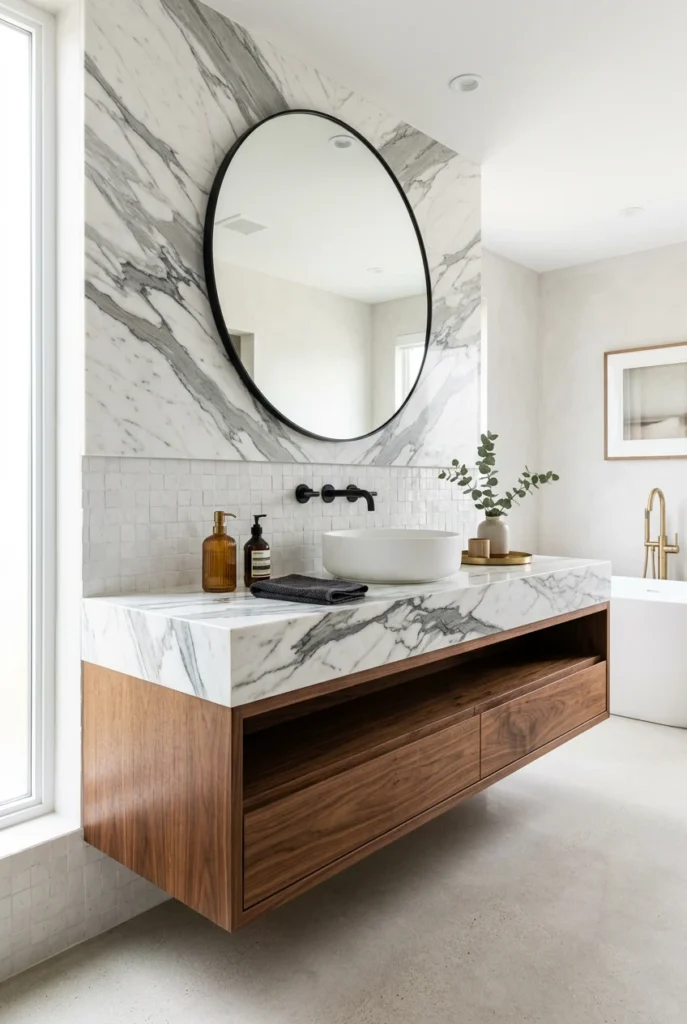
A bookmatched marble slab turns your floating vanity into the clear visual centerpiece of the whole bathroom, with veining that flows continuously across the surface.
Pairing it with a warm wood cabinet base lets both materials shine without competing for attention.
This is a bigger investment than most vanity choices, but the dramatic effect is hard to replicate with any other material. It’s worth considering if you want your vanity to feel like genuine art.
12. Concrete-Top Floating Vanity
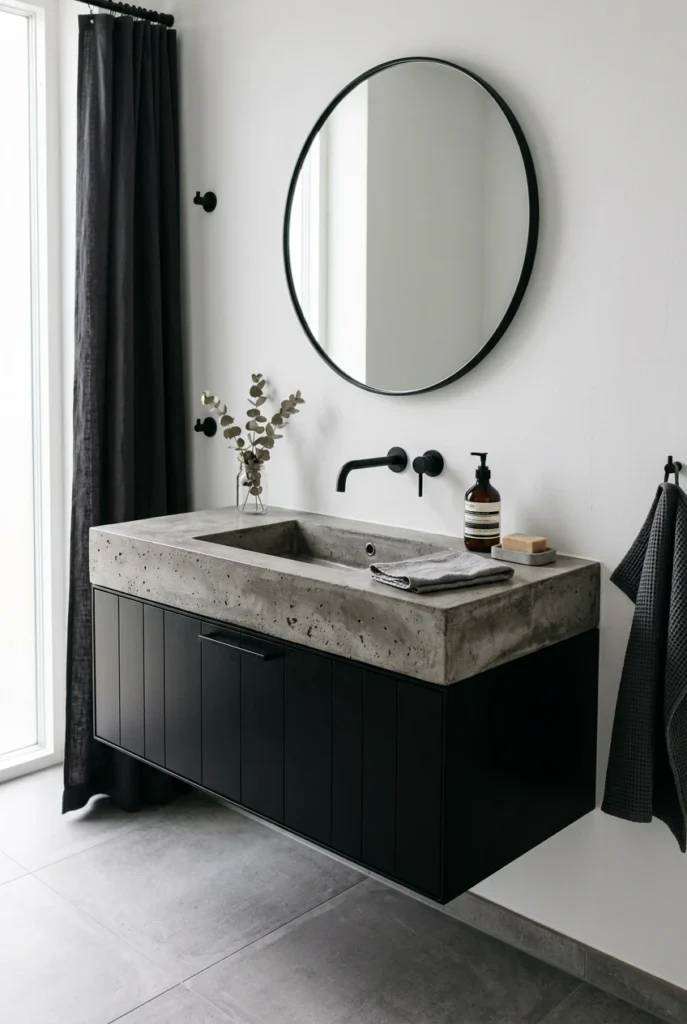
A hand-troweled concrete countertop gives your floating vanity a raw, industrial edge that pairs beautifully with a matte black steel base.
Every countertop has slight natural variation, so no two builds ever look quite identical. This material holds up well over time but does require periodic sealing to prevent staining.
Consider this option if you want your bathroom to feel more like a converted loft than a typical suburban space.
13. Quartz-Top Floating Vanity
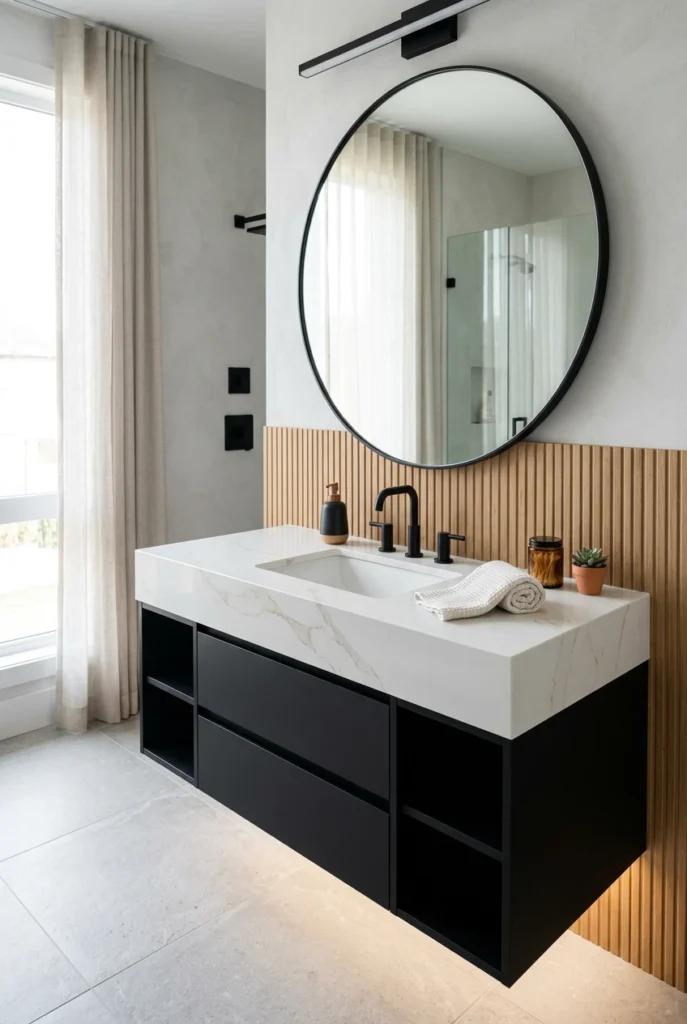
Quartz gives you a clean, seamless surface with subtle warm veining that mimics natural stone without the higher maintenance.
Pairing it with a matte black cabinet base and integrated sink creates a polished, cohesive look throughout.
This material resists staining and scratching better than many natural stone alternatives, making it a genuinely practical daily-use choice. It’s a smart option if you want a high-end look without the upkeep that real marble requires.
14. Matte Black Floating Vanity
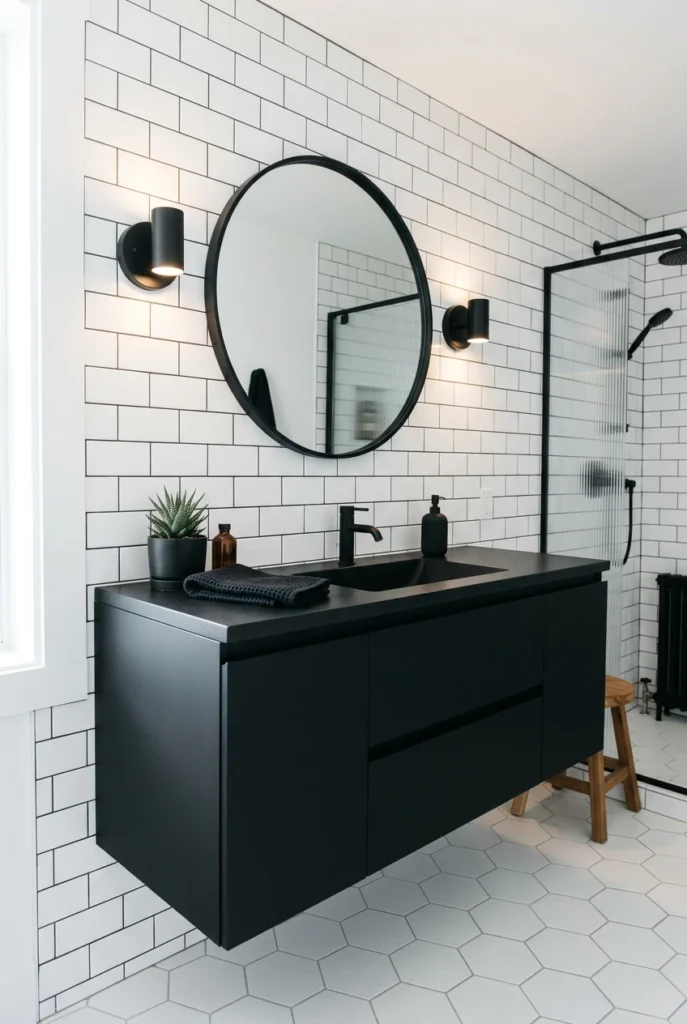
Going fully matte black creates a bold, graphic silhouette that stands out dramatically against a lighter wall or floor.
An integrated black sink keeps the whole piece feeling cohesive rather than mismatched. This combination works especially well if the rest of your bathroom already leans toward a modern, high-contrast palette.
It’s a striking choice for anyone who wants their vanity to feel like a genuine design statement rather than a purely functional piece.
15. Crisp White Floating Vanity
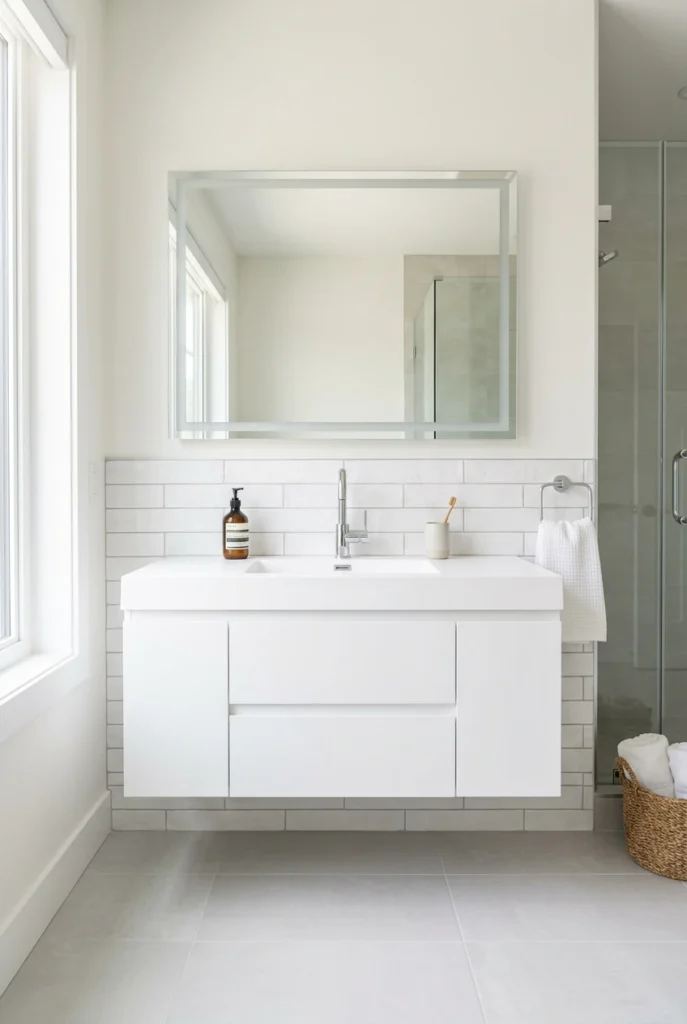
A smooth lacquered white finish keeps this floating vanity feeling bright and clean, especially paired with an integrated white sink for a seamless, uninterrupted look.
Light gray tile flooring beneath continues the fresh, airy palette throughout the room. This style works in almost any bathroom, from modern to transitional, since white remains one of the most versatile vanity colors available. It’s a safe, timeless choice if you’re not sure which direction to take your finish.
16. Warm Wood-Tone Floating Vanity
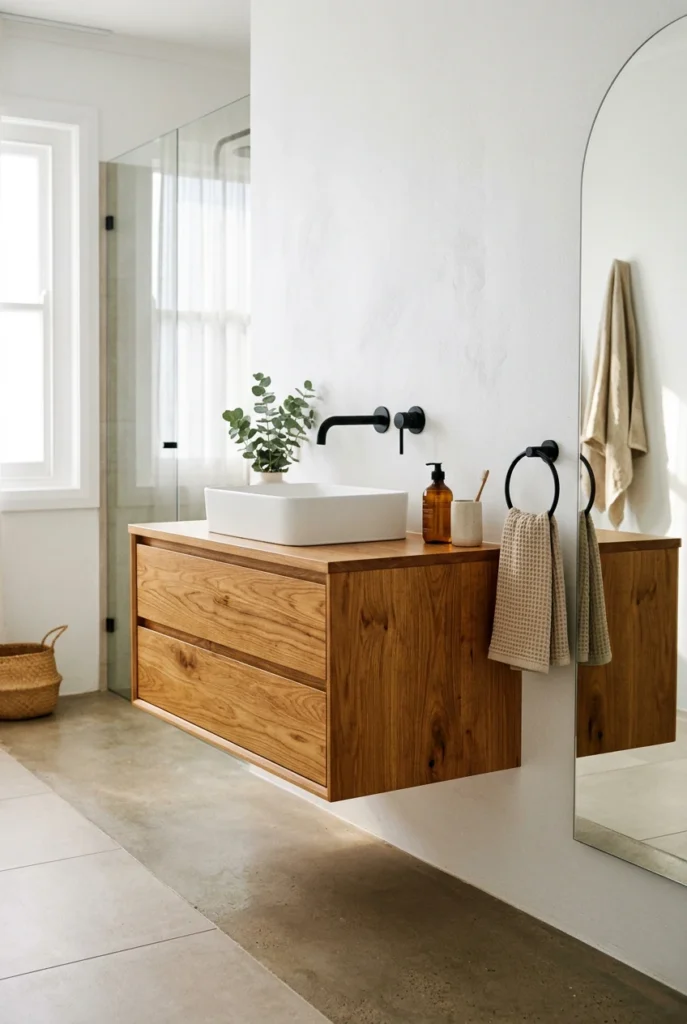
Honey-toned wood with visible natural grain brings genuine warmth to a floating vanity that might otherwise feel cold or clinical.
Pairing it with a simple white countertop keeps the overall look bright while still letting the wood’s rich tone stand out.
A matte black faucet adds just enough contrast without overwhelming the warm palette.
This combination works especially well if you want your bathroom to feel inviting rather than purely sleek and modern.
17. Two-Tone Floating Vanity Design
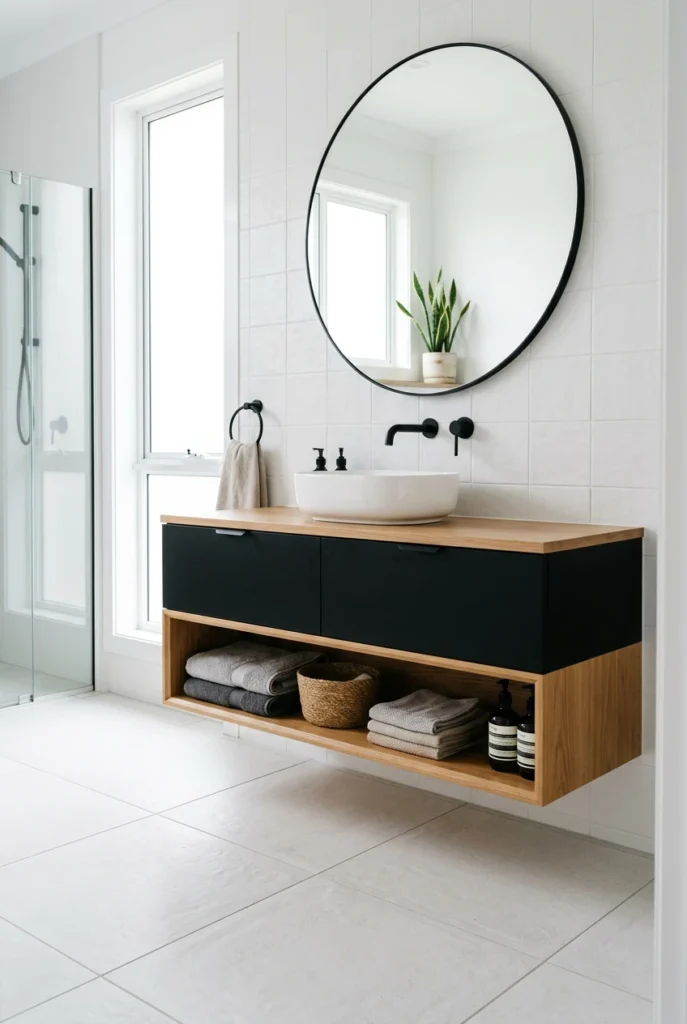
Splitting your vanity into two distinct materials, like matte black drawers up top and warm wood shelving below, creates genuine visual interest without needing any additional decor.
This deliberate contrast keeps the piece feeling intentional rather than randomly assembled.
The two-section approach also gives you a mix of concealed and visible storage in one unit. This is a great option if you want your vanity to feel more custom and less like a standard single-material piece.
18. Floating Vanity with Deep Drawers
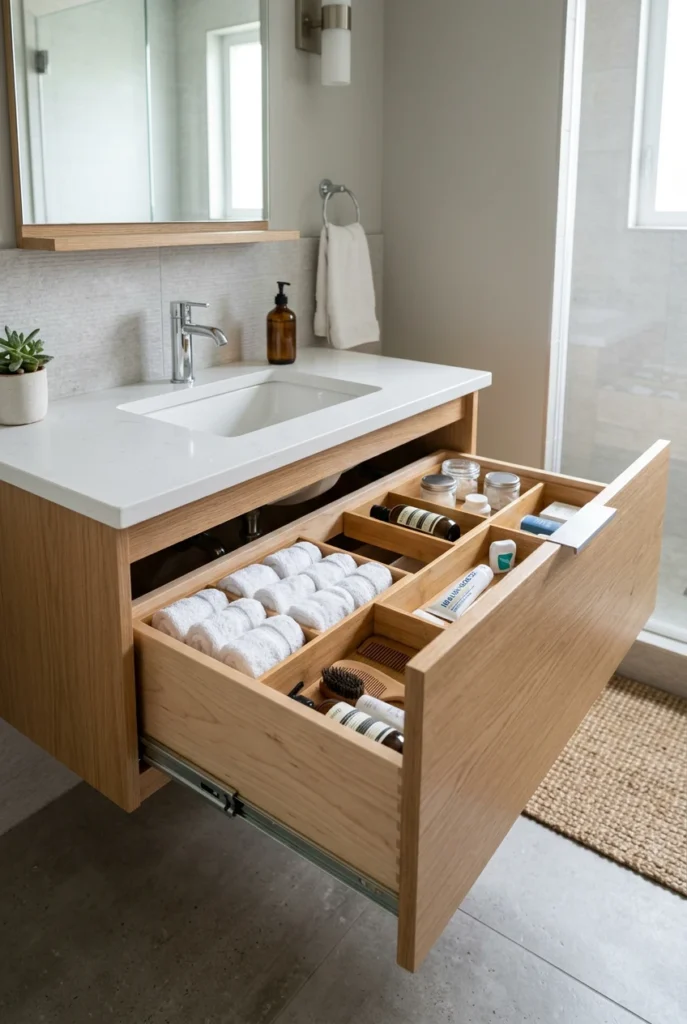
Deep interior storage solves the common frustration of a vanity that looks great but doesn’t actually hold much.
A custom-fitted organizer inside keeps toiletries and washcloths sorted rather than sliding around loose every time you open the drawer.
This feature is worth prioritizing when shopping, since drawer depth isn’t always obvious from photos alone.
It’s a smart choice if you want your floating vanity’s minimal exterior to hide genuinely useful storage inside.
19. Open Shelving Floating Vanity
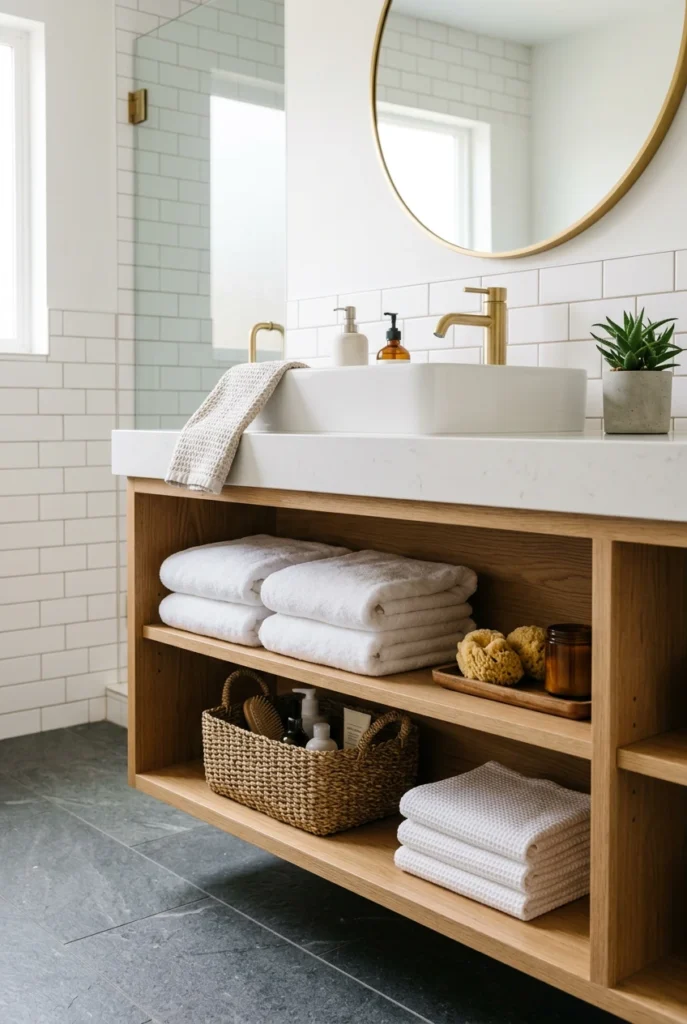
Skipping closed cabinetry in favor of open shelving gives your floating vanity an even lighter, airier feel while still providing real storage space.
Neatly folded towels and a woven basket keep everything looking styled rather than cluttered.
This works especially well if you already have good linen storage elsewhere and just need a spot for everyday essentials. It’s a great option if you want your vanity to feel a bit less bulky and heavy visually.
20. Floating Vanity with Mixed Storage
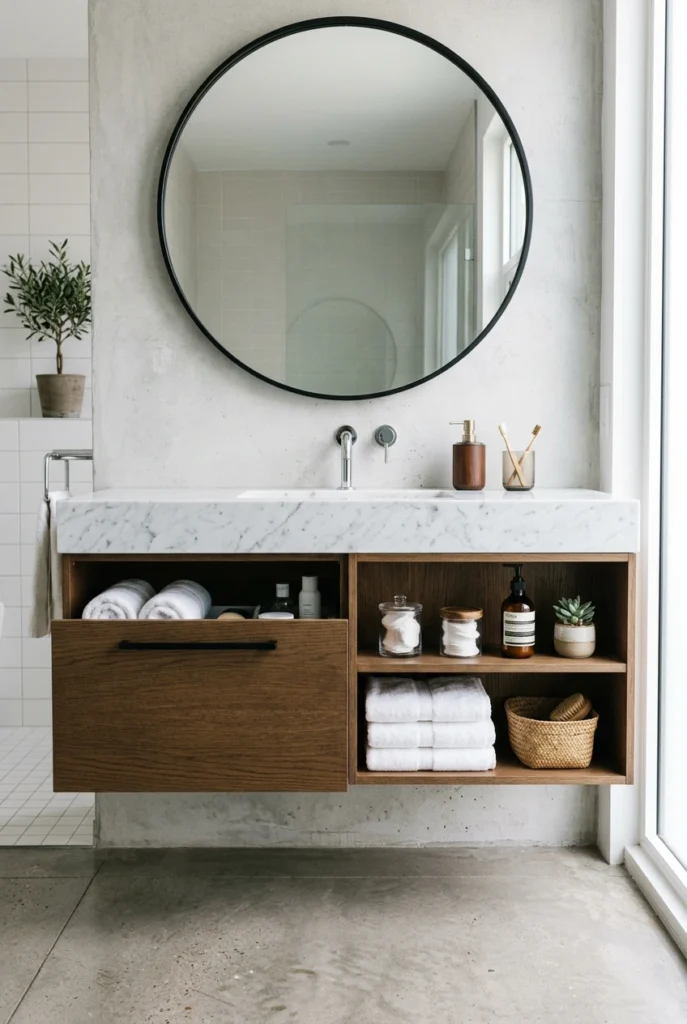
Combining one closed drawer section with an adjacent open shelf gives you the best of both worlds, hiding away items you’d rather not display while still having a spot for towels or baskets in plain sight.
This configuration works well for people who want some storage concealed and some easily accessible without digging through drawers.
White marble on top keeps the whole piece feeling cohesive despite the mixed functionality. It’s a practical choice for genuinely varied daily storage needs.
21. Floating Vanity with Hidden Storage Niche
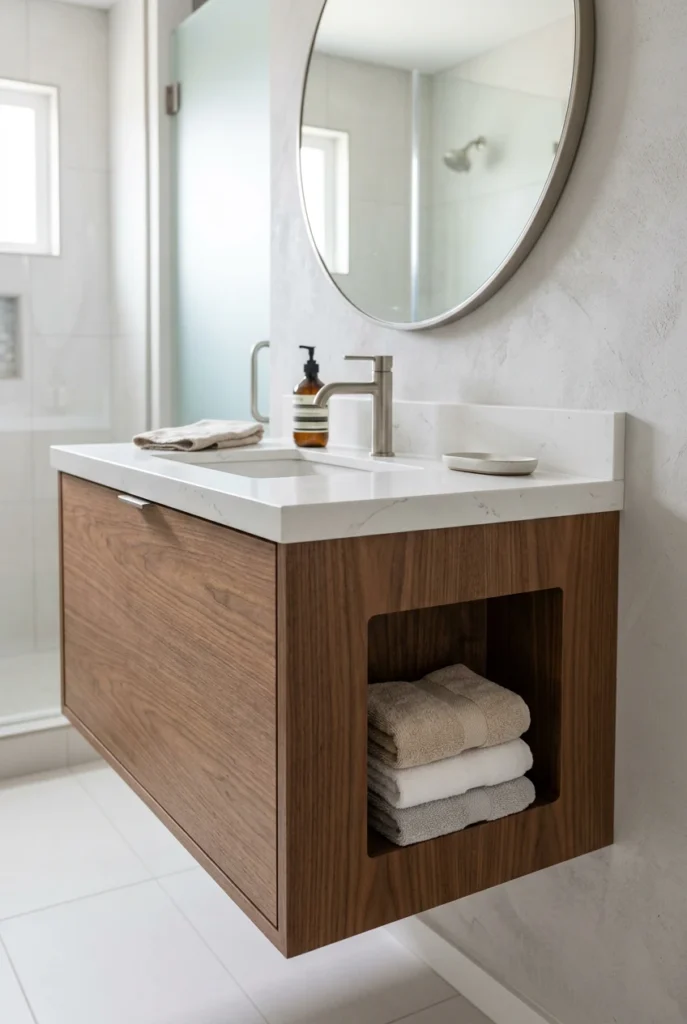
A discreet recessed niche built into the side panel gives you extra storage that doesn’t compete with your main drawers or shelving.
Tucking a small stack of towels into this hidden compartment keeps them accessible without cluttering the main countertop area.
This detail is easy to miss when shopping, so it’s worth asking about during custom builds specifically. It’s a clever addition if you want more storage without adding any visual bulk to the piece.
22. Floating Vanity for Visual Floor Space
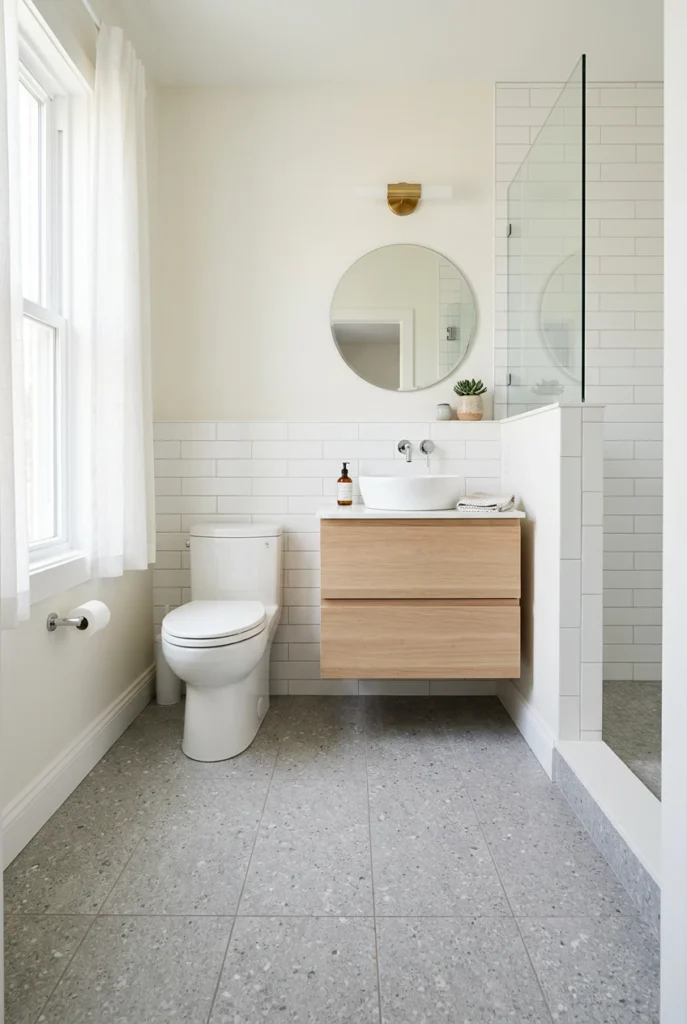
The biggest advantage of a floating vanity has nothing to do with storage at all — it’s the visible floor space beneath that genuinely changes how a small bathroom feels.
Continuous tile flooring running underneath the cabinet tricks the eye into perceiving more square footage than actually exists.
This effect is especially noticeable in bathrooms under a certain size, where every visual inch matters. It’s worth considering this benefit even before you start comparing styles or materials.
23. Floating Vanity with Under-Lighting
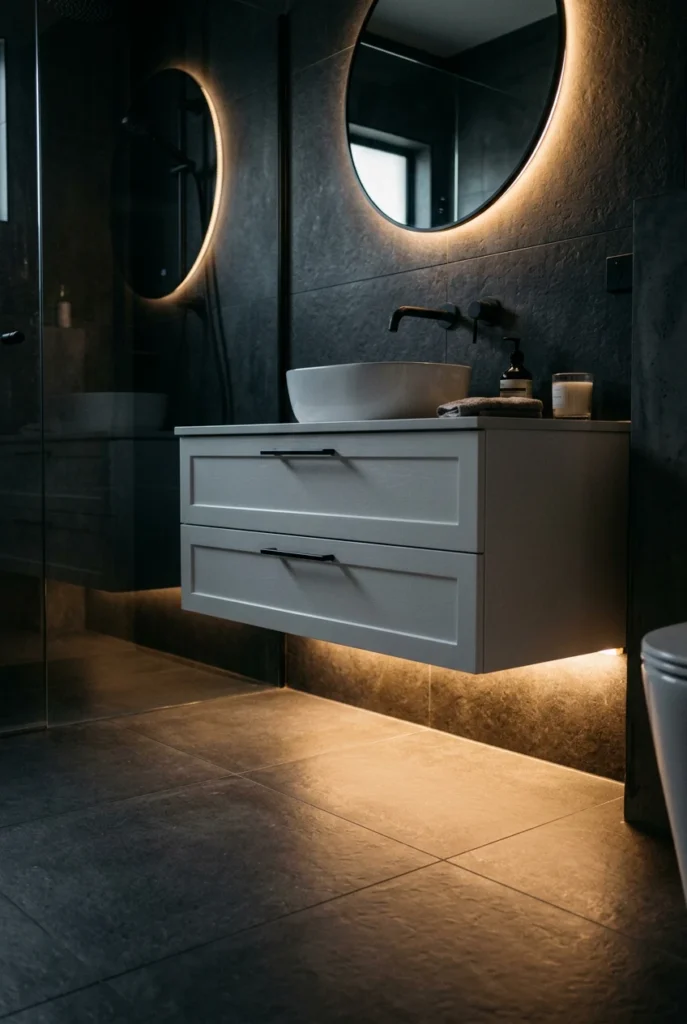
A slim LED strip installed along your vanity’s underside creates a soft, ambient glow that makes the whole piece look like it’s genuinely floating in the room.
This effect is especially striking in a dimly lit bathroom, where the light adds a modern, almost architectural quality.
Installation requires an electrician familiar with low-voltage wiring, so it’s worth planning during a larger renovation. It’s a small addition that makes a genuinely dramatic visual difference.
24. Extra-Long Floating Vanity Statement
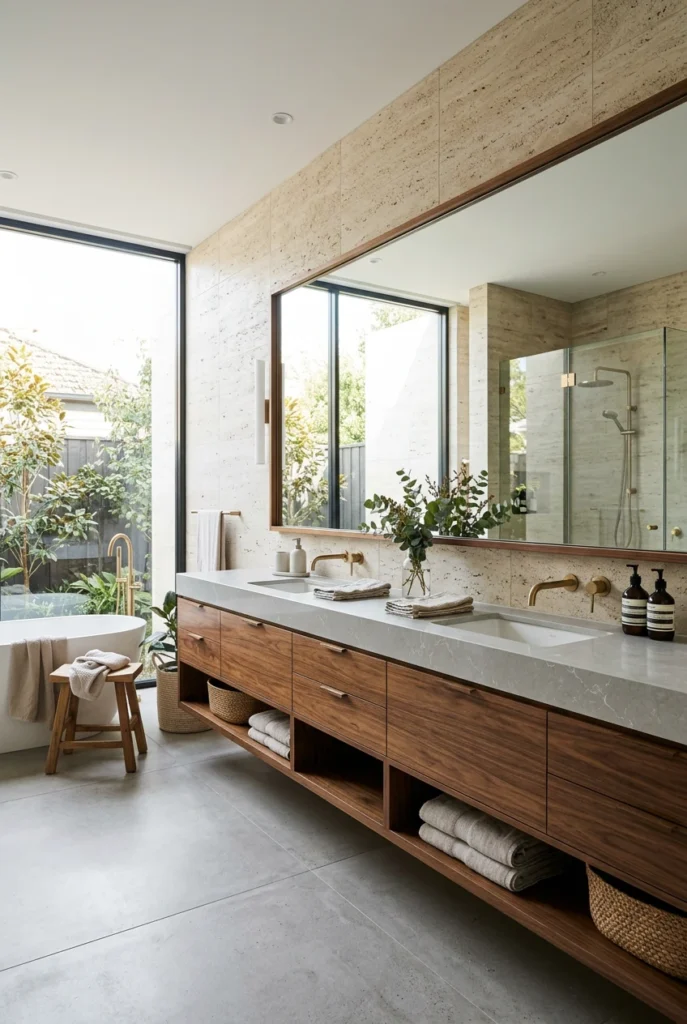
Spanning nearly the entire width of your wall, an extra-long floating vanity becomes a genuine architectural feature rather than just a functional piece.
A single continuous quartz countertop keeps the expansive surface feeling cohesive rather than segmented.
This scale requires a larger bathroom to avoid feeling overwhelming, so it’s best suited to a spacious primary suite. It’s worth considering if you want your vanity to feel like a true design statement.
25. Narrow Floating Vanity for Tight Bathrooms
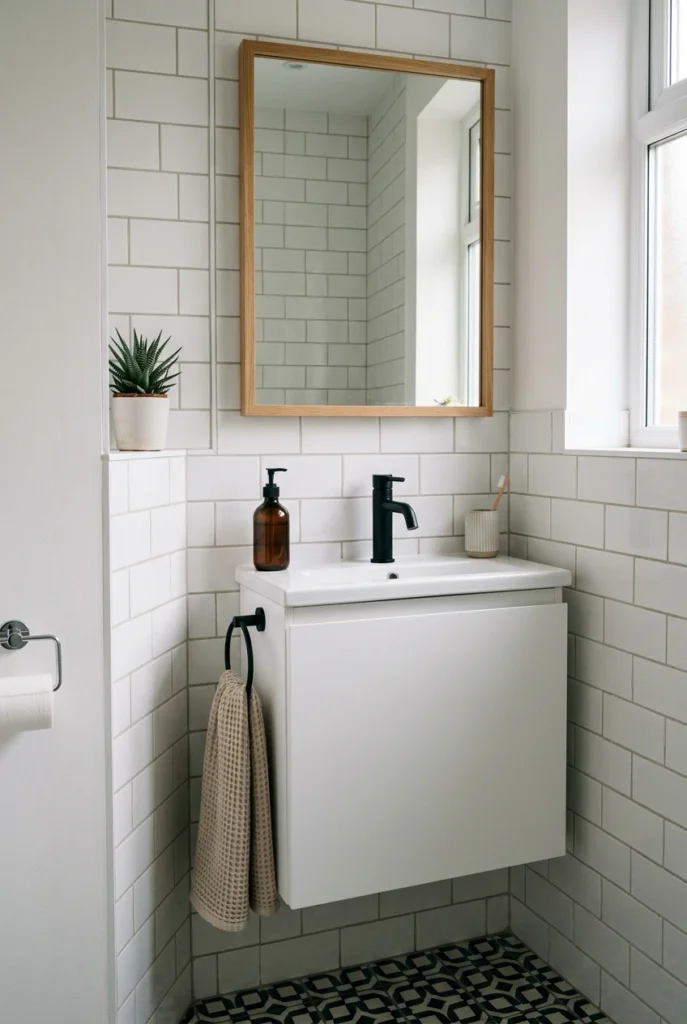
A shallow depth lets this floating vanity fit into tight wall space where a standard-depth cabinet simply wouldn’t work.
This solution is especially useful in narrow bathrooms or awkward layouts where every inch of clearance matters.
Choosing a narrow design still gives you genuine function without forcing you to sacrifice walking space.
It’s worth measuring your available depth carefully before shopping for any floating vanity in a compact bathroom.
26. Budget-Friendly Floating Vanity Option
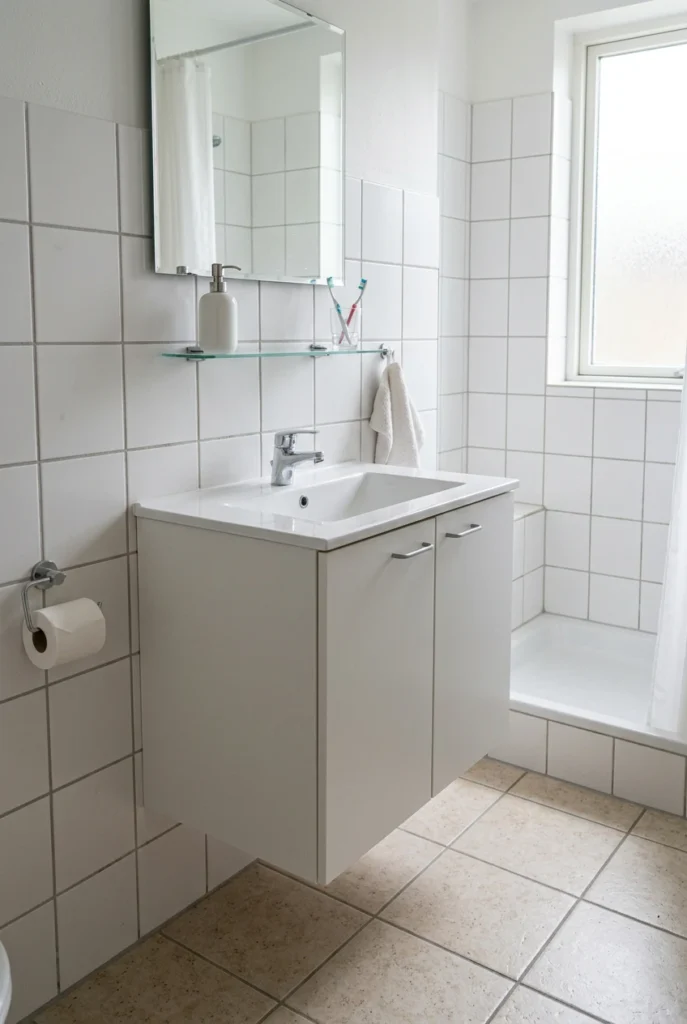
You don’t need premium materials to get real value from a floating vanity. A simple white laminate finish and basic integrated sink deliver the same visual space-saving benefit as a higher-end version, just without the added cost of custom materials.
This option works especially well if your priority is the floating silhouette itself rather than any particular finish or material. It’s a smart starting point if you’re updating your bathroom on a realistic budget.
27. DIY Floating Vanity Installation
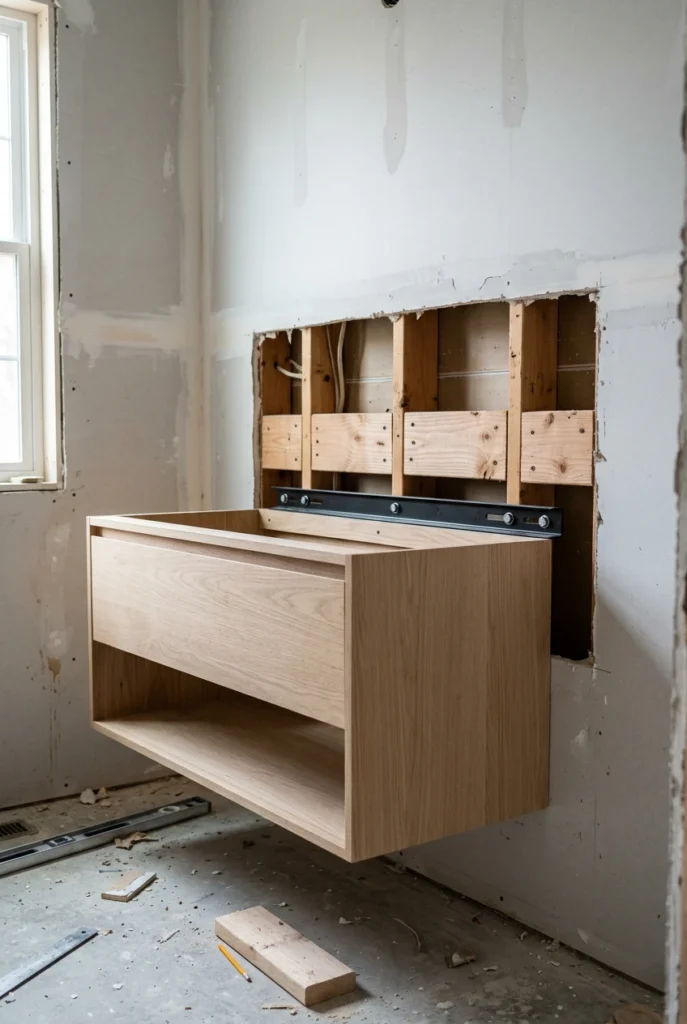
Installing a floating vanity yourself is achievable, but it requires genuine structural reinforcement behind the wall to support the cabinet and countertop weight safely.
This typically means adding blocking between studs before mounting the bracket system, which is a bigger project than simply hanging a shelf.
It’s worth consulting a professional if you’re not confident in your ability to assess your wall’s structure. Getting this step right matters more than almost any other part of the installation.
28. Floating Vanity with Concealed Plumbing
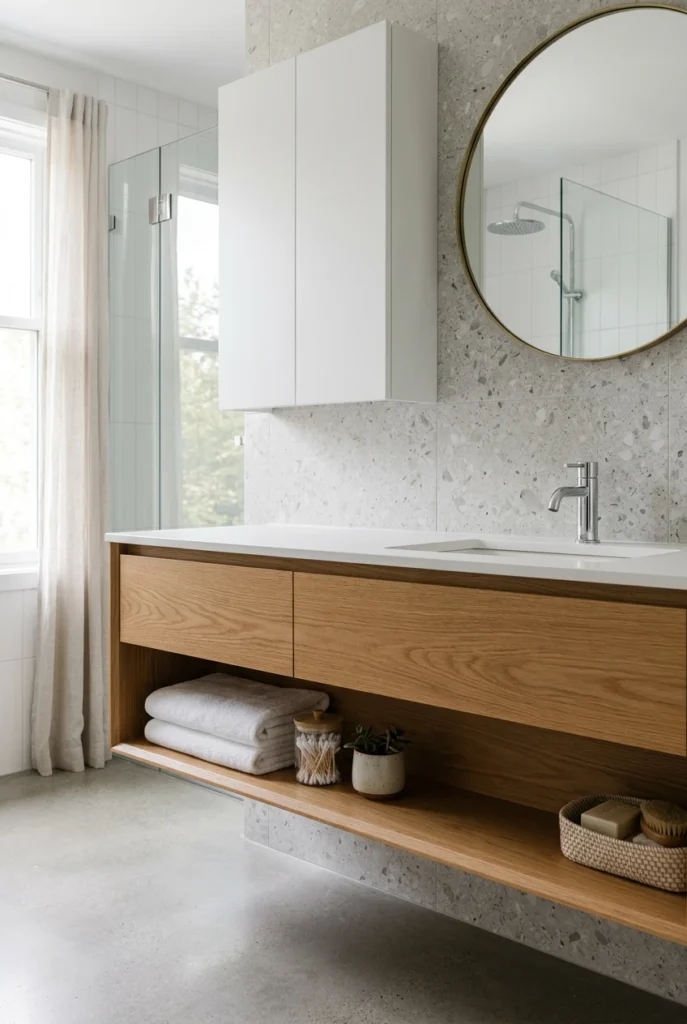
Hiding your plumbing behind a clean back panel gives your floating vanity a genuinely polished, finished look rather than exposed pipework interrupting the visual effect.
This detail requires careful planning during installation, since the pipes still need proper access for future repairs.
The payoff is a vanity that looks intentionally designed rather than like a retrofit. It’s worth discussing with your contractor early if a seamless underside view matters to you.
29. Floating Vanity Weight and Wall Support
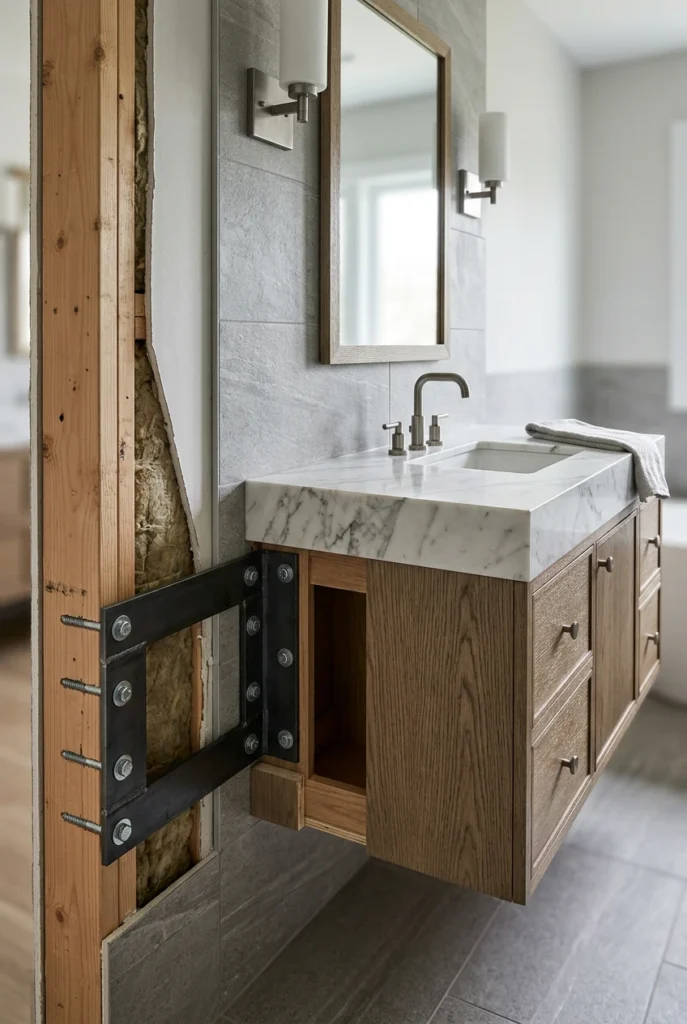
Every floating vanity needs a genuinely robust wall-mounted bracket system anchored into reinforced studs, since the cabinet, countertop, and everything stored inside all rely entirely on that connection.
This structural requirement isn’t optional or something to shortcut, regardless of how lightweight the vanity might look.
It’s worth having a professional assess your wall before committing to a heavier stone countertop specifically. Getting this detail right is what keeps your vanity safe and secure for years to come.
30. Floating Vanity for Easier Bathroom Cleaning
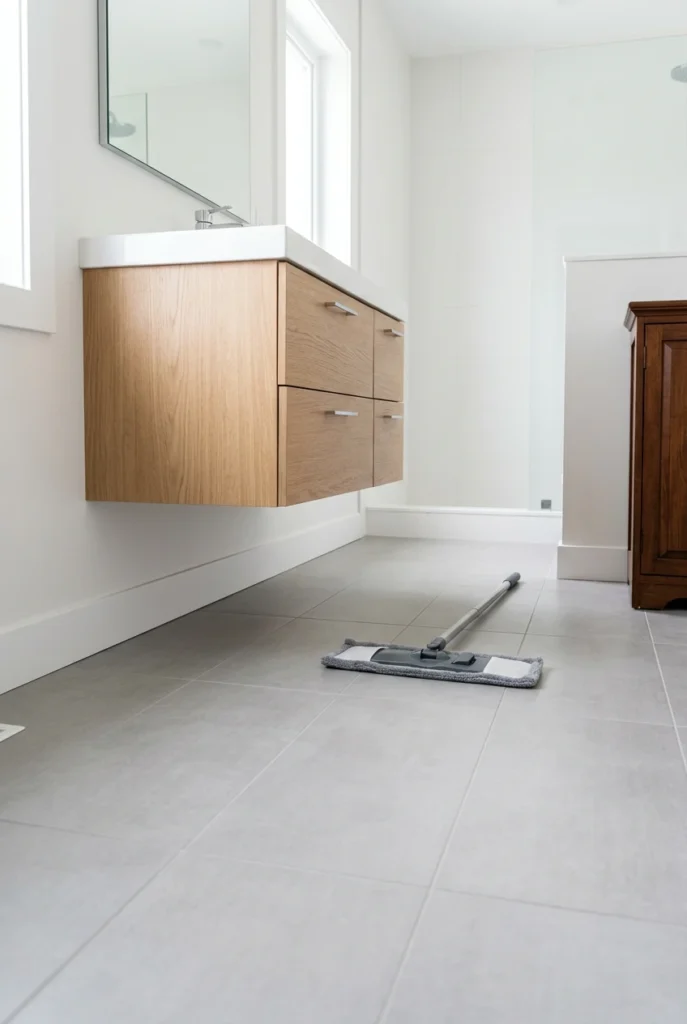
An open, unobstructed floor beneath your vanity means you can run a mop or vacuum through cleanly, without navigating around a cabinet base the way you would with a traditional floor-mounted design.
This practical benefit matters more than people expect during actual daily cleaning routines.
It’s a genuine advantage worth considering even if the visual space-saving effect isn’t your primary motivation.
This is one of the most underrated reasons people end up loving their floating vanity long after installation.
Whether you’re drawn to a dramatic marble slab or a simple budget-friendly option, there’s a floating vanity idea here for every style and practical need.
Start by considering your bathroom’s size and your storage priorities before narrowing down material and finish choices.
Pin your favorites now so you have real reference points ready when you’re ready to make your final decision.