25 Shower Glass Door Ideas for Every Style and Layout
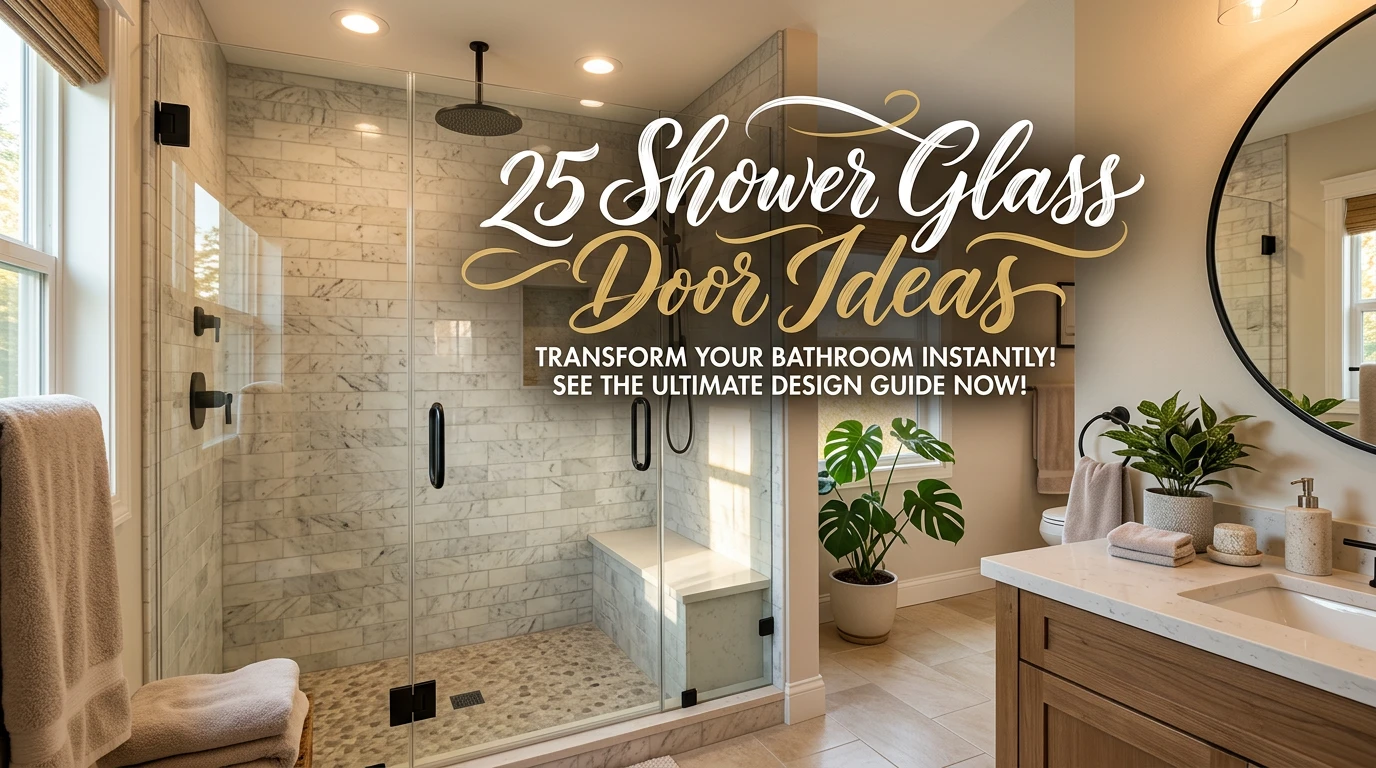
Choosing a shower glass door involves more than just picking a look you like — configuration, glass treatment, and hardware finish all affect how well your shower actually functions day to day.
These 25 ideas cover everything from style variations to practical decision points like hinged versus sliding and cleaning maintenance, so you’ll have real guidance whether you’re focused on aesthetics, function, or both.
Save your favorites and start narrowing down the door choice that fits your own bathroom.
1. Modern Frameless Glass Door
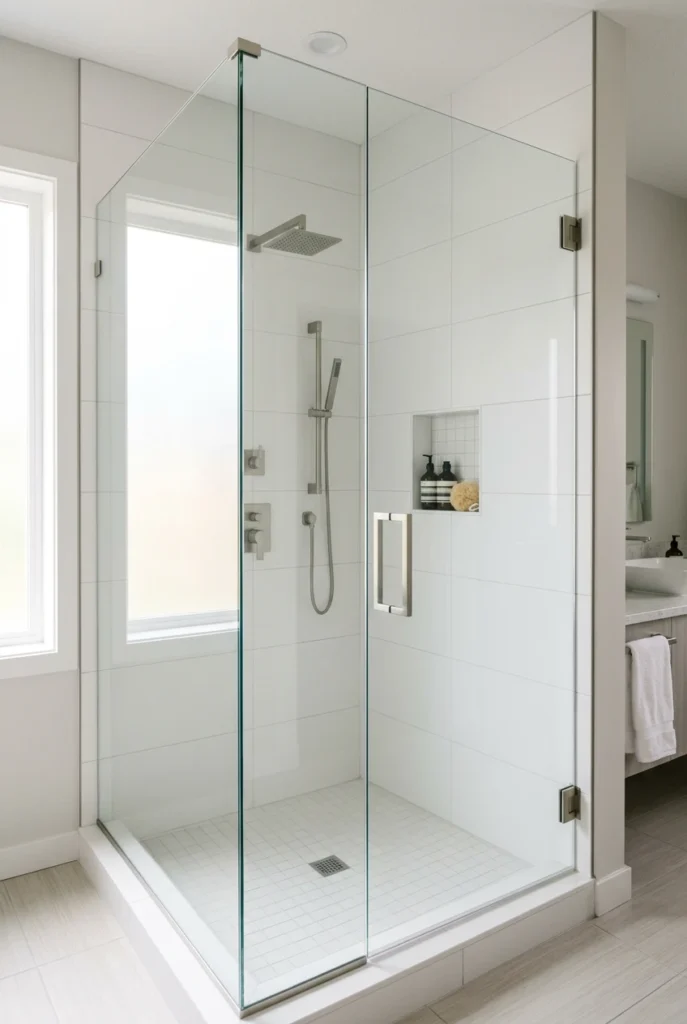
Skipping the metal frame entirely gives your shower door a genuinely sleek, uninterrupted look that fits right into a modern bathroom.
A slim brushed nickel handle is really all the hardware you need, since the glass itself does the visual work.
This style works especially well against white large-format tile, where the transparency keeps the whole room feeling open.
It’s a smart choice if you want your shower to feel like a genuine architectural feature rather than a boxed-in afterthought.
2. Farmhouse Shower Door Style
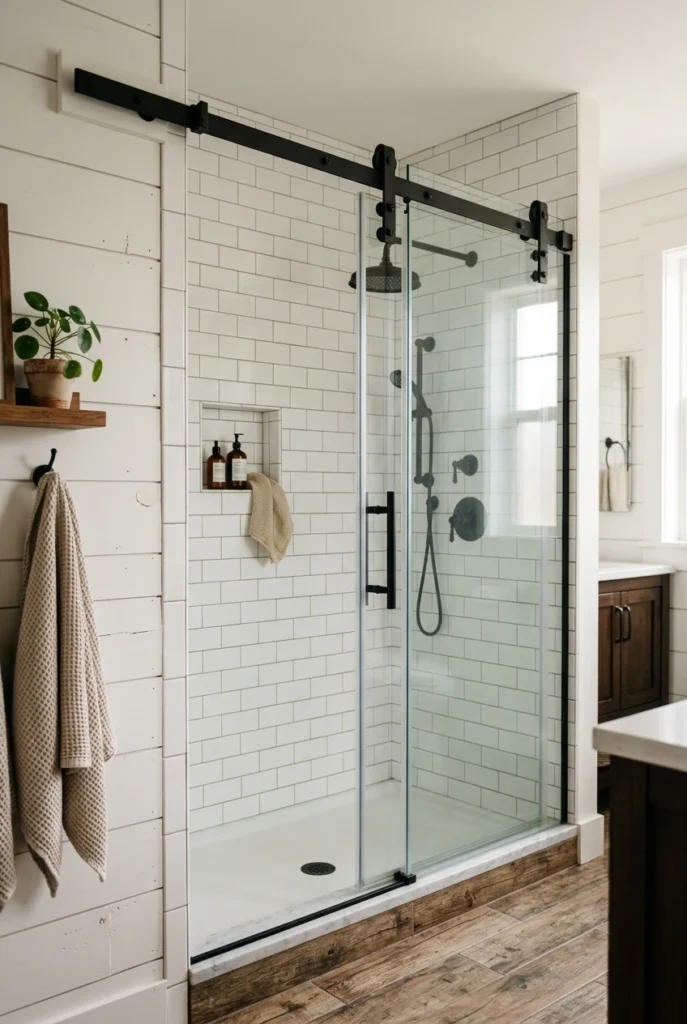
A sliding barn-style door brings genuine farmhouse character to your shower, especially mounted on a black exposed track that doubles as a design detail in itself.
This configuration also happens to be a smart space-saving choice, since it doesn’t require room to swing open.
Pairing it with white subway tile keeps the whole look cohesive with classic farmhouse styling. It’s a distinctive choice that signals farmhouse style the moment someone walks into the room.
3. Industrial Black-Framed Door
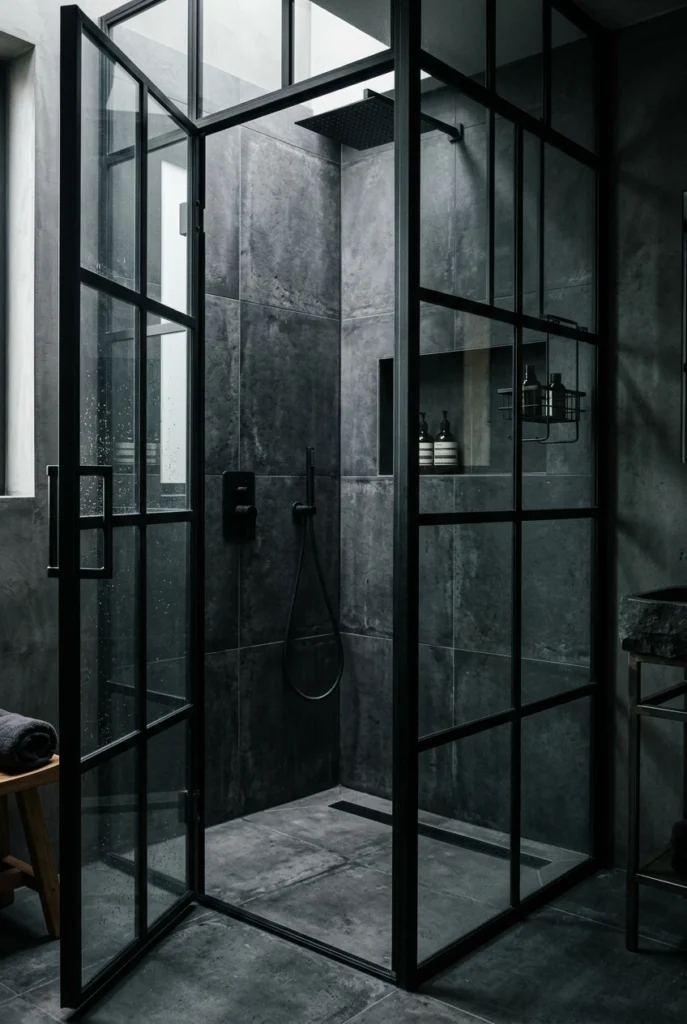
Black-framed glass panels give your shower a factory-window look that pairs surprisingly well with almost any bathroom style, not just industrial ones. Dark concrete-look tile amplifies the mood without making the space feel cold or unfinished.
This combination works especially well in a bathroom with warm wood flooring, since the contrast keeps things from feeling too harsh. It’s a bold choice if the rest of your bathroom already leans toward raw, unfinished materials.
4. Minimalist Glass Enclosure
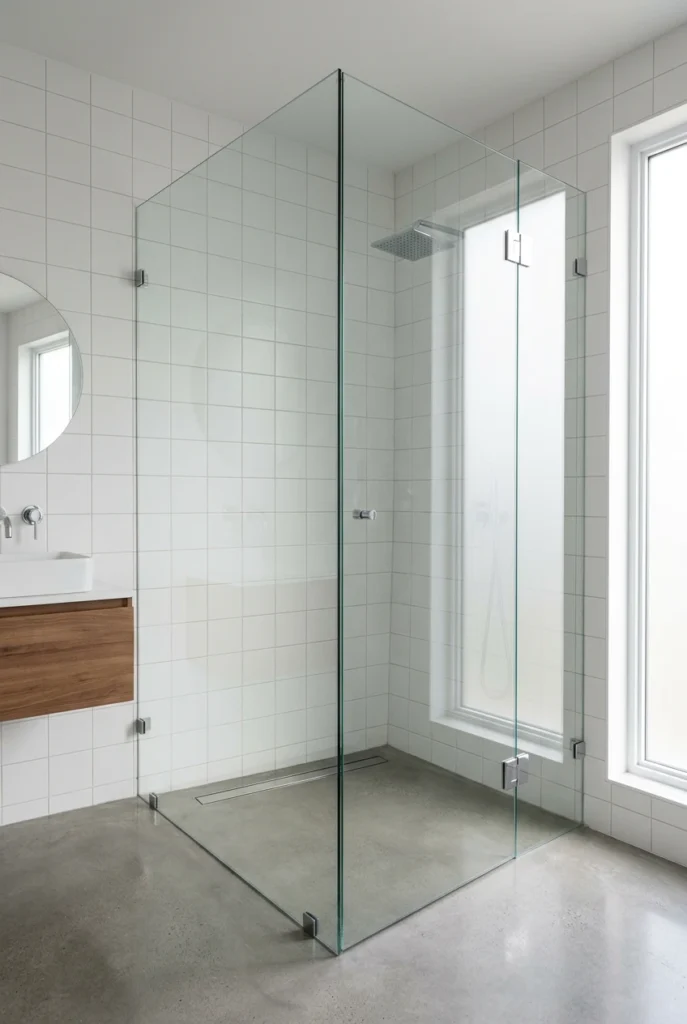
Sometimes the simplest configuration is the most effective, and a single fixed glass panel paired with a slim swing panel proves you don’t need elaborate hardware to get a genuinely elegant shower enclosure.
Plain white tile walls keep the whole space feeling calm and uncluttered. This approach works especially well if you already have a minimalist bathroom and want your shower to match that same restrained aesthetic. It’s proof that less really can be more.
5. Hinged Single-Panel Door
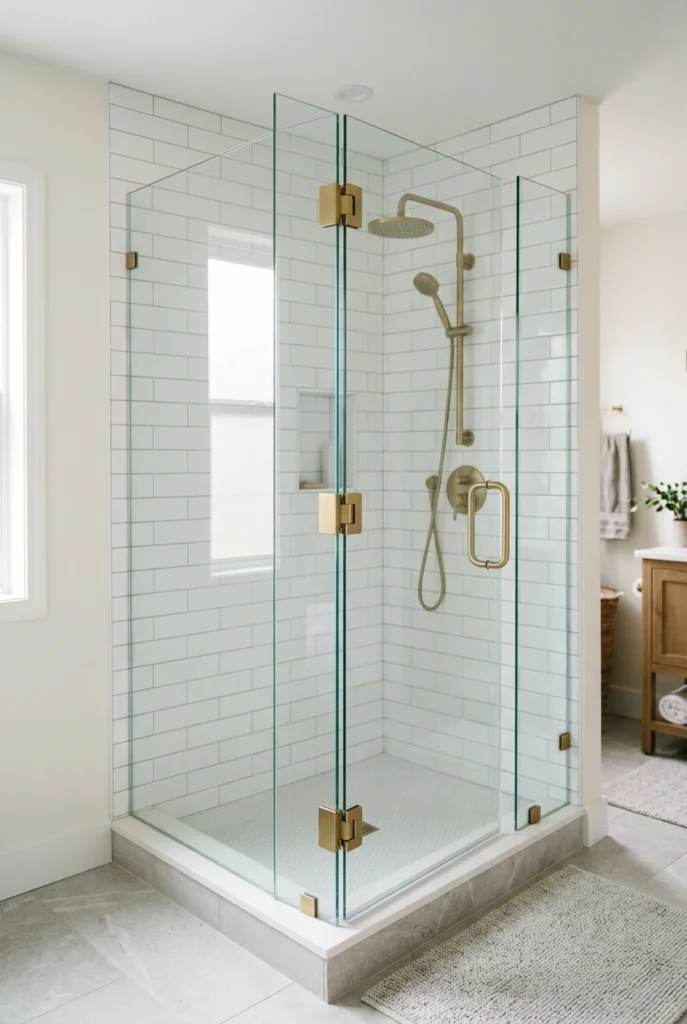
A single hinged door swinging outward on brushed brass hinges is one of the most classic and reliable shower configurations available.
Paired with a fixed side panel, this setup provides genuine splash protection without needing a fully enclosed box.
White subway tile keeps the whole look timeless and versatile. This configuration works well in almost any bathroom layout, making it a safe, dependable choice if you’re not sure which door style to pick.
6. Sliding Barn-Style Door
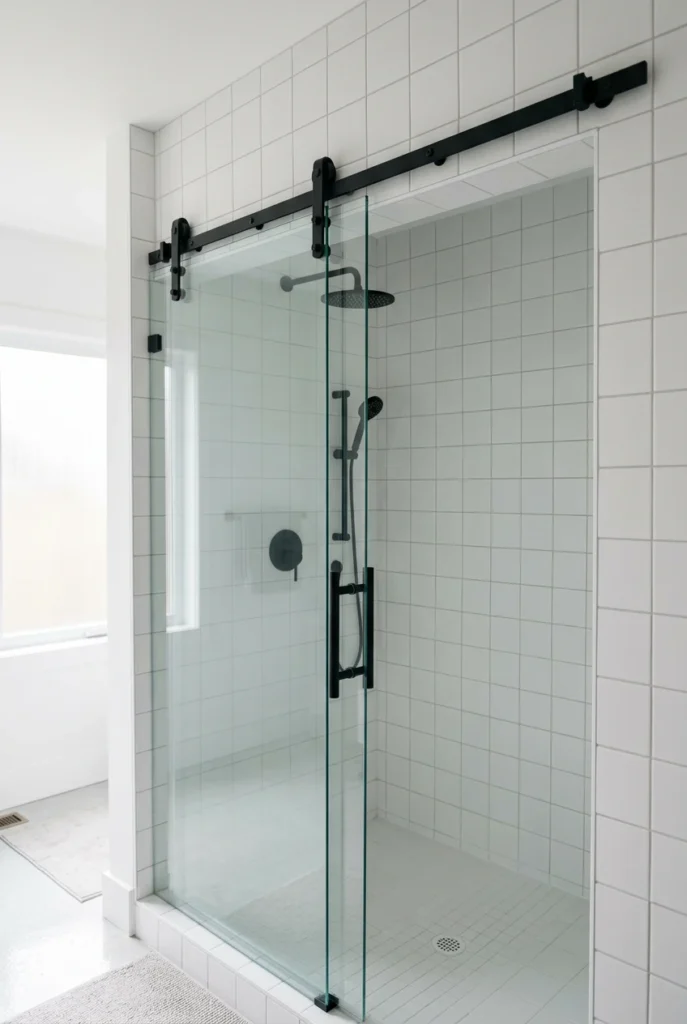
A sliding door mounted on an exposed track eliminates the need for floor space to swing a door open, making it a genuinely smart choice for bathrooms where clearance is tight.
The track itself becomes a design detail rather than just hardware, especially in a matte black finish.
This configuration works especially well in a smaller bathroom where every inch of walking space matters. It’s worth considering anytime a swinging door would interfere with your layout.
7. Pivot Frameless Door
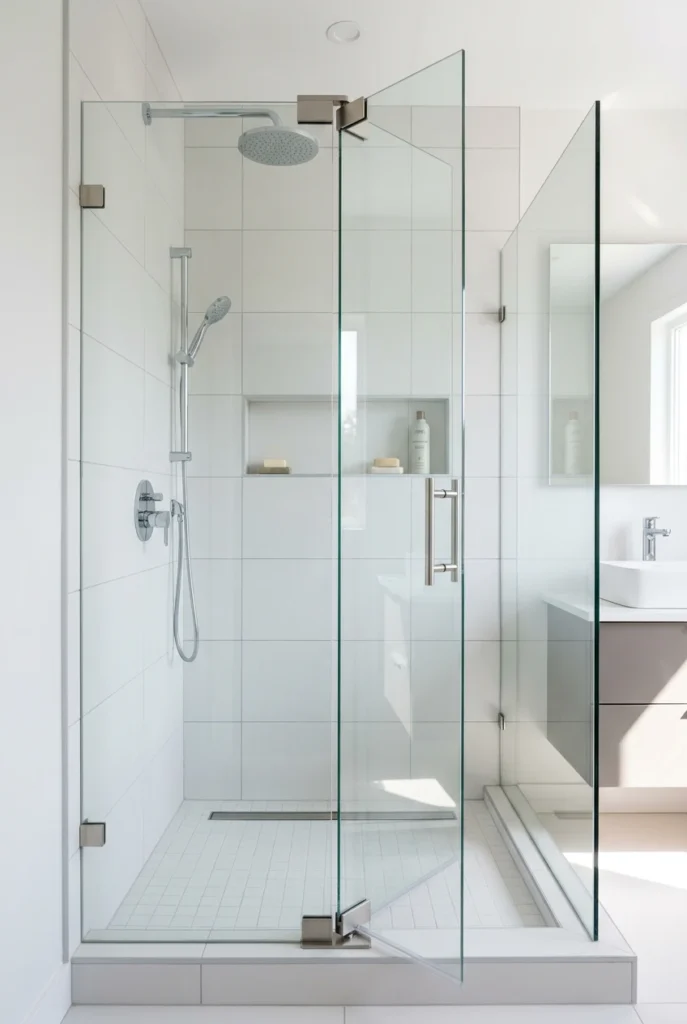
A pivot hinge system positioned at the top and bottom lets your door rotate open on a central axis rather than swinging from the side like a traditional hinge.
This configuration often allows for a wider opening in a similar footprint, since the door can swing both in and out.
Minimal hardware keeps the overall frameless look intact despite the more complex mechanism underneath. It’s a smart choice if you want frameless style with a slightly different functional approach.
8. Bi-Fold Space-Saving Door
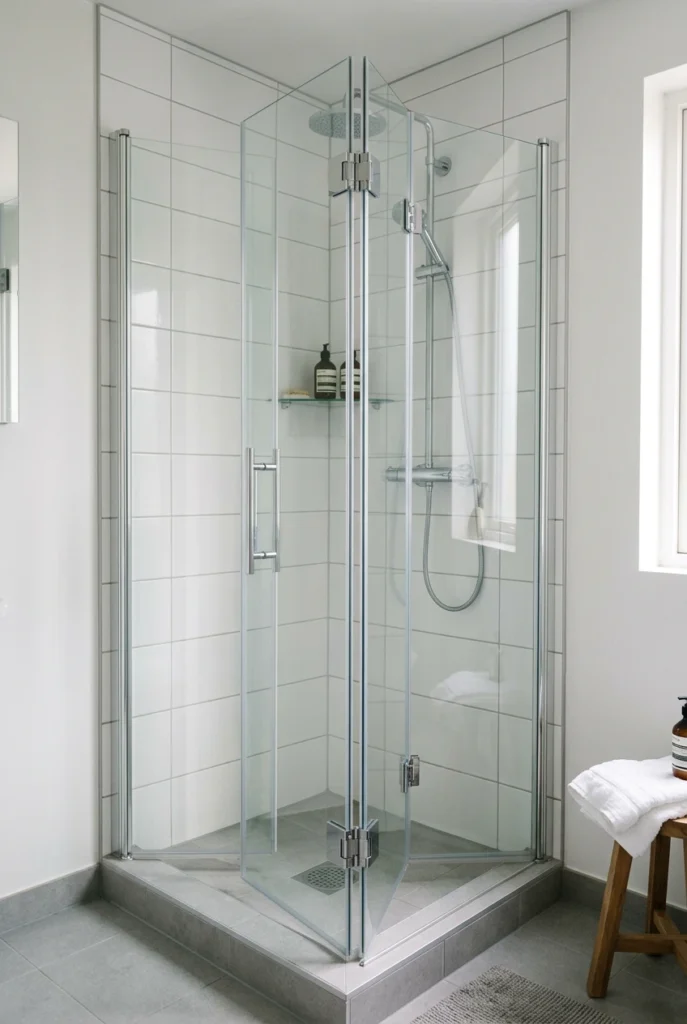
A bi-fold door folds inward on a center hinge instead of swinging fully into the room, making it a genuinely practical choice for tight bathroom layouts.
This configuration requires significantly less clearance than a standard swinging door while still providing full access to the shower.
It’s worth considering if your bathroom’s door placement or fixture layout leaves limited room for a traditional swing. This mechanism solves a real space problem that many other door styles can’t.
9. Fixed Panel with Walk-In Opening
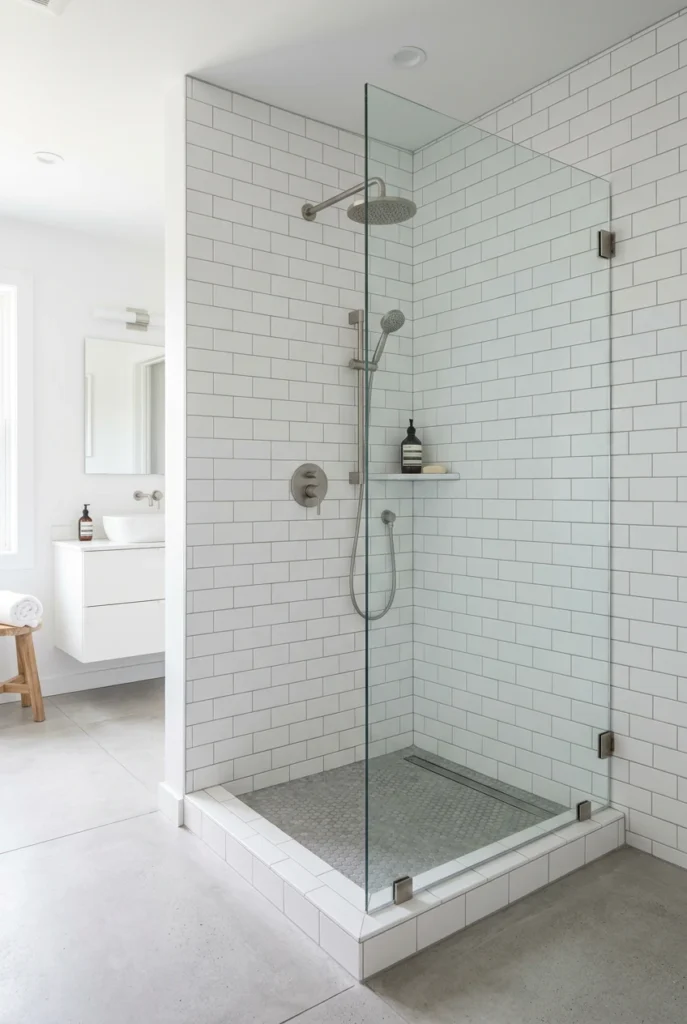
Sometimes the smartest door is no door at all, and a single fixed glass panel positioned to block splash gives you most of the enclosure’s benefit without any hinges or hardware whatsoever.
This configuration pairs naturally with a doorless, walk-in shower layout. White subway tile keeps the whole space feeling open and airy.
It’s worth considering if you like the idea of an open shower but still want some splash protection near the entry.
10. Small Bathroom Shower Door
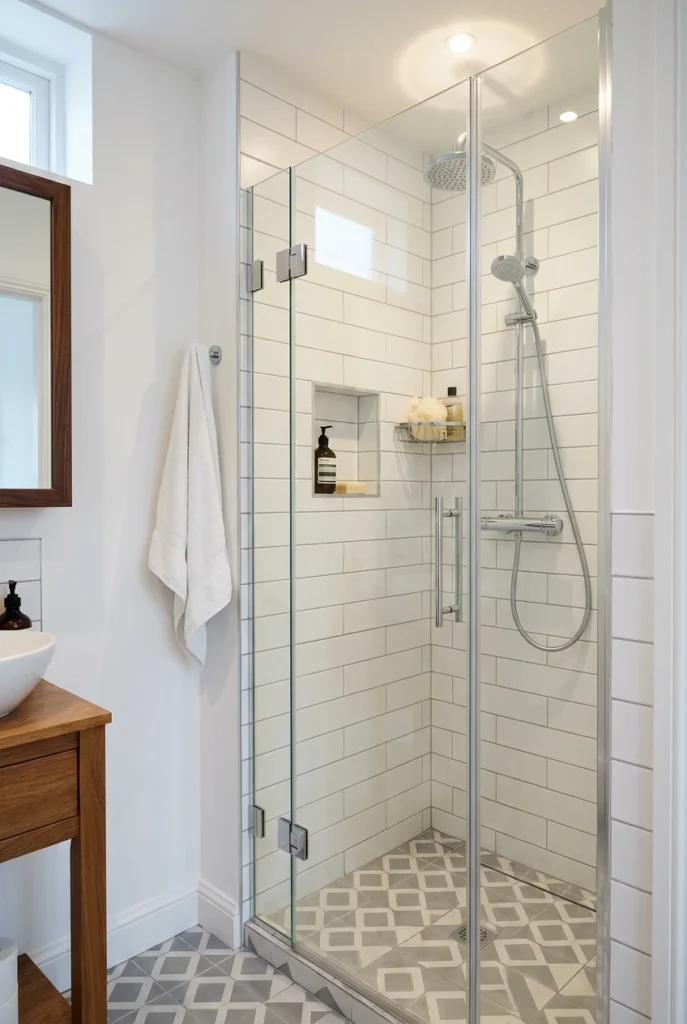
Choosing a door with minimal hardware and a compact swing radius matters just as much as choosing the right glass style when you’re working with a small bathroom.
A slim frameless design avoids the visual bulk that a heavier framed door would add to a tight space. White tile throughout keeps the whole area feeling bright despite the limited square footage.
This is proof that even a small bathroom can accommodate a genuinely elegant shower door.
11. Primary Suite Shower Enclosure
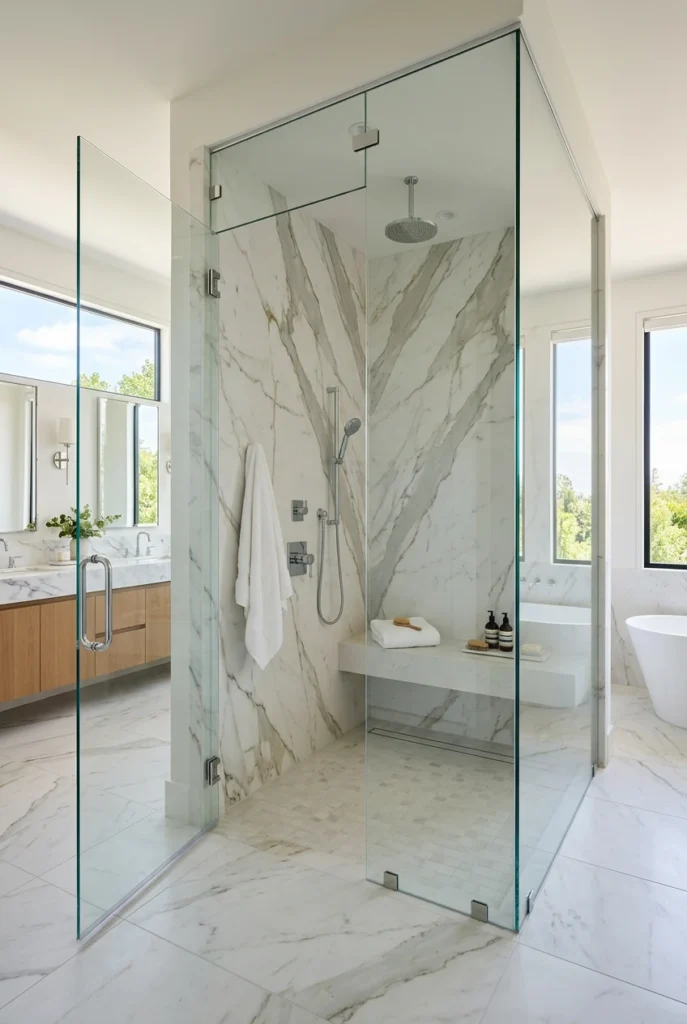
A spacious primary suite gives you room for a full frameless enclosure with a wide hinged door, large-format porcelain slab walls, and a built-in bench all working together.
This scale lets the shower feel like a genuine architectural feature rather than just a functional necessity.
Bright, natural lighting fills the generous space, making the whole enclosure feel airy despite its size. This is worth prioritizing if you’re planning a full primary bathroom renovation.
12. Tub-Shower Combo Glass Door
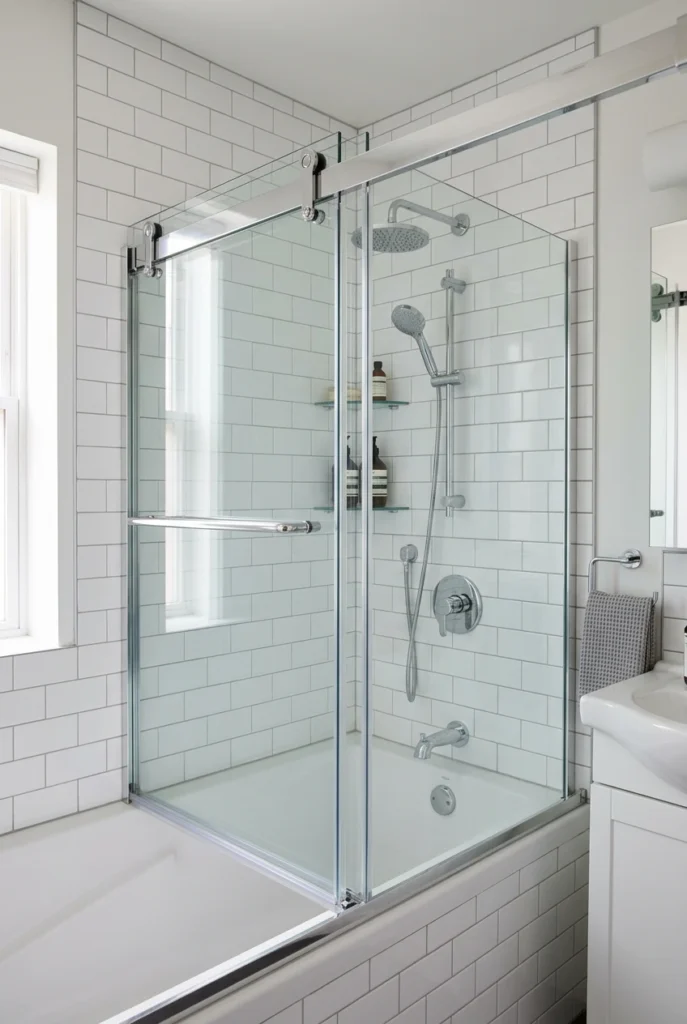
A sliding glass door mounted above your tub’s edge on a chrome track solves the classic tub-shower combo challenge, enclosing the shower area while keeping the tub itself fully accessible below.
This configuration is one of the most practical solutions if you need both bathing options in a single space.
White subway tile keeps the whole combo unit feeling cohesive and classic. It’s a smart choice for households that use both functions regularly.
13. Corner Shower Door Configuration
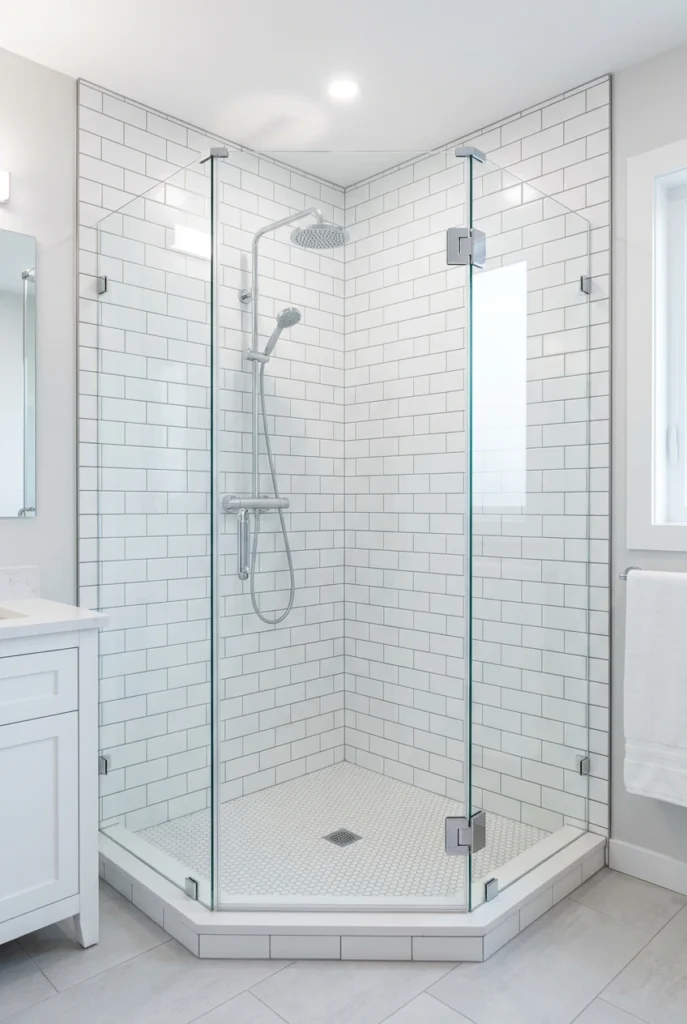
An angled frameless door paired with two fixed side panels lets you make the most of a corner shower position, maximizing your available square footage rather than wasting it.
This configuration works especially well in bathrooms where a straight-wall shower simply wouldn’t fit the existing layout.
White tile throughout keeps the whole enclosure feeling bright and cohesive. It’s worth considering if your bathroom’s dimensions naturally lend themselves to a corner installation.
14. Crystal Clear Glass Door
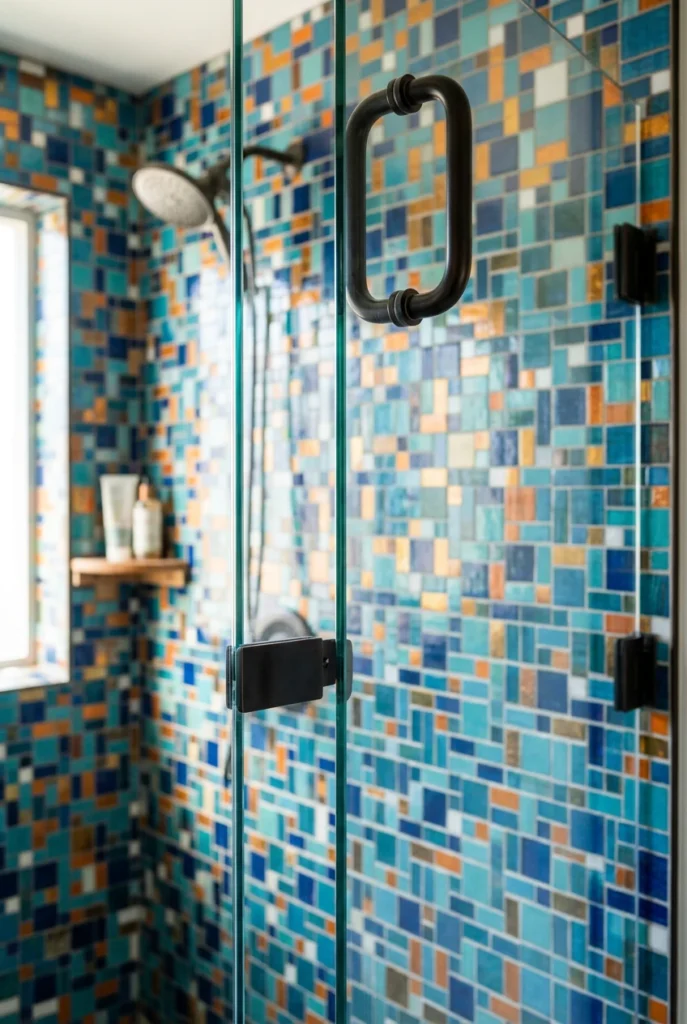
Standard shower glass often carries a subtle greenish tint, but low-iron glass delivers genuinely true clarity without that color cast.
This upgrade matters most if your shower features a bold tile pattern or colorful mosaic you want to see clearly through the glass.
The difference is subtle but noticeable once you see the two side by side. It’s worth the additional cost if you want your shower’s interior design to read exactly as intended.
15. Frosted Privacy Glass Door
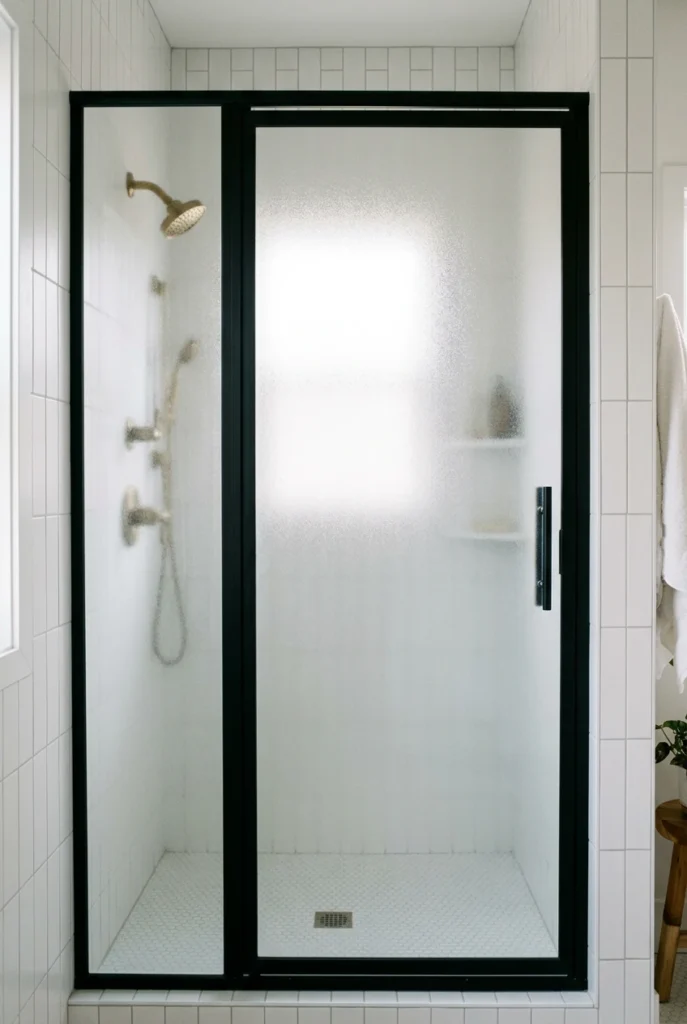
Evenly frosted glass gives you genuine privacy while still allowing soft, diffused light to pass through into the shower.
This treatment works especially well if your shower is visible from other parts of the bathroom or a shared space.
A slim matte black frame adds definition without competing with the glass’s soft, textured quality. It’s a smart choice if privacy matters more to you than an unobstructed view.
16. Textured Fluted Glass Door
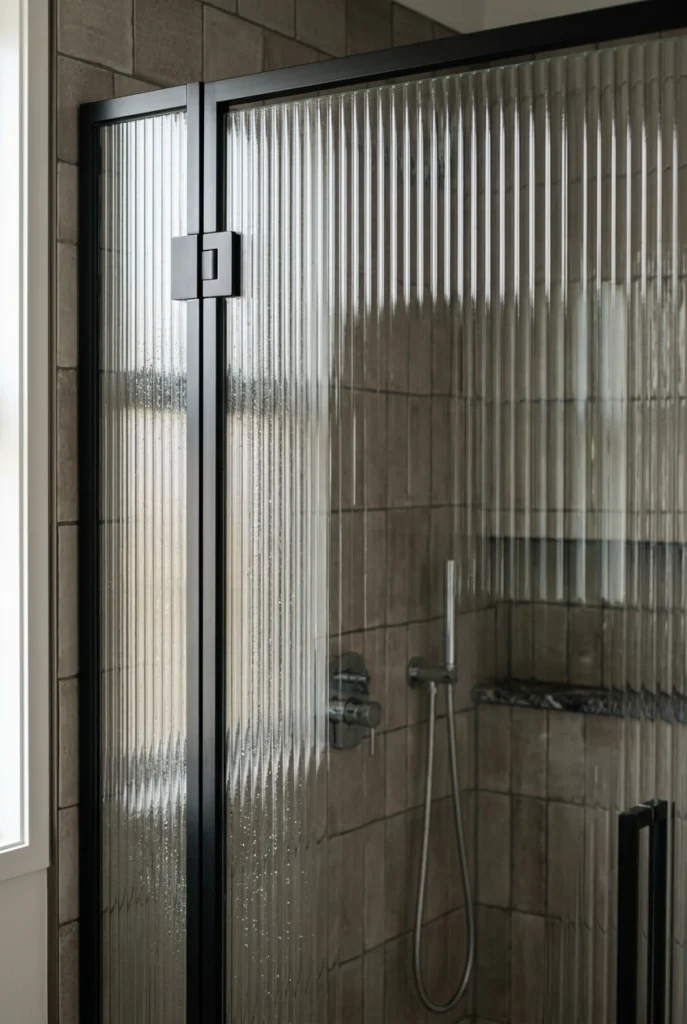
Vertically fluted glass adds genuine dimensional detail to your shower door, with its ribbed texture softly distorting the view rather than fully obscuring it like frosted glass would.
This treatment catches light and shadow beautifully throughout the day, adding visual interest even when the shower isn’t in use.
It’s a distinctive choice if you want something more decorative than plain clear glass but less opaque than full privacy glass.
This style works especially well in a bathroom that already leans toward textured, tactile materials.
17. Subtly Tinted Glass Door
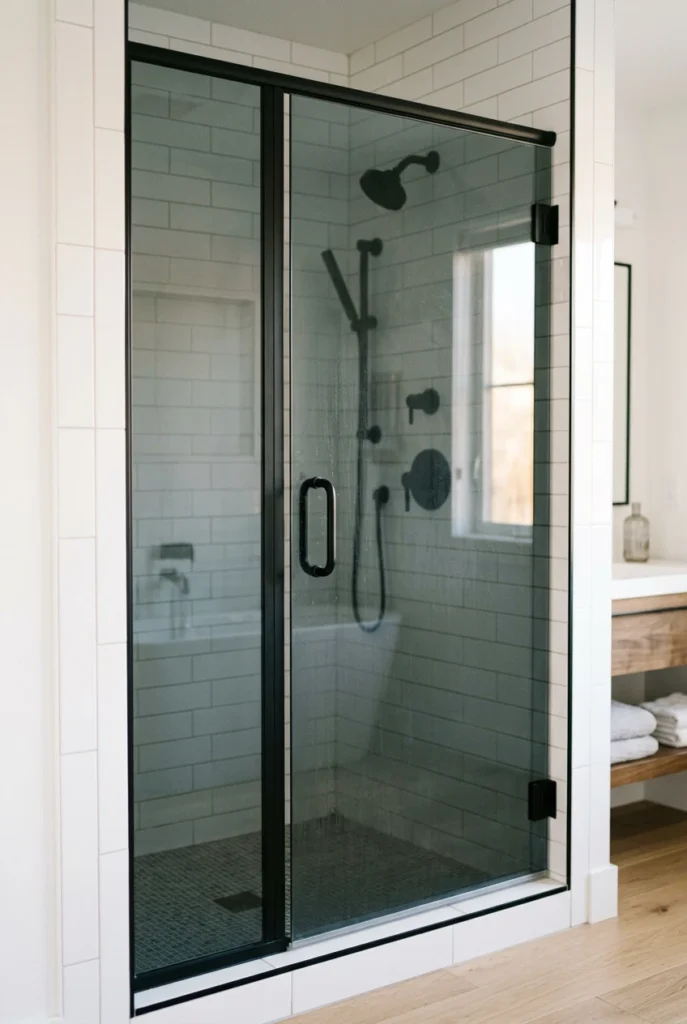
Smoke-gray tinted glass softens visibility into your shower without fully obscuring it the way frosted glass does, striking a genuine middle ground between privacy and openness.
This treatment also adds a moody, sophisticated quality that clear glass simply can’t offer. Paired with a matte black frame, the tinted glass feels cohesive and intentional rather than like an afterthought.
It’s worth considering if you want your shower door to feel like a deliberate style choice rather than a purely functional barrier.
18. Frameless Minimal Hardware Door
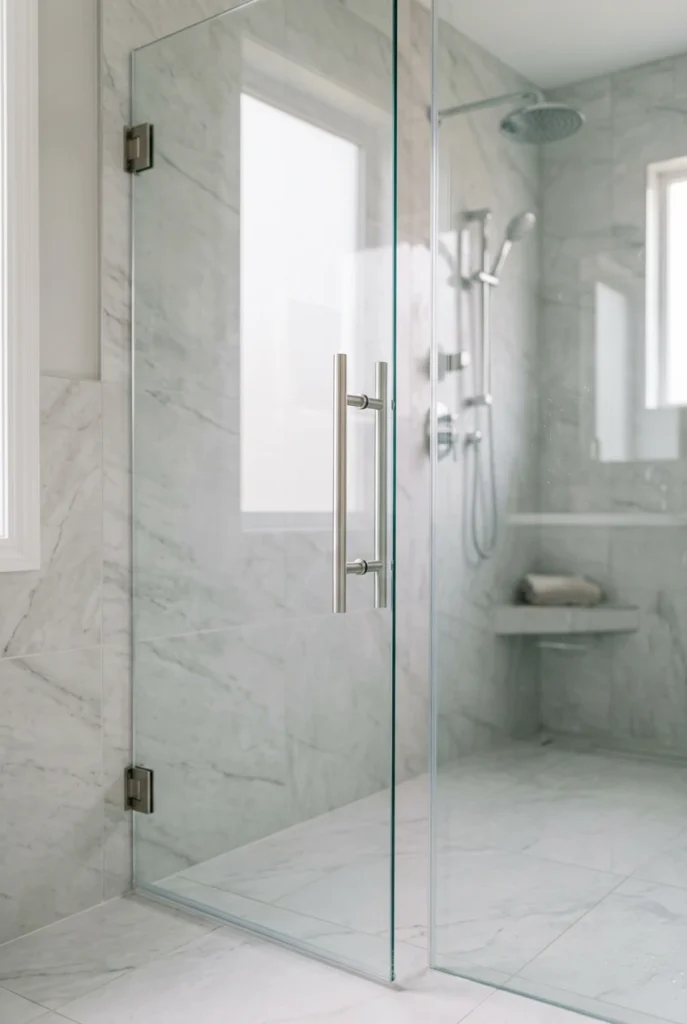
Keeping hardware to just a slim pull handle and minimal hinge clips lets your shower door feel almost invisible, emphasizing the glass itself rather than any surrounding metal.
This approach requires higher-quality glass and precise installation, since there’s no frame to hide minor imperfections.
The payoff is a genuinely seamless look that feels distinctly more expensive than a framed alternative. It’s worth the investment if a truly minimal aesthetic is your top priority.
19. Matte Black Frame Detail
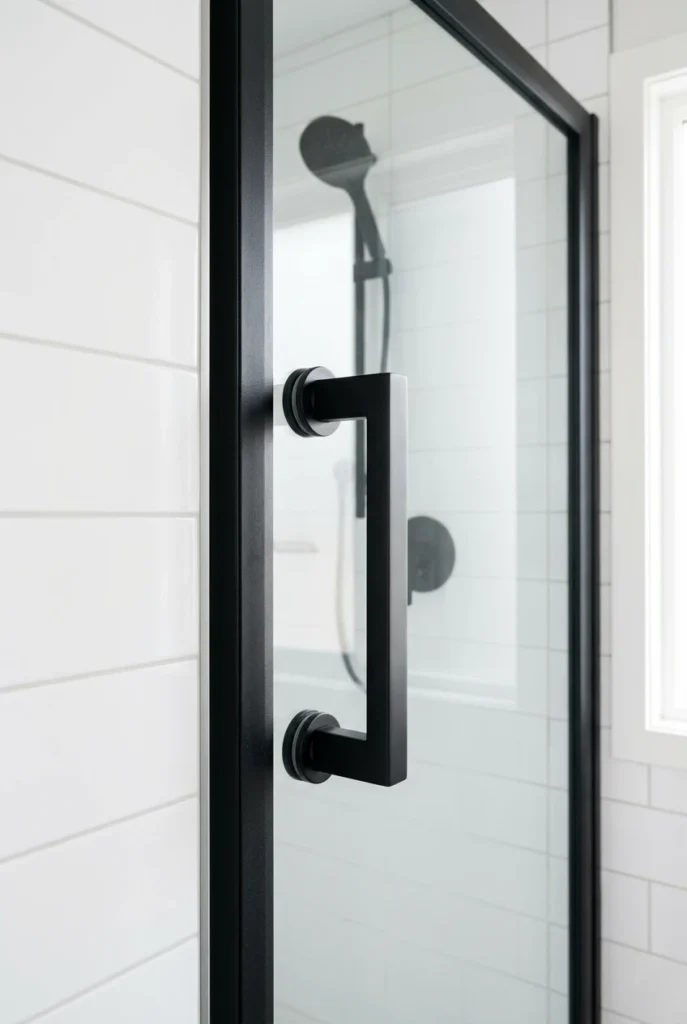
A slim matte black frame gives your shower door a crisp, graphic silhouette that stands out clearly against white tile.
This detail works especially well if the rest of your bathroom already features black fixtures or hardware, creating a cohesive material story throughout the space.
The frame also adds a bit of structural reinforcement compared to a fully frameless design. It’s a reliable choice if you want a bold, modern look without going fully frameless.
20. Brass-Framed Shower Door
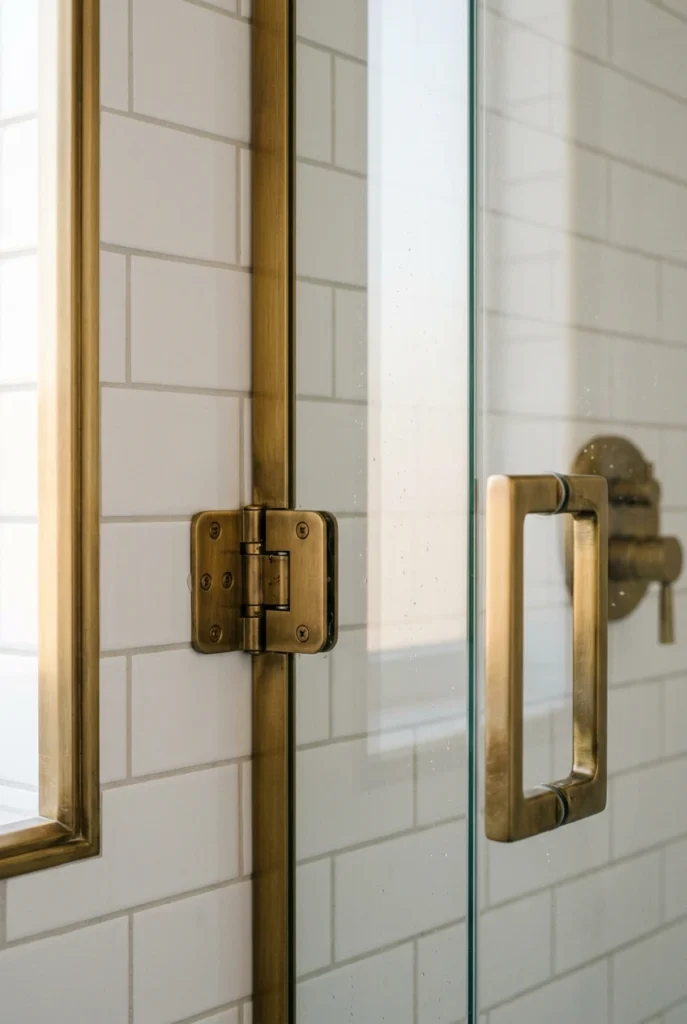
A warm brushed brass frame brings genuine richness to your shower door, especially paired with matching brass hinges and handle for a cohesive metal story.
This finish works beautifully against white subway tile, where the warm metal tones really stand out. Brass also tends to develop a soft patina over time, adding character rather than looking worn.
It’s a great choice if you want your shower door to feel like a genuine design statement rather than purely functional hardware.
21. Chrome Hardware Shower Door
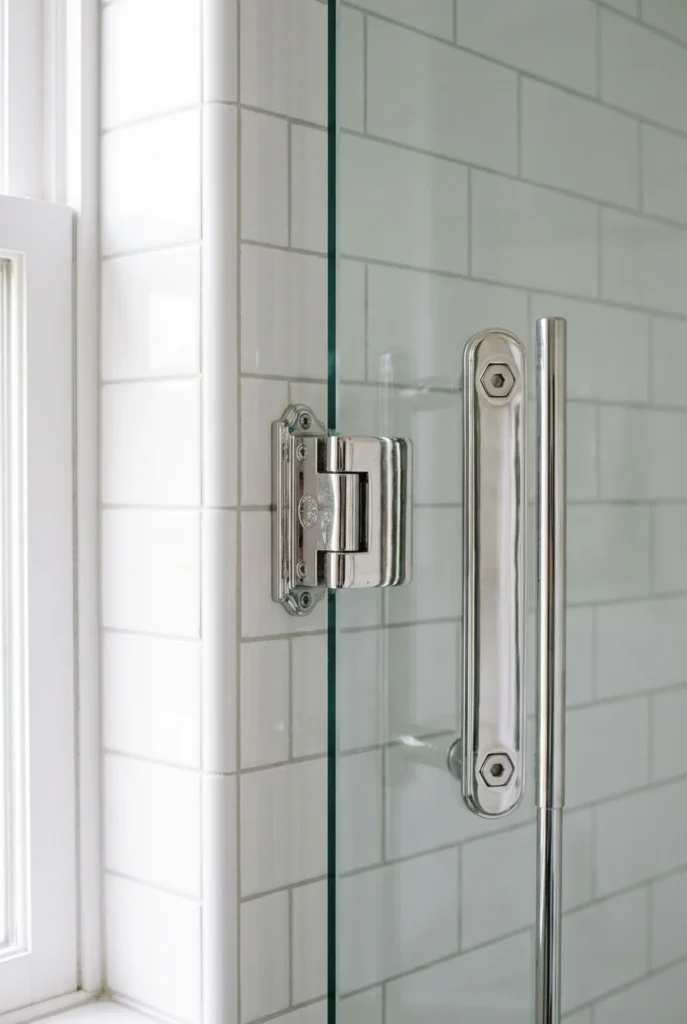
Classic polished chrome hardware never really goes out of style, and it pairs beautifully with almost any tile choice, from vintage hexagon to modern subway.
This finish reflects light nicely, adding a bit of brightness to the whole shower area.
Chrome also tends to be one of the most affordable and widely available hardware finishes, making it an easy match for existing fixtures. It’s a reliable, versatile choice if you’re not sure which metal finish to commit to.
22. Budget-Friendly Shower Door
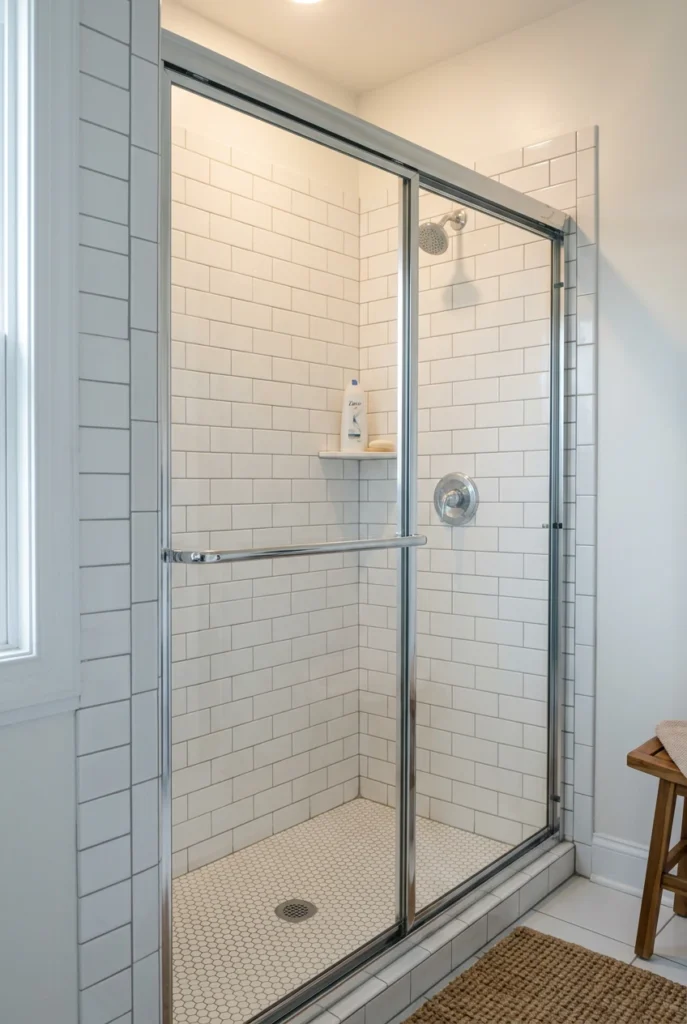
You don’t need custom glass work or high-end hardware to get a genuinely functional, good-looking shower door.
A simple framed sliding door with basic chrome hardware delivers real function for a fraction of the cost of a frameless custom option.
This approach works especially well if your existing plumbing and layout are already in reasonably good shape. It’s proof that a clean, polished shower enclosure is achievable on almost any renovation budget.
23. DIY Shower Door Installation
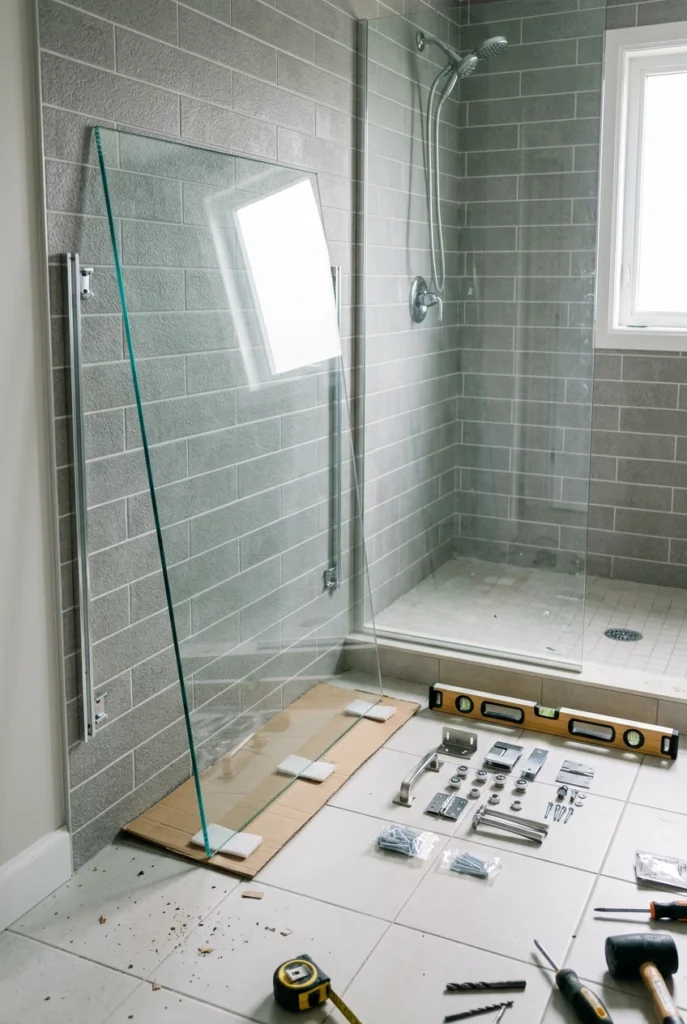
Installing a shower door yourself is achievable if you’re comfortable with basic tools and precise measurements, since most kits come with detailed mounting instructions and hardware included.
A level is essential for this project, since even small misalignments can cause real leaking problems down the line.
It’s worth double-checking your wall surfaces are properly waterproofed before installation begins. This project can save significant labor costs if you’re already comfortable with basic home improvement work.
24. Hinged Versus Sliding Door Decision
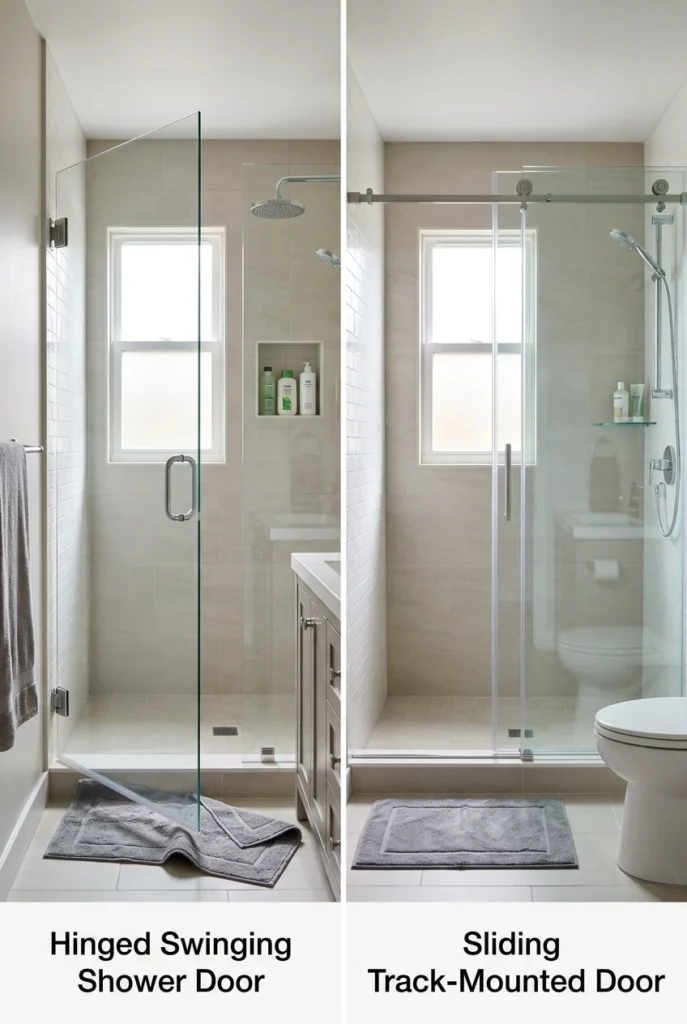
Choosing between a hinged and sliding door really comes down to your available floor space and how the door’s swing radius fits your specific layout.
A hinged door needs clearance to open fully into the room, while a sliding door glides along a track without requiring any additional floor space.
This decision is worth making early, since it affects your whole bathroom’s walking path and fixture placement. It’s a practical question worth answering before you fall in love with any particular style.
25. Keeping a Glass Shower Door Clean
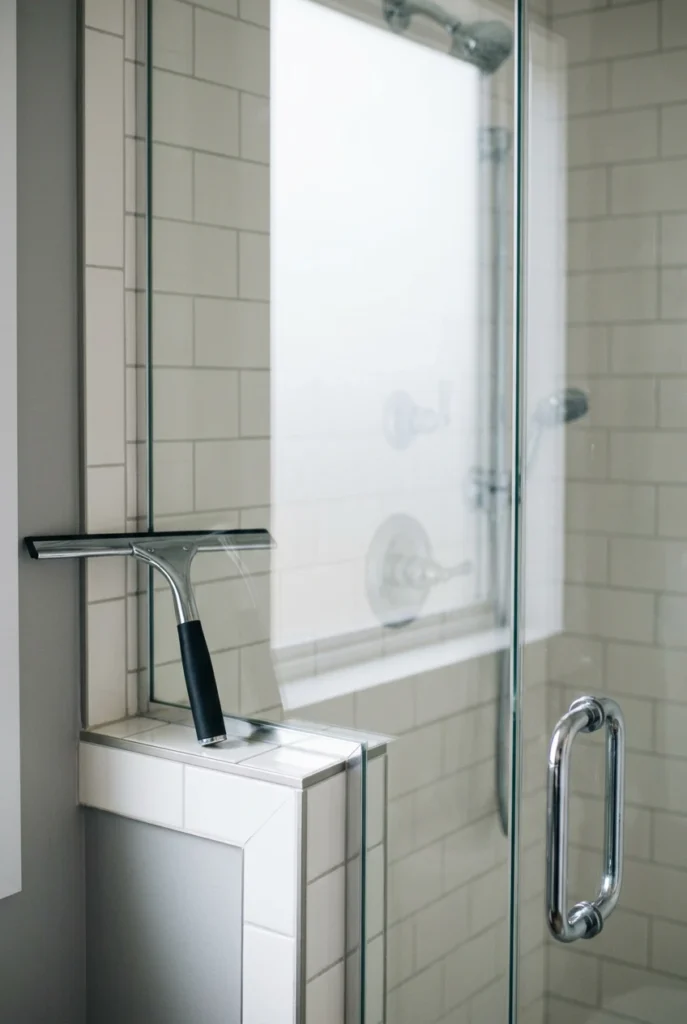
A squeegee used after every shower is genuinely the single most effective way to prevent water spots and soap scum from building up on your glass door.
This small daily habit takes just a few seconds but makes a real difference in how clear your glass stays over time.
Choosing treated or coated glass at installation can also help minimize buildup between cleanings.
It’s worth developing this habit early, since removing established buildup is far more work than preventing it in the first place.
Whether you’re drawn to a frameless minimalist panel or a warm brass-framed door, there’s a shower door idea here for every style and practical need.
Pick the elements that matter most to you, whether that’s space constraints, privacy, or maintenance, and build your decision from there.
Pin your favorites now so you have real reference points ready when it’s time to finalize your shower door choice.