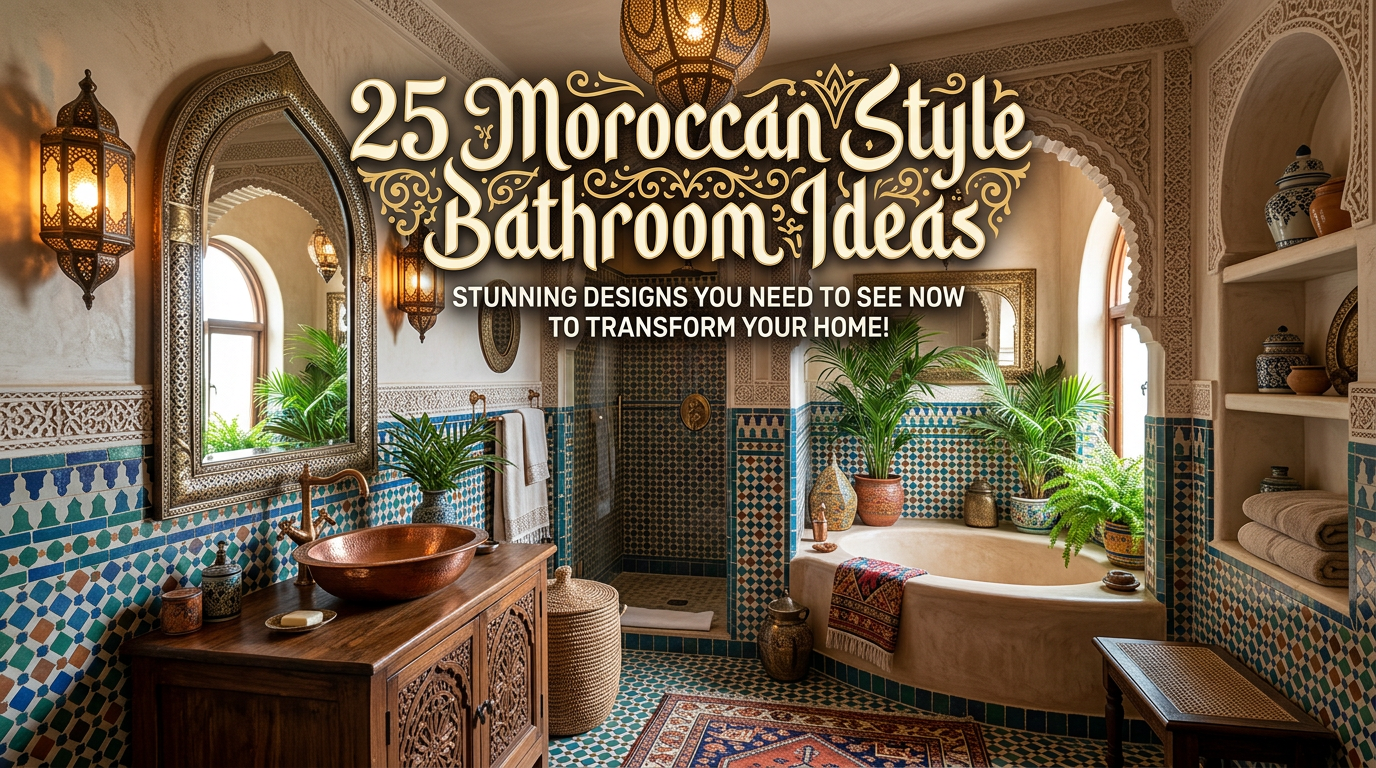
25 Moroccan Style Bathroom Ideas Full of Warmth and Craft
Moroccan bathroom design brings together rich color, hand-carved detail, and centuries of craft tradition in a way that feels genuinely warm and grounded.
These 25 ideas cover everything from full style variations to signature architectural details to budget-friendly execution, so there’s real direction here whether you’re planning a full renovation or a simple refresh.
Save your favorites and start picturing the Moroccan-inspired bathroom that fits your own home and budget.
1. Modern Moroccan Bathroom Style
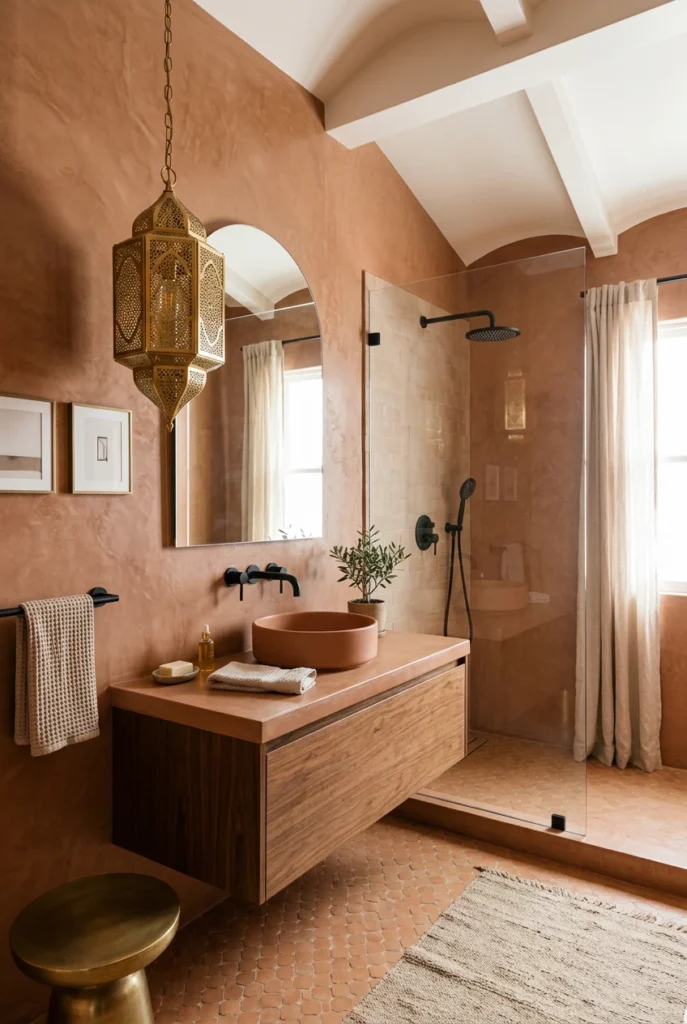
Smooth tadelakt plaster in a warm terracotta tone gives this bathroom genuine Moroccan character while still feeling current and restrained.
A sleek floating vanity and matte black fixtures keep the overall look from tipping into anything overly ornate. A brass pendant lantern with clean geometric lines adds just enough traditional detail without overwhelming the space.
This direction works especially well if you want Moroccan warmth balanced with a more contemporary, streamlined execution.
2. Traditional Moroccan Bathroom Design
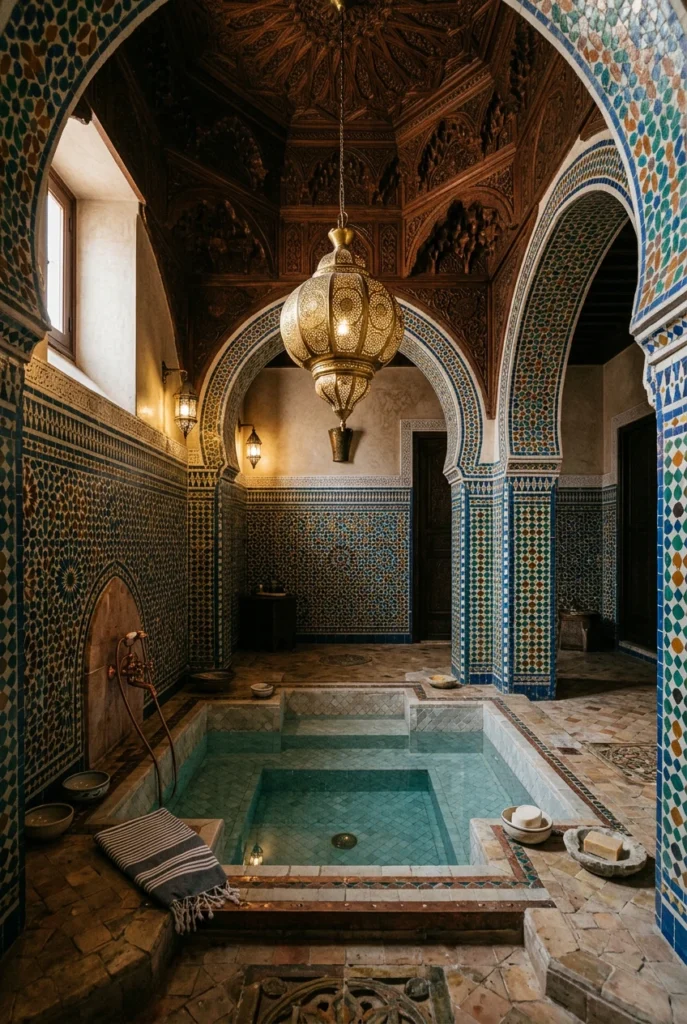
Intricate carved wood ceiling detailing and rich jewel-toned mosaic tile bring genuine traditional Moroccan craftsmanship into this bathroom.
A deep sunken tiled bathing area reinforces the sense of ritual central to Moroccan bathing culture. An ornate brass lantern hanging low overhead completes the layered, historically rooted look.
This direction works especially well if you want your bathroom to feel like a genuine piece of Moroccan architecture rather than a lightly themed space.
3. Berber-Inspired Bathroom Style
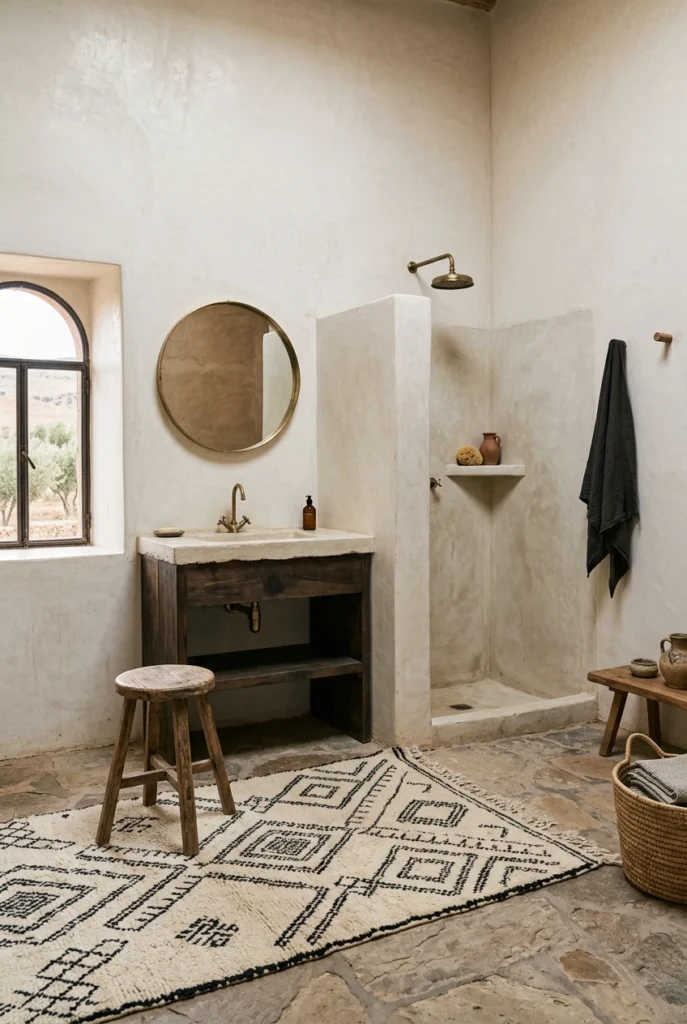
Berber design draws from North Africa’s indigenous craft traditions, favoring raw, earthy texture over the more ornate tilework typically associated with Moroccan interiors.
Warm whitewashed plaster and a woven Berber rug in cream and black geometric motifs bring genuine texture without excessive pattern.
Simple wood stool seating keeps the whole space feeling grounded and unfussy. This direction works especially well if you want Moroccan-adjacent style that leans more minimal and tactile.
4. Marrakech Riad Bathroom Design
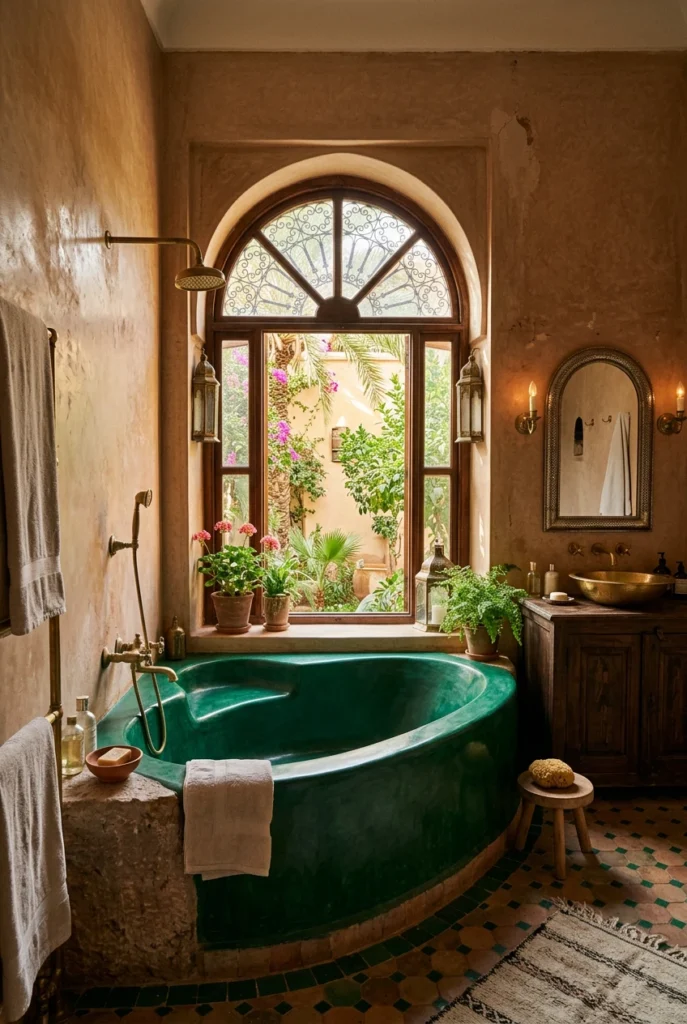
A deep emerald tadelakt soaking tub brings genuine Marrakech riad character into this bathroom, evoking the enclosed courtyard homes central to Moroccan architecture.
An arched wood-framed window overlooking a private courtyard reinforces that same indoor-outdoor connection. Brass fixtures throughout tie the space together with warm metallic detail.
This direction works especially well if your home has private outdoor space worth incorporating into the design.
5. Desert Moroccan Bathroom Style
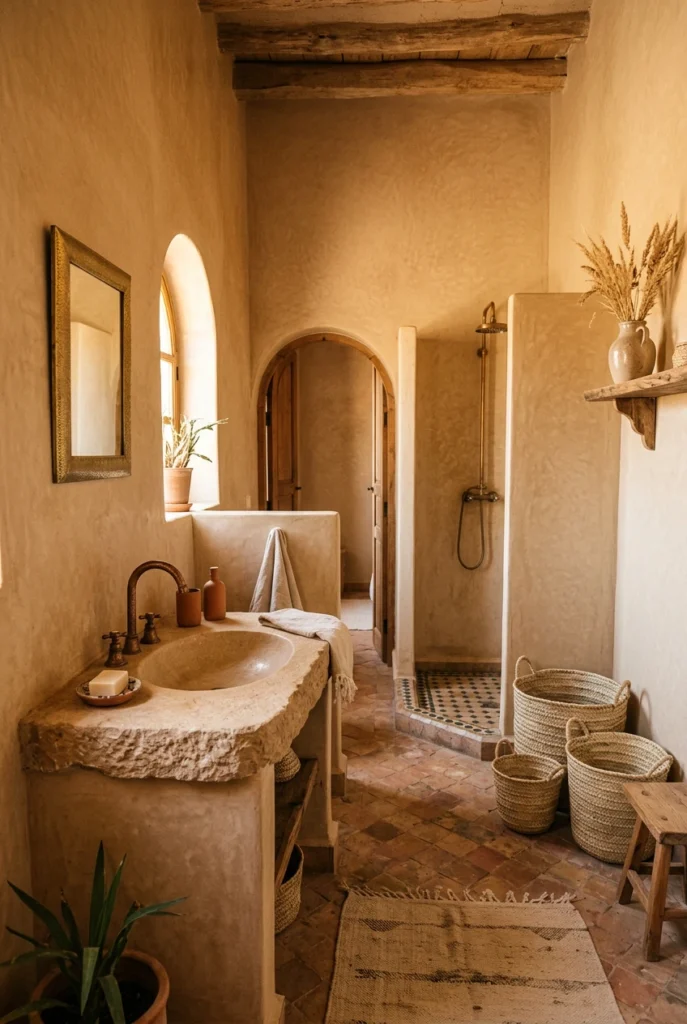
Warm sand-toned tadelakt walls and a low carved stone basin sink capture the sun-baked, earthy quality found in Morocco’s desert regions.
Woven baskets in the corner add genuine texture without introducing any competing pattern or color.
This direction skips the jewel-toned richness of more traditional Moroccan interiors in favor of something quieter and more elemental. It works especially well if you want your bathroom to feel grounded and organic rather than richly decorated.
6. Small Moroccan Bathroom Style
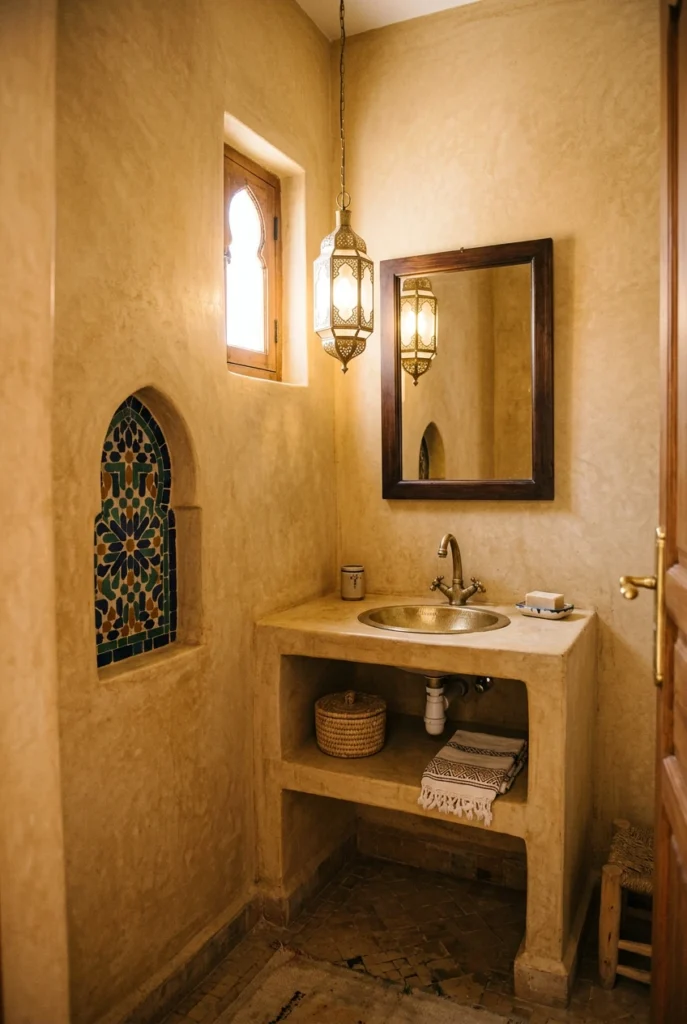
Moroccan style doesn’t require a spacious bathroom to come through clearly, even though many examples lean into larger primary suites.
A compact tadelakt-finished vanity and one small brass lantern prove the aesthetic translates well into a genuinely tight footprint.
Limiting mosaic tile to a small niche keeps the pattern contained rather than overwhelming the whole room. This is a great reference if your bathroom is on the smaller side but you still want authentic Moroccan character.
7. Moroccan Primary Bathroom Suite
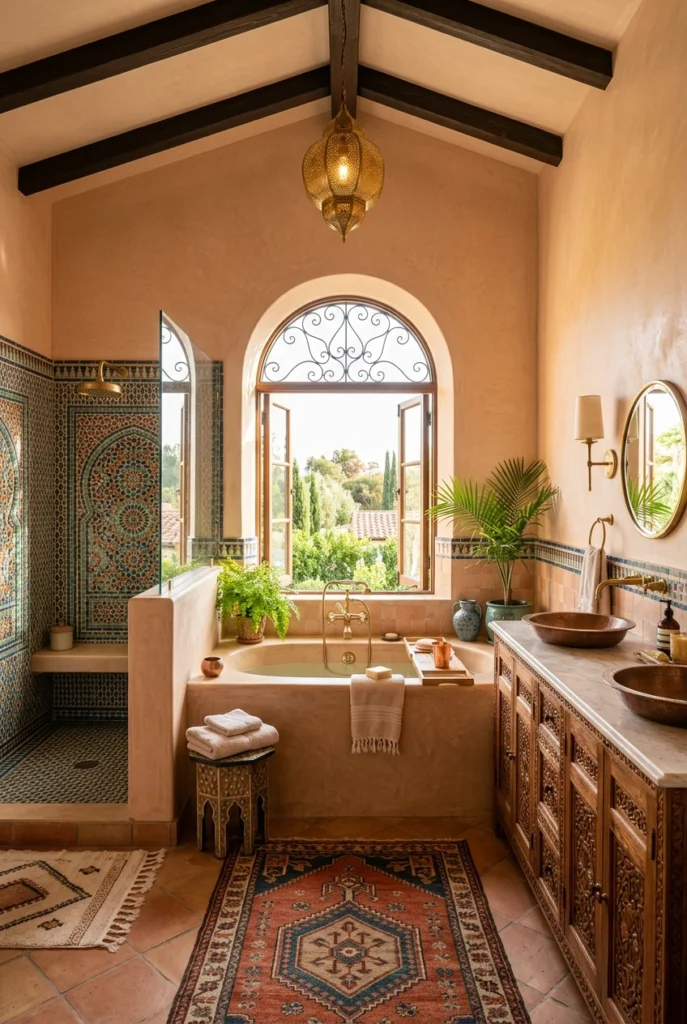
A primary suite gives you room to layer in Moroccan style fully, from a deep tadelakt soaking tub beneath an arched window to a carved wood double vanity.
A walk-in shower with layered mosaic tile detailing adds richness without overwhelming the generous space.
This is the version of Moroccan style that feels genuinely elevated, since the bigger footprint allows each element room to breathe. It’s worth prioritizing if you’re planning a full primary bathroom renovation.
8. Moroccan Powder Room Design
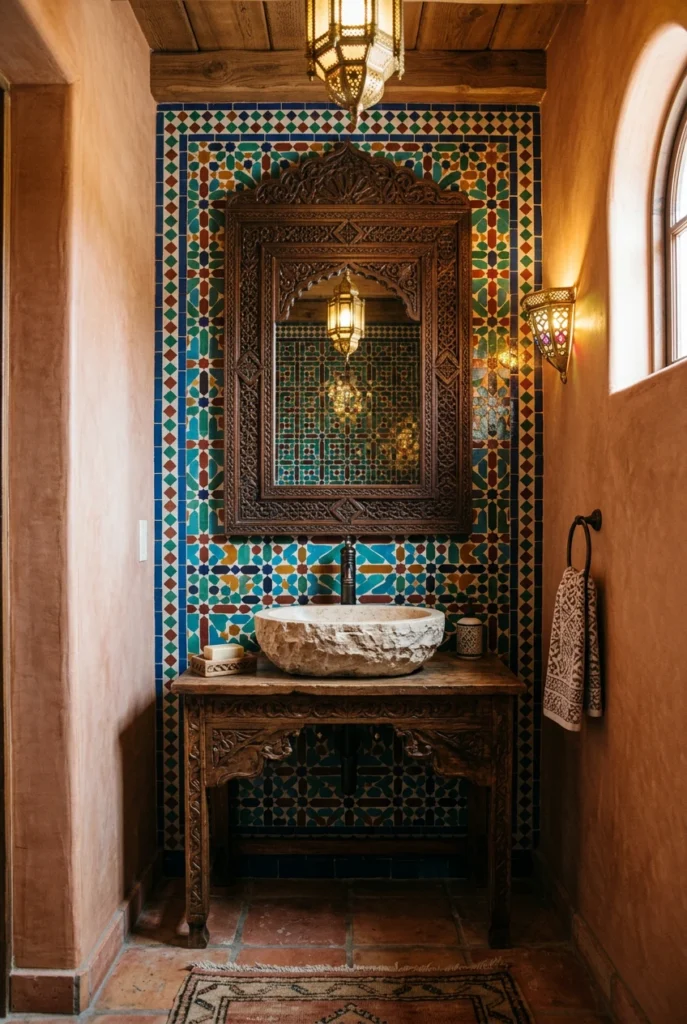
A small powder room is actually one of the easiest spots to go bold with Moroccan style, since you’re only committing to one compact space.
A jewel-toned mosaic tile accent wall creates serious visual impact despite the room’s modest size. A carved stone vessel sink and hand-carved wood mirror complete the richly detailed look.
This is a great starting project if you’re testing out Moroccan style before committing to a bigger space.
9. Moroccan Guest Bathroom Style
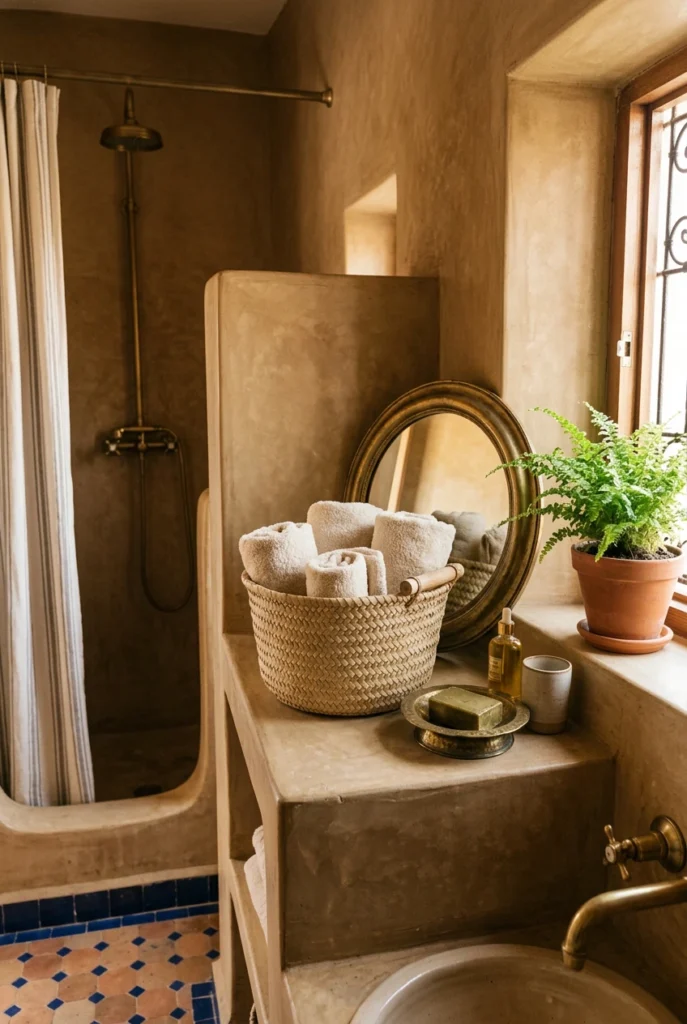
A guest bathroom benefits from Moroccan warmth just as much as any other room, giving visitors a genuinely grounded space to use.
Warm tadelakt walls and a woven basket of towels create the foundation, while a brass soap dish adds a small artisanal touch.
This execution works especially well if you want your guest bathroom to feel intentional rather than an afterthought. It’s proof that Moroccan style doesn’t need to be reserved for your primary spaces.
10. Tadelakt Plaster Wall Finish
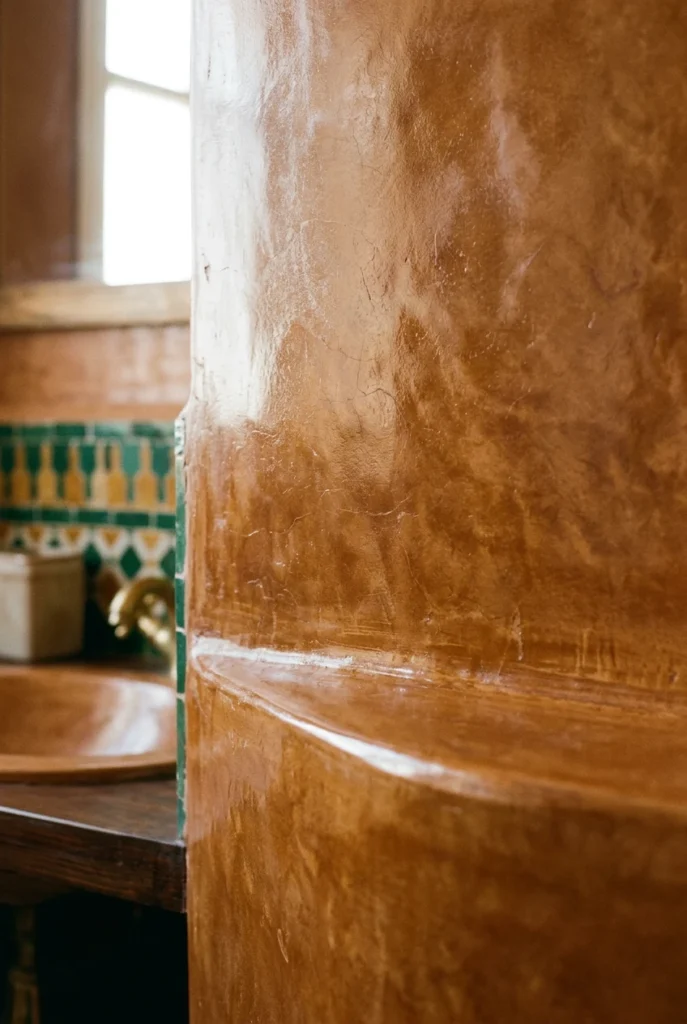
Traditional tadelakt lime plaster brings a smooth, waxed sheen that’s genuinely unique among wall finishes, with subtle color variation that flat paint simply can’t replicate.
This ancient Moroccan technique is naturally water-resistant, making it a genuinely practical choice for bathroom walls. Its polished surface catches light beautifully throughout the day.
This finish requires a skilled plasterer to execute authentically, but the payoff is a wall that feels genuinely rooted in Moroccan craft tradition.
11. Carved Wood Screen Detail
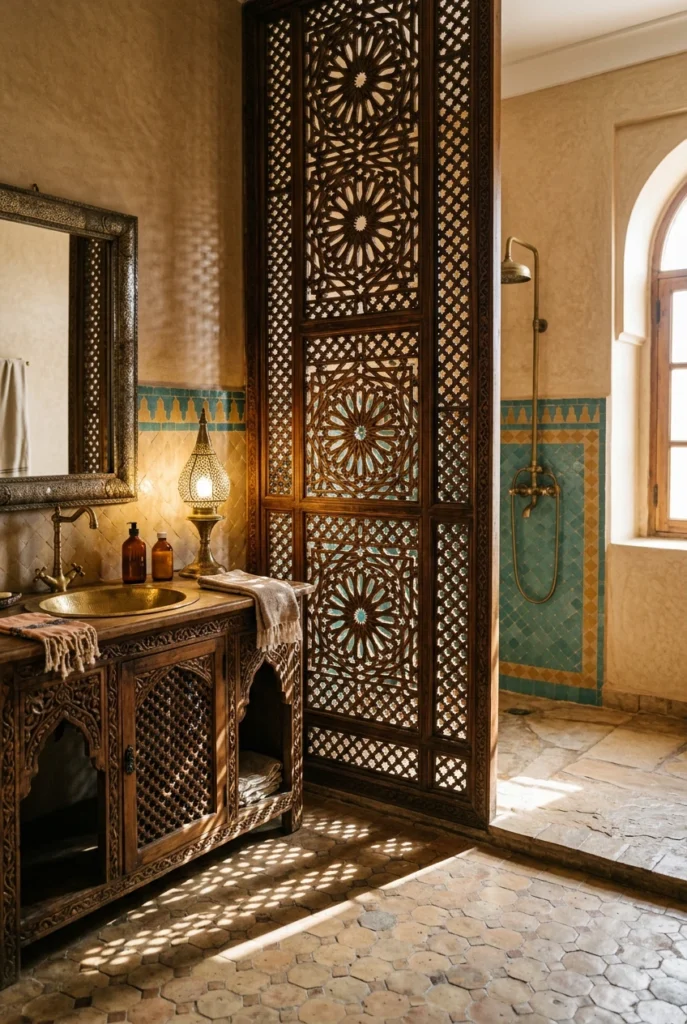
An intricately carved wood screen brings genuine Moroccan craftsmanship into your bathroom while also serving a real function as a room divider.
Its geometric latticework casts patterned shadows across the floor as light shifts throughout the day, adding visual interest even without any additional decor.
This detail works especially well separating your vanity area from the shower, creating a sense of privacy without a solid wall. It’s worth seeking out an authentic hand-carved piece for genuine craftsmanship.
12. Arched Niche Wall Feature
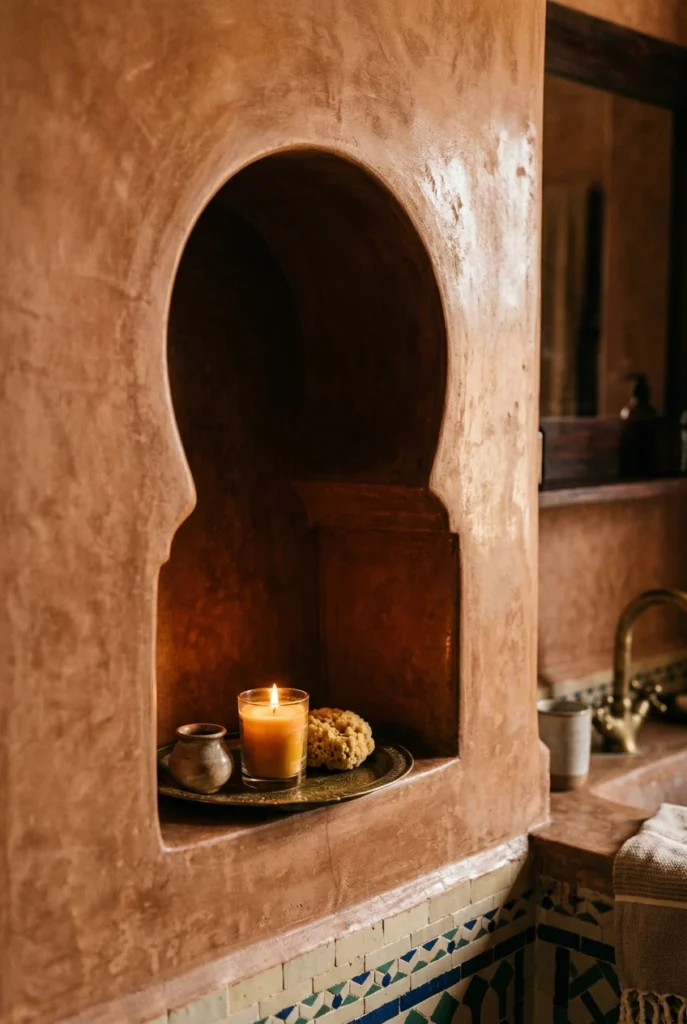
A deep arched niche built into your tadelakt plaster wall creates genuine architectural interest while doubling as a small styling opportunity.
A brass tray and lit candle inside the niche reinforce the warm, ritualistic quality central to Moroccan bathing culture.
This detail requires structural work during a renovation, so it’s best planned alongside other plaster or wall changes. It’s worth the investment if you want your bathroom to feel like genuine architecture rather than just decor.
13. Riad-Style Courtyard Window
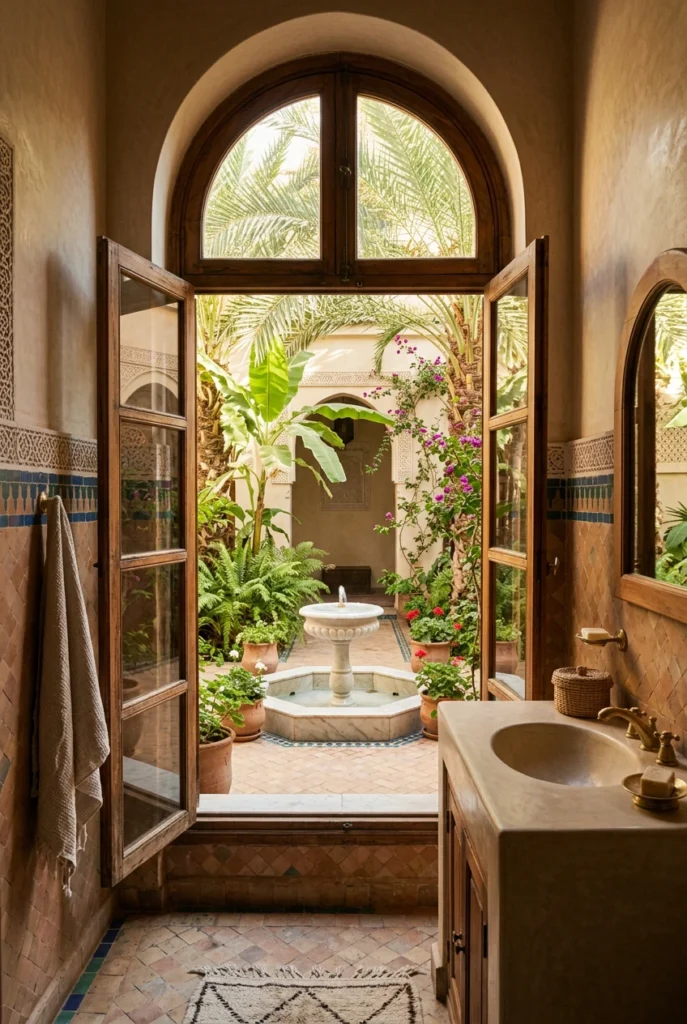
A tall arched window overlooking a private courtyard blurs the line between your bathroom and the outdoors, echoing the enclosed courtyard homes central to Moroccan architecture.
A small fountain and potted palms visible beyond the glass extend the room’s atmosphere into the landscape itself.
This detail works especially well if your bathroom already has access to a private outdoor space worth showcasing. It’s worth prioritizing during a window replacement if courtyard views are available to you.
14. Jewel-Tone Moroccan Palette
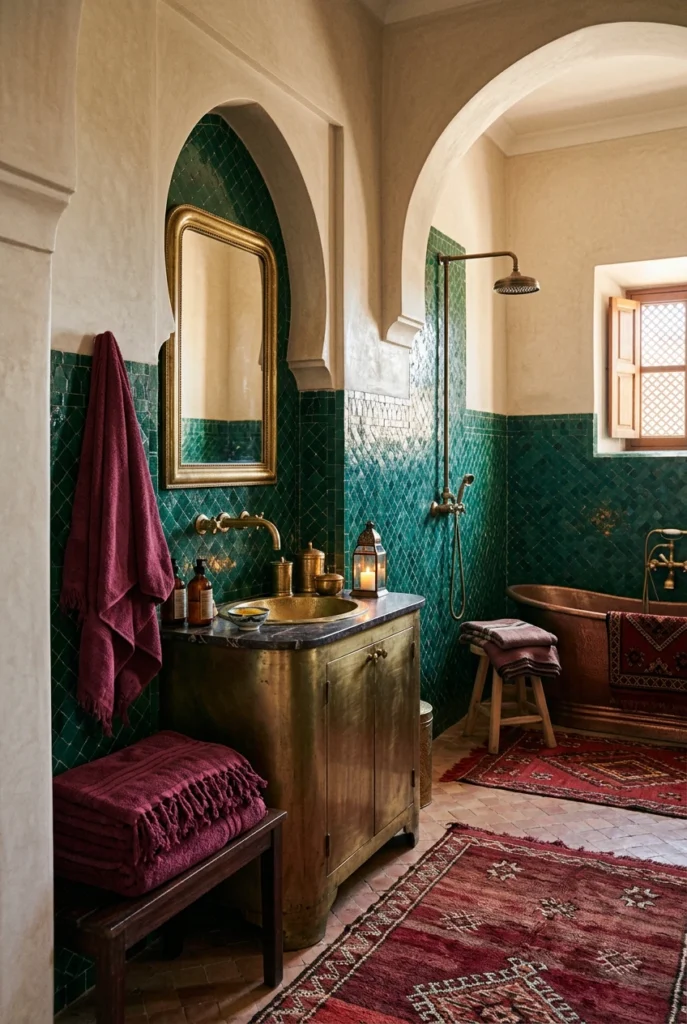
Deep emerald mosaic tile paired with warm brass fixtures captures the rich, saturated color story central to traditional Moroccan interiors.
Burgundy textiles layered throughout reinforce the same jewel-toned depth without needing any additional pattern.
This combination works especially well if you want your bathroom to feel opulent and richly detailed rather than pared back. It’s one of the most recognizable and authentic Moroccan color stories available.
15. Warm Terracotta and Brass Palette
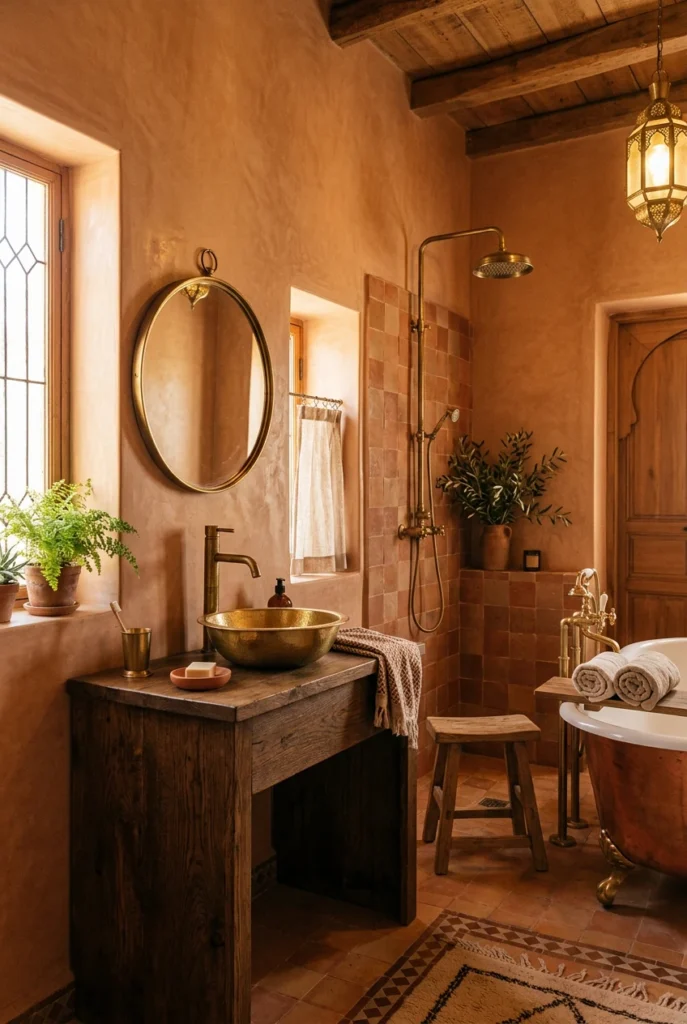
Terracotta-toned tadelakt walls paired with brass fixtures create a cohesive, sun-baked material story throughout a Moroccan bathroom.
Warm wood accents reinforce the same earthy richness found in traditional Moroccan architecture. This combination works especially well if you’re drawn to the desert or riad side of Moroccan style rather than its more jewel-toned, ornate version.
It’s a reliable, versatile starting point for anyone building their Moroccan bathroom’s material palette from scratch.
16. Deep Indigo Moroccan Palette
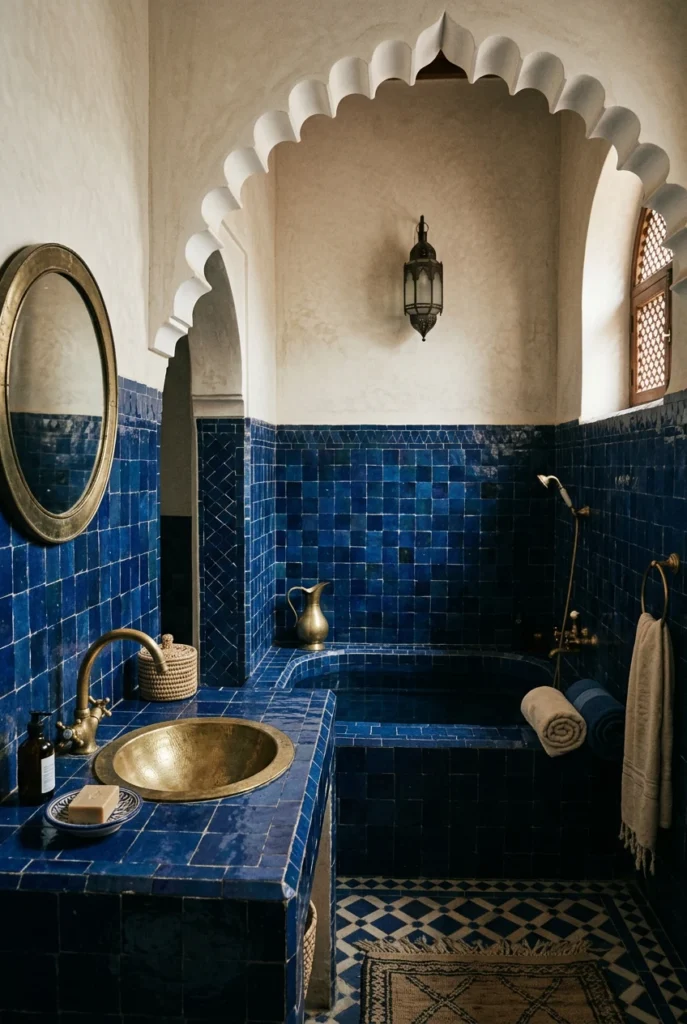
Indigo-glazed zellige tile brings a distinct, saturated color story into a Moroccan bathroom, moving beyond the typical terracotta or jewel-toned versions.
Brass fixtures add warmth against the cooler indigo tone, while warm white plaster accents keep the palette from feeling too heavy.
This combination works especially well if you want your Moroccan bathroom to feel bold and dramatic rather than earthy or subdued. It’s a striking choice for anyone drawn to deeper, richer color throughout their design.
17. Berber Textile Pattern Accent
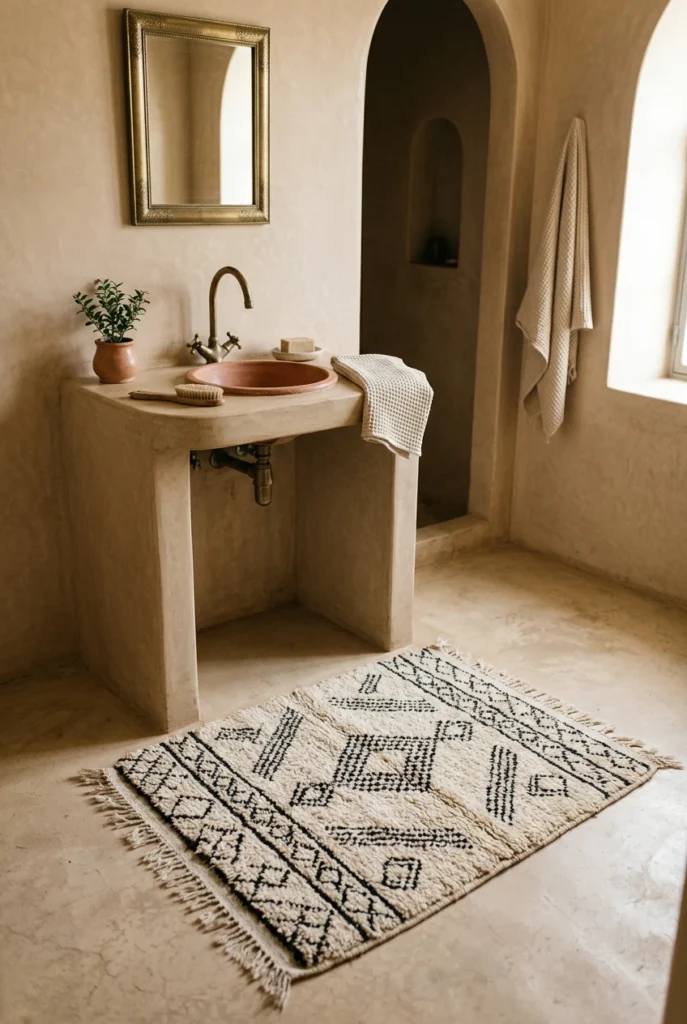
A woven Berber-pattern bath mat brings authentic Moroccan pattern into your bathroom through textile rather than tile, offering a lower-commitment way to introduce the aesthetic.
Cream and black geometric motifs add genuine visual interest against a simple tadelakt vanity.
This approach works especially well if you love Moroccan pattern but aren’t ready to commit to permanent tilework. It’s an easy, affordable way to bring authentic character into your space.
18. Brass Lantern Pendant Light
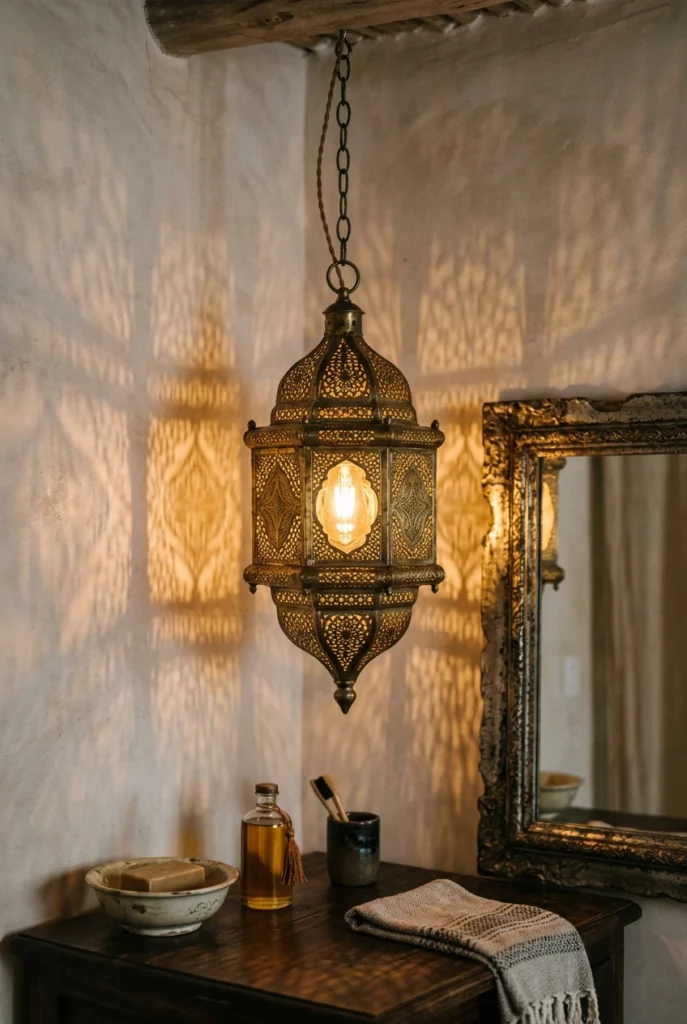
An ornate brass Moroccan lantern does more than just light your vanity — its perforated metalwork casts genuinely beautiful shadow patterns across the surrounding walls.
This detail brings authentic craft and atmosphere that a standard fixture simply can’t replicate. Positioned above a vanity, it becomes a genuine focal point even before it’s switched on.
It’s worth seeking out an authentic handmade lantern rather than a mass-produced version for genuine character.
19. Hand-Carved Wood Mirror Frame
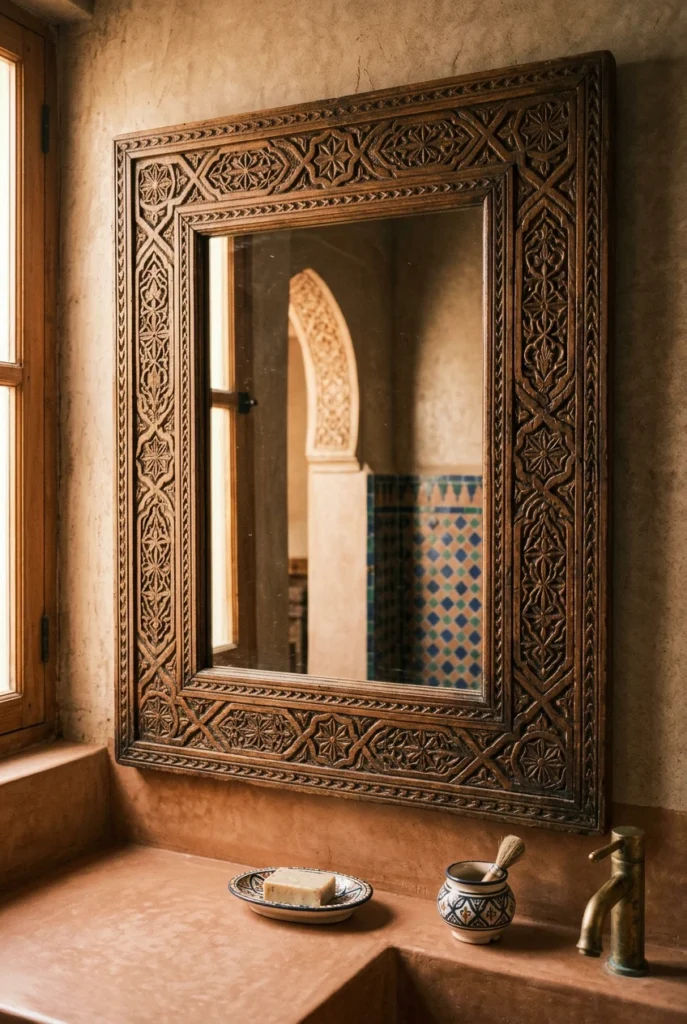
A hand-carved wood mirror frame with intricate geometric detailing brings genuine Moroccan craftsmanship to a functional bathroom fixture.
This detail works especially well mounted above a tadelakt vanity, where both elements share the same warm, artisanal quality.
The carved texture catches light and shadow differently throughout the day, adding visual interest beyond the mirror’s basic function. It’s worth the investment if you want your bathroom’s mirror to feel like genuine art rather than a standard fixture.
20. Mosaic Tile Niche Detail
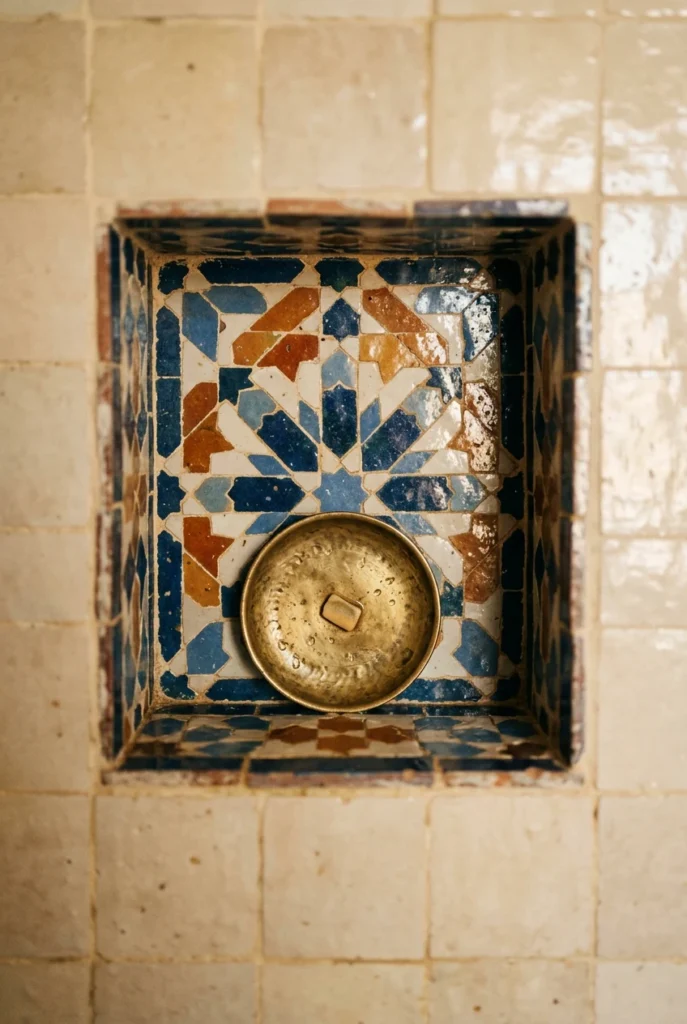
A small shower niche lined in intricate star-and-cross mosaic tile turns a purely practical storage feature into a genuine design detail.
This contained approach lets you enjoy authentic Moroccan pattern without covering an entire wall or room.
A single brass dish inside keeps the styling simple so the mosaic itself remains the focal point. This is a smart addition if you want a taste of Moroccan tilework without a larger commitment.
21. Budget Moroccan Bathroom Style
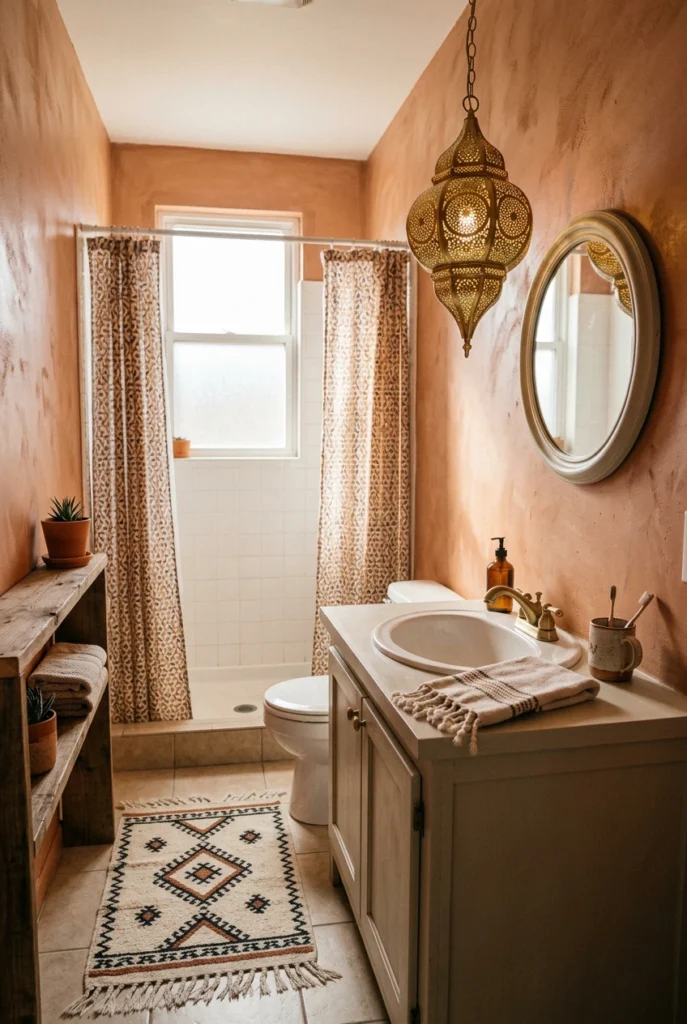
Moroccan style doesn’t require a full renovation to come through clearly in a bathroom. Warm terracotta-toned paint that mimics tadelakt’s texture, an affordable brass-style lantern, and a small woven Berber-pattern mat can get you most of the way there without touching your existing layout.
This approach works especially well if your current fixtures are structurally fine but visually plain. It’s proof that Moroccan warmth is achievable on almost any budget with a bit of patience and some smart choices.
22. Renter-Friendly Moroccan Approach
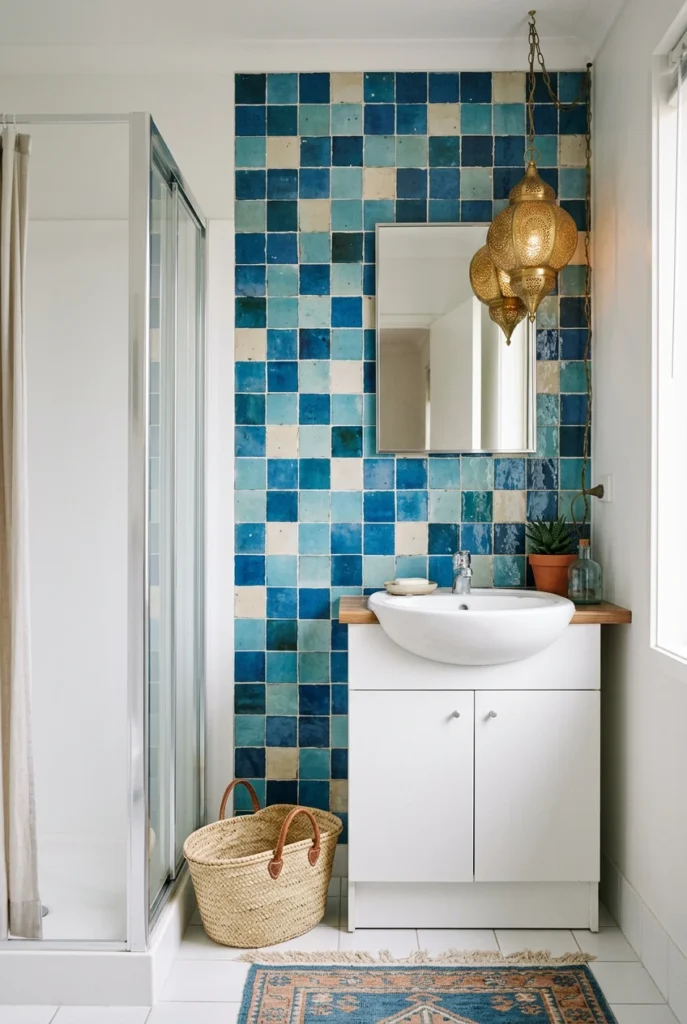
Renters can absolutely achieve Moroccan style using entirely removable elements like peel-and-stick zellige-style tile wallpaper and a plug-in brass lantern fixture.
A small woven basket adds genuine texture without requiring any permanent changes to the space. This approach means everything can come with you when you eventually move, without leaving any damage behind.
It’s a genuinely effective way to make a rental bathroom feel warm and intentional without risking your security deposit.
23. Avoiding a Costume-Like Moroccan Look
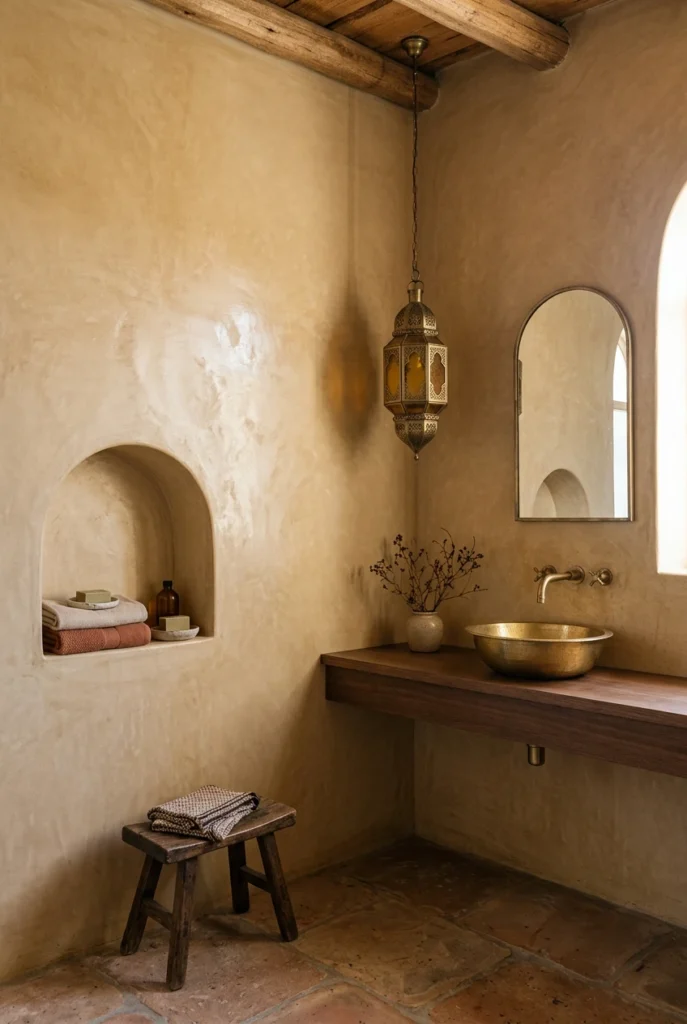
Moroccan design works best when you commit to just one or two authentic signature elements rather than layering in every possible motif at once.
A tadelakt-finished wall paired with a single brass lantern often reads as more sophisticated than a room packed with mosaic tile, carved wood, and jewel tones all competing for attention.
This restraint keeps the space feeling like genuine design rather than a themed costume. It’s worth editing down if your Moroccan bathroom currently feels a little too busy or literal.
24. Balancing Pattern in a Small Moroccan Bathroom
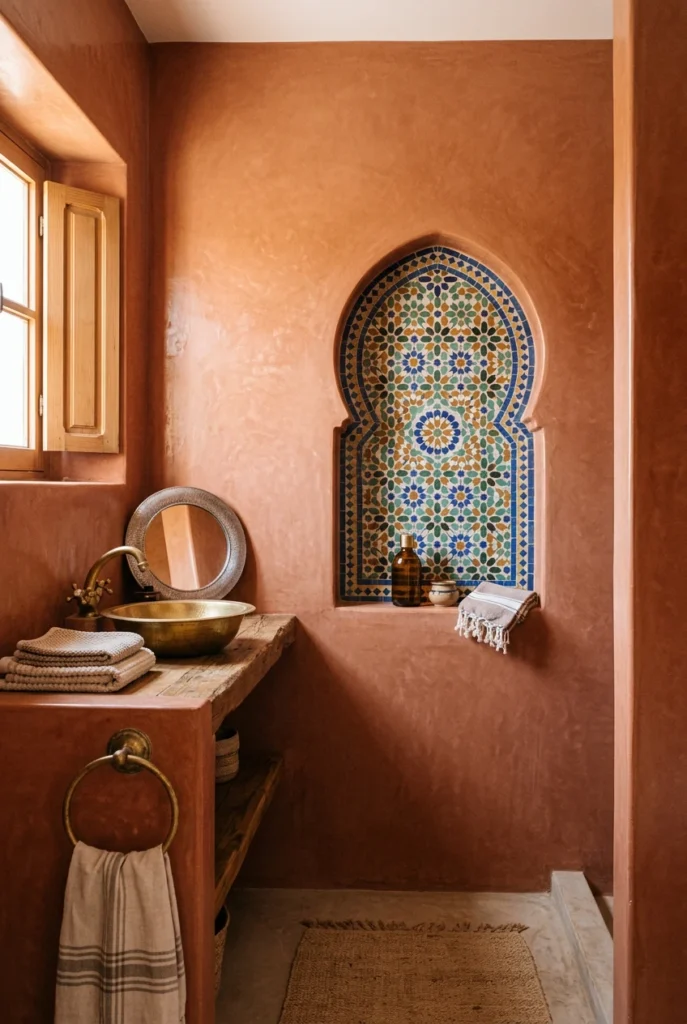
Bold Moroccan pattern can absolutely work in a small bathroom, as long as you limit it to one contained area rather than covering every surface.
A mosaic tile niche paired with solid tadelakt plaster walls lets you enjoy the style’s signature detail without overwhelming a tight space.
This restraint keeps the small bathroom feeling balanced rather than visually chaotic. It’s worth remembering this technique any time you’re tempted to add pattern to multiple surfaces at once in a compact room.
25. Moroccan Style for a Plain Builder-Grade Bathroom
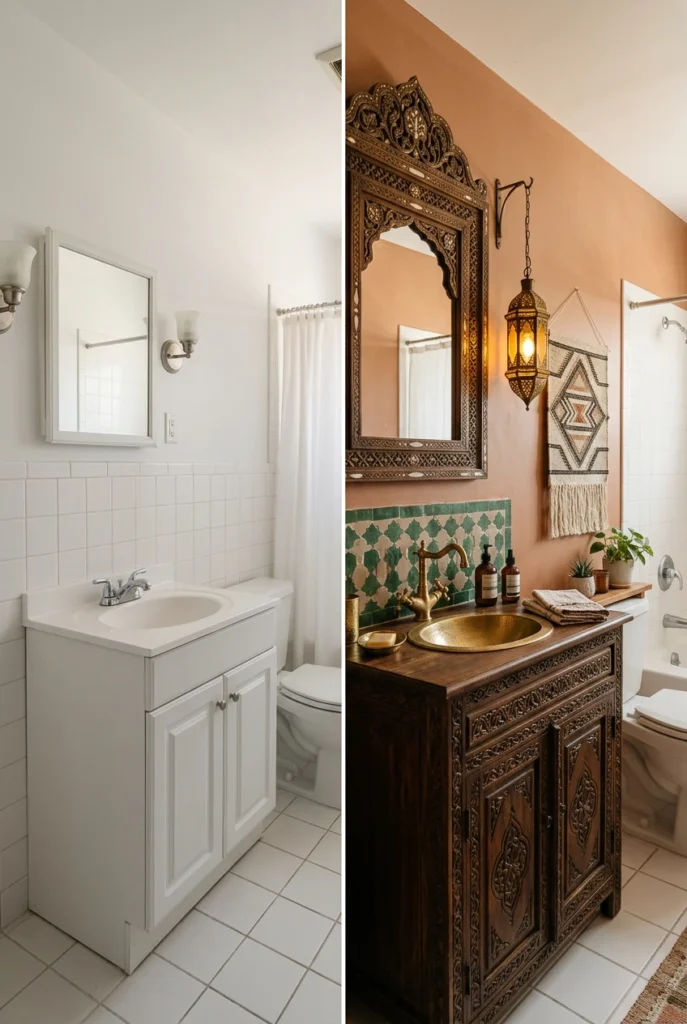
A generic builder-grade bathroom can absolutely become a genuine Moroccan space without changing the existing layout or tile.
Adding a brass lantern, a carved wood mirror, and warm terracotta-toned walls can shift the whole feel dramatically.
This approach proves that Moroccan style is achievable even when you’re working within someone else’s original design decisions. It’s a great starting point if a full renovation isn’t in your current budget or plans.
From richly detailed traditional riads to pared-back Berber-inspired spaces, there’s a Moroccan bathroom style here for nearly every taste and budget.
Pick the direction that feels most authentic to you, then start layering in the materials and details that bring genuine craft into the space.
Pin your favorites now so you have real style direction ready when your own Moroccan bathroom project gets underway.